
 English
 Français
 Deutsch
 Português
 Español
 русский
  한국어
한국어 العربية
 Italiano
 Indonesia
 Schweiz
 Polski
 Nederlands
 ישראל - עברית
 Perzisch
 ไทย
ไทย 日本語
日本語 ኢትዮ-አማርኛ
 Việt Nam
 Kiswahili
 Srpski
 Ελληνικά
 简体中文
简体中文How to Choose the Right Cooling Fan: 8 Key Factors Engineers Should Know
Choosing the right cooling fan is essential for efficient heat dissipation, stable performance, and long equipment life in applications such as VFD systems, control cabinets, and industrial electronics.
Before selection, first define the purpose:ventilation, cooling, or specific industrial use. Different applications require different fan types and specifications.To ensure long-term reliability and safe operation, high-quality cooling fans are designed with multiple built-in protection features:
8 Key Factors for Cooling Fan Selection:
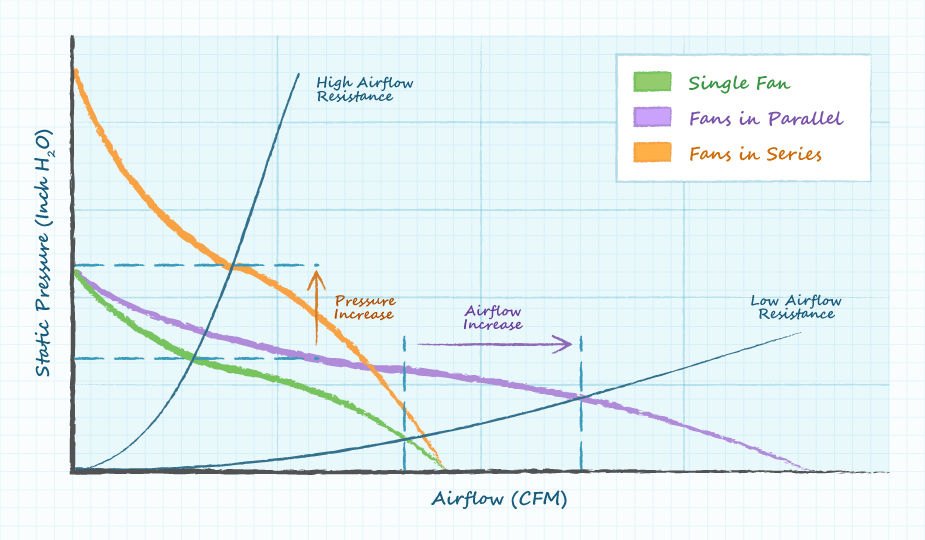
♦ Operating Point (Airflow & Static Pressure)
Select based on required airflow (m³/h or CFM) under actual system resistance (Pa or inH₂O), not free air conditions.
♦ Noise Requirements
Ensure noise levels meet application standards, especially in sensitive environments.
♦ Voltage & Frequency
Match system requirements: DC (12V/24V/48V) or AC (220V/380V, 50/60Hz).
♦ Installation Conditions
Consider space, mounting direction, and structural constraints.
♦ Fan Type
Choose the right type: axial, forward or backward centrifugal, or mixed flow — depending on airflow and pressure needs.
♦ Functional Features
Optional features include speed control, alarm signals, thermal protection, and communication interfaces.
♦ Environmental Conditions
Evaluate IP rating, temperature, dust, humidity, and corrosion resistance.
Reliable brands ensure consistent performance, longer lifespan, and stable supply.
 whatsapp


