
 English
 Français
 Deutsch
 Português
 Español
 русский
  한국어
한국어 العربية
 Italiano
 Indonesia
 Schweiz
 Polski
 Nederlands
 ישראל - עברית
 Perzisch
 ไทย
ไทย 日本語
日本語 ኢትዮ-አማርኛ
 Việt Nam
 Kiswahili
 Srpski
 Ελληνικά
 简体中文
简体中文Why Are More Data Centers Moving Cooling Closer to the Rack?
HENGRUI 3-Step Approach: From Rack Heat to Optimized Airflow
01 — PROBLEM | Cooling Capacity ≠ Cooling Delivery
02 — SOLUTION | Bring Cooling Closer to the Heat Source
03 — KEY RULE | Select the Fan at the Real Operating Point

A data center can have enough cooling capacity—and still have a cooling problem.Why?
Because cooling capacity is only part of the equation. Airflow distribution determines whether that cooling actually reaches the equipment that needs it.
As rack power density continues to increase, traditional room-level cooling can face a familiar challenge: longer airflow paths, air mixing, bypass airflow, and localized hot spots.
This is where InRow Cooling becomes an increasingly interesting architecture.
The Problem: Cooling the Room Is Not the Same as Cooling the Rack
Traditional CRAH or CRAC systems cool the overall data center environment. This works well when heat loads are relatively distributed.
But when certain racks generate significantly more heat than others, room-level cooling may not deliver cooling exactly where it is needed.
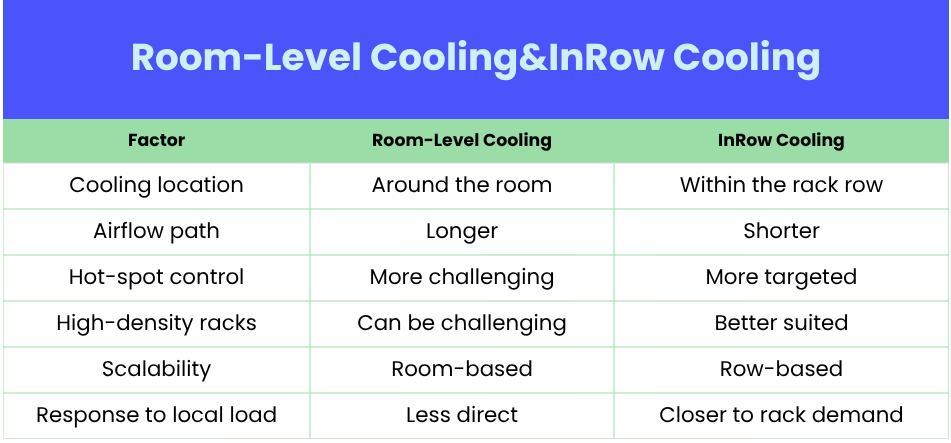
Pic.1 Room-Level Cooling&InRow Cooling
The key difference is simple:InRow brings the cooling source closer to the heat source.But InRow is not simply “putting an air conditioner next to a rack.”The real engineering challenge is airflow management.

Pic.2 InRow Cooling airflow
The Fan Inside InRow Cooling Matters More Than It Looks
When discussing precision cooling, attention often goes to compressors, coils, chilled water, or heat exchangers.But the fan determines how effectively air moves through the system.
Three parameters deserve particular attention.
1. Airflow
High-density IT equipment requires sufficient airflow to remove heat.
The fan must deliver the required airflow at the actual operating condition—not simply at its free-air rating.
2. Static Pressure
Filters, coils, heat exchangers, grilles, and other components create system resistance.
A fan that provides high airflow under free-air conditions may perform very differently once installed inside an InRow unit.
Airflow + static pressure = the real operating point.
3. Variable-Speed Control
Cooling demand is rarely constant.
When rack loads decrease, running the fan continuously at full speed can waste energy and increase noise.
EC fans with variable-speed control can adjust airflow according to cooling demand, using control methods such as 0–10 V, PWM, or Modbus, depending on the system architecture.
This creates an opportunity to optimize three things simultaneously:
Cooling performance + energy efficiency + acoustic performance
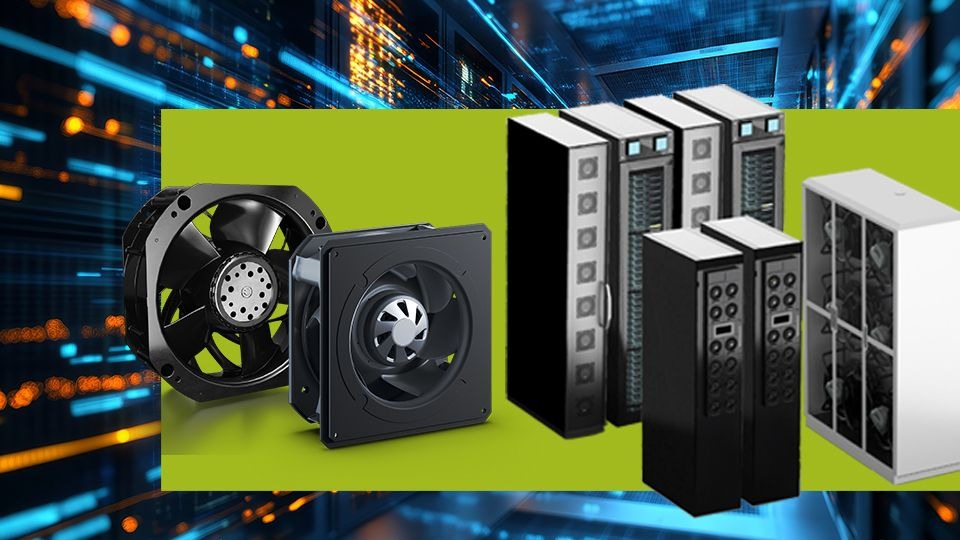
Pic.3 ebm-papst provides cooling solutions for artificial intelligence applications in data centers
InRow Cooling Is About Airflow Architecture
A well-designed InRow system depends on more than the cooling unit itself.
The complete airflow path matters: Hot air from IT equipment → InRow cooling → cooled air → rack inlet
If the airflow path is poorly designed, even a high-capacity cooling system may not perform as expected.
That is why factors such as rack arrangement, hot-aisle/cold-aisle configuration, airflow direction, fan performance, and system pressure should be evaluated together.
When Should You Consider InRow Cooling?
InRow cooling can be particularly attractive when:
And importantly, InRow does not necessarily replace CRAH or CRAC systems.
In many data centers, it can work as part of a hybrid cooling strategy, providing more targeted cooling where room-level systems alone may struggle.
The Engineering Takeaway
The next generation of data center cooling is not simply about installing more cooling capacity.It is about delivering the right amount of cooling, to the right location, at the right operating condition.
For InRow systems, that means looking beyond the fan's nominal airflow rating.
Check the operating point→Check the system resistance→Check the control strategy→Then select the fan.
At Beijing HENGRUI, we work with data center cooling OEMs, precision cooling manufacturers, system integrators, and thermal management teams on fan selection and airflow optimization.
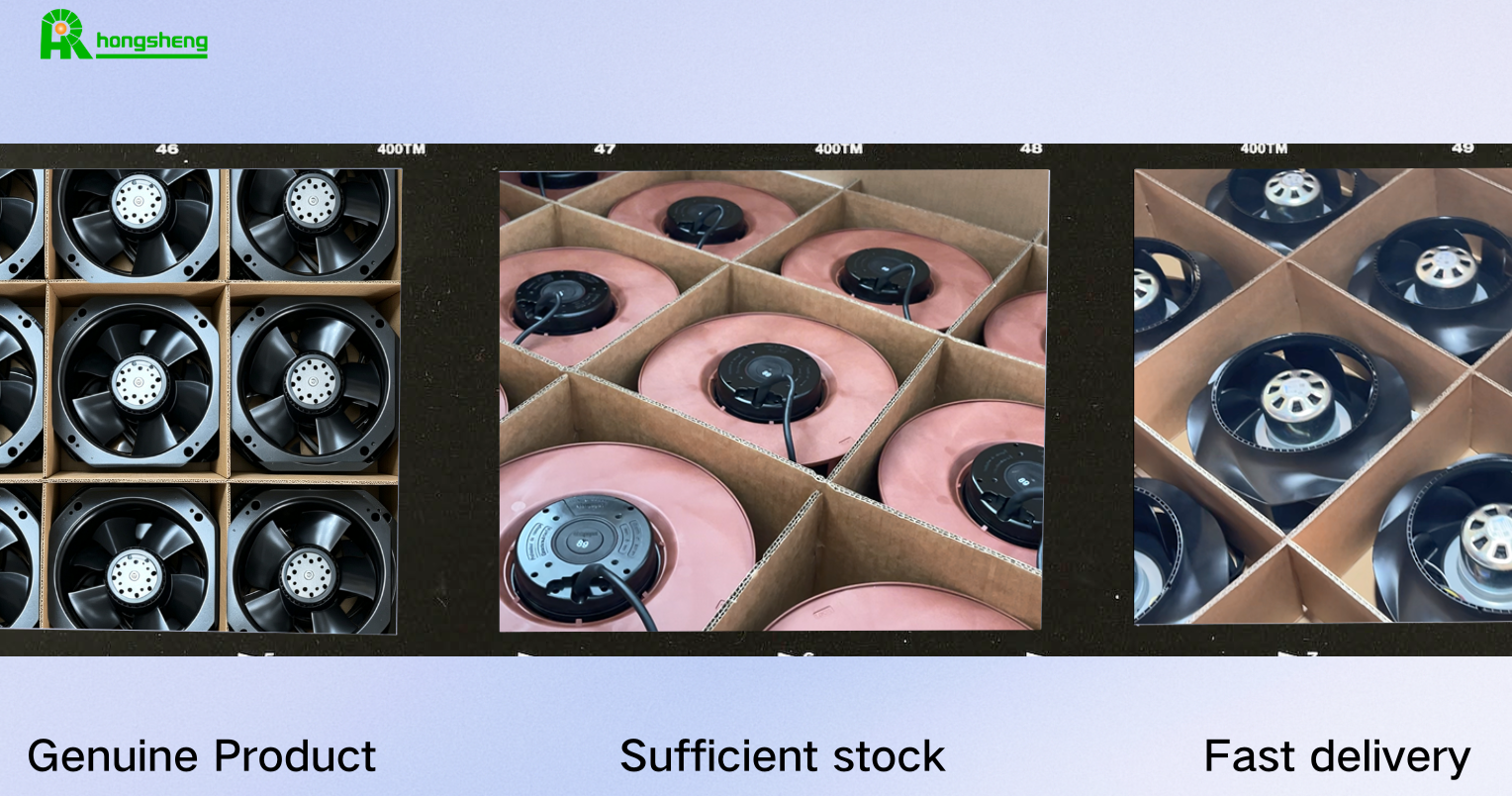
Pic.4 Hengrui's inventory strength
If you're developing or upgrading an InRow cooling system, sharing the required airflow, static pressure, installation dimensions, voltage, and control requirements is often enough for us to start evaluating the right fan solution.
Cooling efficiency isn't only about how much cooling capacity you have.It's also about how close that cooling capacity is to the heat source.
 whatsapp


