 English
 Français
 Deutsch
 Português
 Español
 русский
  한국어
한국어 العربية
 Italiano
 Indonesia
 Schweiz
 Polski
 Nederlands
 ישראל - עברית
 Perzisch
 ไทย
ไทย 日本語
日本語 ኢትዮ-አማርኛ
 Việt Nam
 Kiswahili
 Srpski
 Ελληνικά
 简体中文
简体中文Data Center Dry Cooler Retrofit: The Shift Is Already Happening
Across North America, data centers are under pressure to support higher rack densities and AI-driven workloads. But instead of rebuilding facilities, many operators are turning to data center retrofit projects — and one system is at the center of this upgrade:dry cooler systems.
A leading example is the Infomaniak D4 data center in Geneva, which demonstrates how advanced cooling design can transform energy use.
In this model, dry coolers are no longer just removing heat —they are enabling energy reuse and sustainable operation.
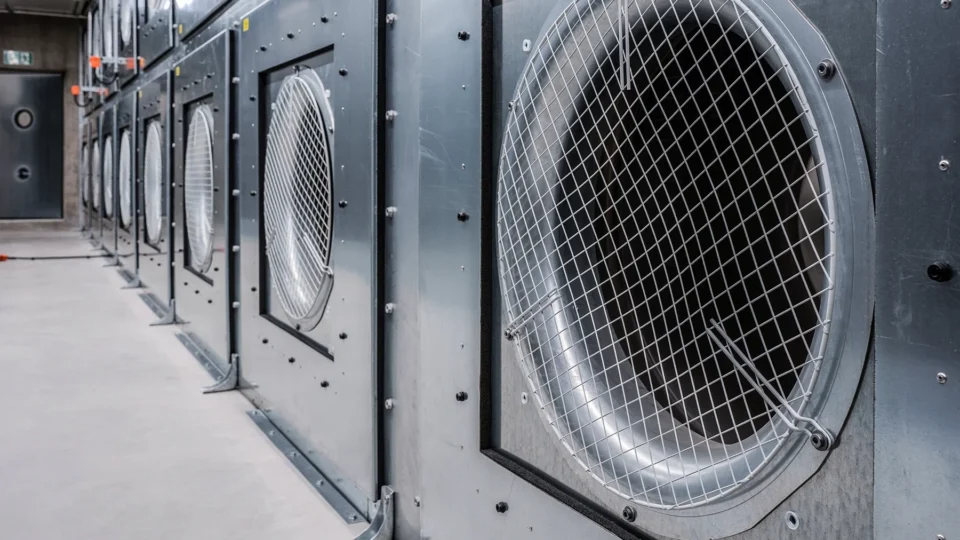
As facilities shift toward high-density racks and more sustainable operations, traditional cooling strategies are no longer sufficient. Modern retrofit projects must handle higher thermal loads with increased airflow demand, deliver precise airflow control instead of oversized systems, manage noise in urban or mixed-use environments, and meet stricter energy efficiency and sustainability requirements. Behind high-performance projects like D4 is a core focus on airflow engineering, where efficiency is achieved through FanGrid configurations for redundancy and stability, high-efficiency EC fans for precise control, and optimized airflow paths that minimize energy loss.
 |
|
Pic1. The three FanGrids ensure optimal air circulation. (Image | Infomaniak) |
The key is not adding more fans, but matching airflow to real system resistance and operating conditions. The Infomaniak D4 project shows a broader industry shift toward higher efficiency, smarter cooling design, and scalable retrofit strategies — where the focus is no longer whether to upgrade, but how to do it efficiently and reliably.
At Beijing HENGRUI, we support engineers working on data center cooling retrofit and dry cooler upgrades with:
 whatsapp


