
 English
 Français
 Deutsch
 Português
 Español
 русский
  한국어
한국어 العربية
 Italiano
 Indonesia
 Schweiz
 Polski
 Nederlands
 ישראל - עברית
 Perzisch
 ไทย
ไทย 日本語
日本語 ኢትዮ-አማርኛ
 Việt Nam
 Kiswahili
 Srpski
 Ελληνικά
 简体中文
简体中文AHU Retrofit to Fan Wall System: A Practical Upgrade for Stable Industrial Cooling Performance
A leading electronics R&D and manufacturing facility in Sichuan, China, recently faced a common but increasingly critical challenge in industrial cooling system performance:
The existing air handling unit (AHU), based on traditional AC fan configuration, was no longer able to meet the evolving requirements of higher equipment density and dynamic thermal loads.
♦ The Challenge:Declining Cooling Stability in a High-Density Environment
As production demands increased, several system limitations became more pronounced:
Although the system was still operational, its performance margin had significantly decreased—raising concerns about long-term reliability and process stability.
This type of issue is increasingly common in industrial facilities, electronics manufacturing plants, and data-center-like environments, where thermal loads continue to rise.
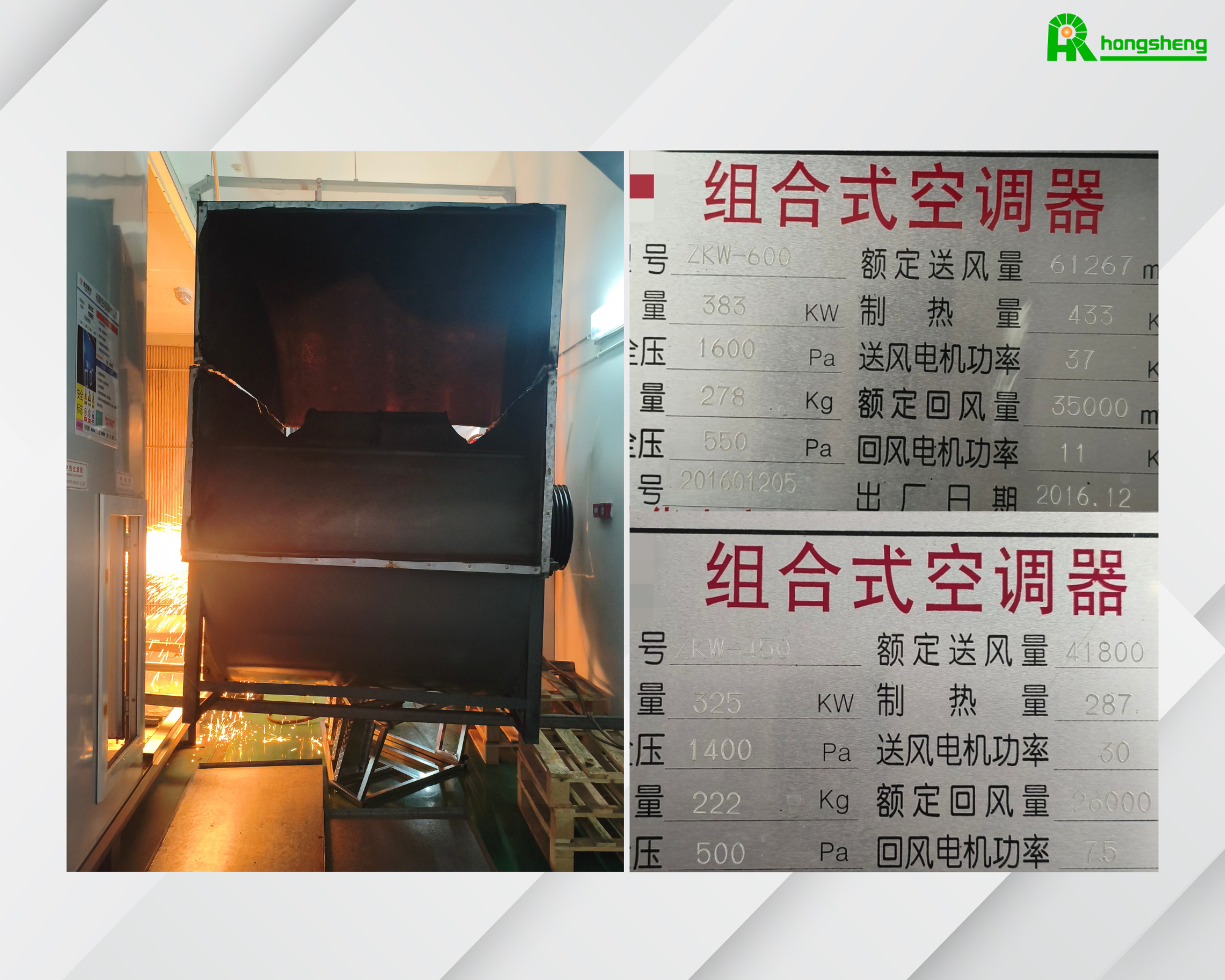 |
|
Pic.1 Scene shooting before renovation |
Instead of a full system replacement, the project adopted a targeted retrofit approach:
Converting the traditional AHU into a modular fan wall configuration
This upgrade strategy enabled:
At the core of the solution, EC fans from ebm-papst were implemented to provide:
Beyond replacing hardware components, the success of the retrofit depended on system-level engineering optimization, including:
This step is critical in any AHU retrofit, fan wall upgrade, or industrial ventilation modernization project, where theoretical design must align with real-world airflow behavior.
• After implementation, the upgraded system achieved:
Most importantly, the retrofit extended the lifecycle of the existing infrastructure—avoiding the cost and downtime of a full system replacement.
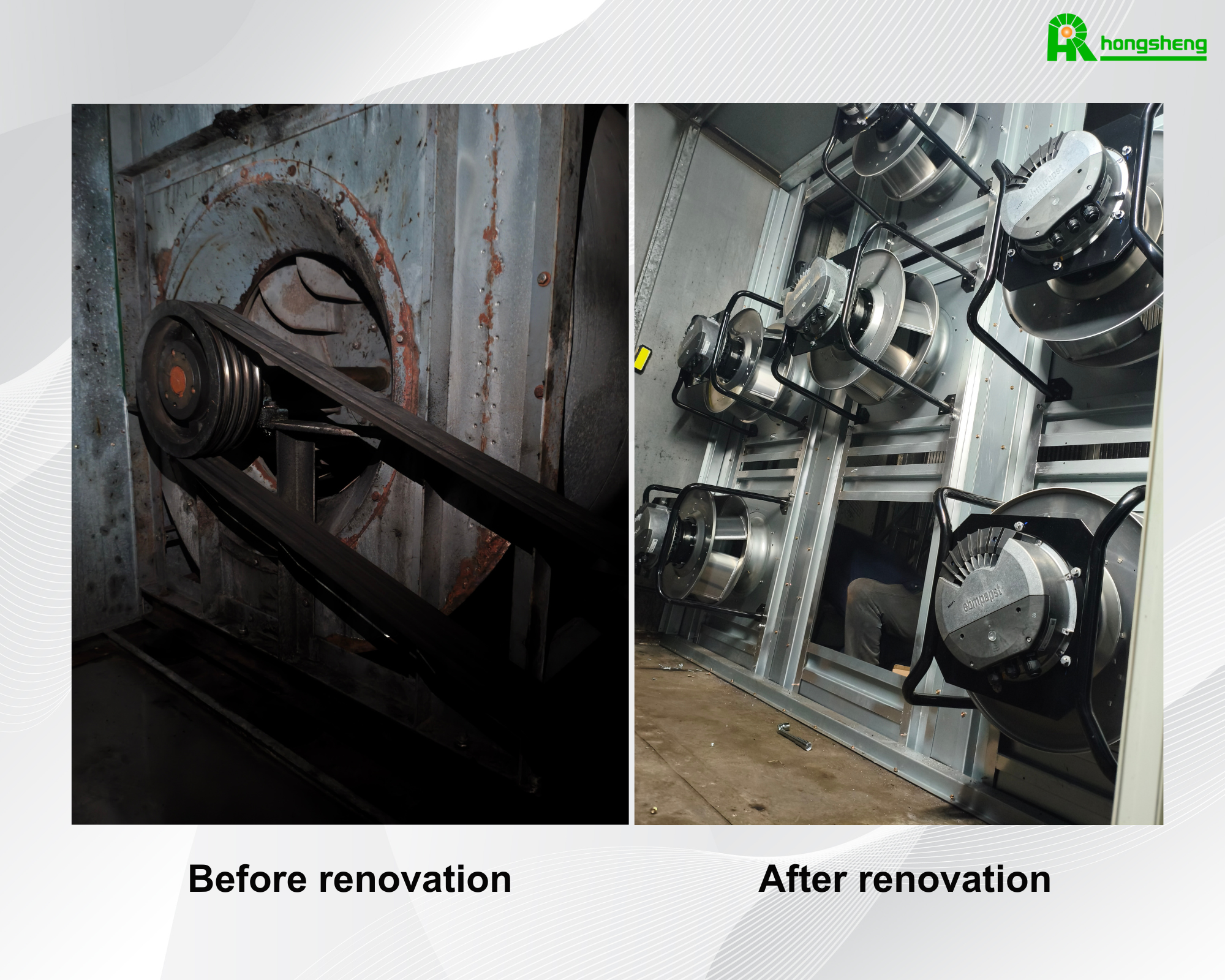 |
|
Pic.2 Comparison before and after renovation |
This case highlights a practical reality:
Effective cooling upgrades are not just about better products—but about how they are selected and integrated into the system.
Beijing Hengrui focuses on application-driven optimization of ventilation and cooling systems, combining fan selection expertise with system-level understanding.
Our work goes beyond component replacement—addressing how airflow dynamics, control strategy, and system architecture interact in real operating environments.
For projects where standard solutions no longer deliver expected performance, exploring a tailored retrofit strategy is often the most effective next step.
 whatsapp


