
 English
 Français
 Deutsch
 Português
 Español
 русский
  한국어
한국어 العربية
 Italiano
 Indonesia
 Schweiz
 Polski
 Nederlands
 ישראל - עברית
 Perzisch
 ไทย
ไทย 日本語
日本語 ኢትዮ-አማርኛ
 Việt Nam
 Kiswahili
 Srpski
 Ελληνικά
 简体中文
简体中文AHU Retrofit Case Study: How an EC Fan Upgrade Reduced Energy Consumption by Up to 37%
In large power electronics industrial parks, AHU/MAU systems often operate under continuous high-load conditions — where airflow stability, energy efficiency, and system reliability directly impact daily operations.
Yet many facilities are still relying on traditional belt-driven fan systems, which gradually lead to higher energy consumption, increased maintenance, and limited airflow control.
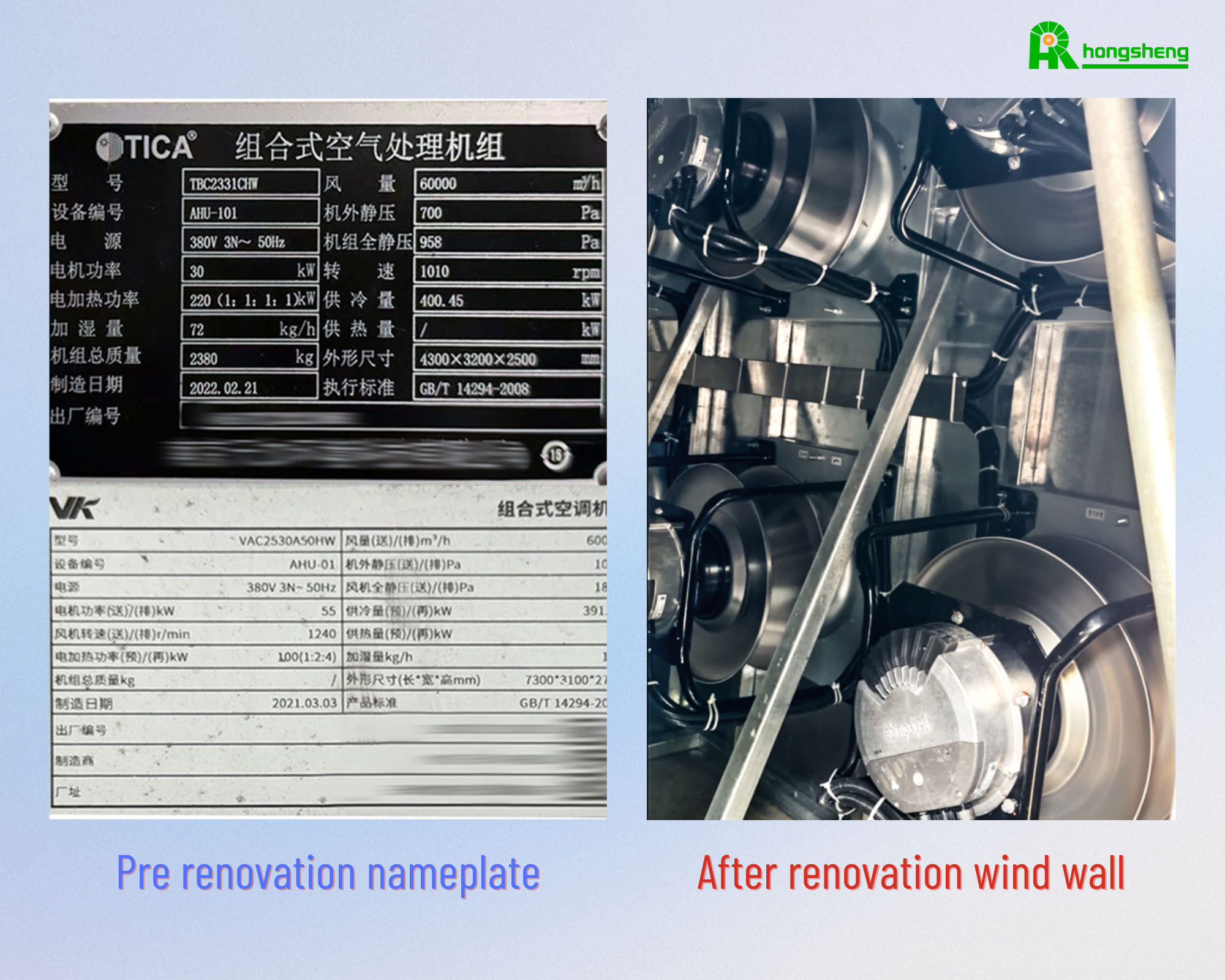
Recently, we supported an AHU retrofit evaluation project for a large-scale power electronics industrial park, upgrading traditional fan systems to high-efficiency EC fan wall solutions.
The existing AHU systems were operating with:
In addition, long-term belt wear introduced:
For high-load industrial HVAC environments, these issues directly impact operational cost and system reliability.
The upgrade plan replaced the original belt-driven system with an EC fan wall solution using backward-curved centrifugal EC fans.
The goal was simple:
Maintain the original airflow and static pressure requirements
Target operating conditions included:
 |
|
Pic.1 Comparison photo taken before and after renovation |
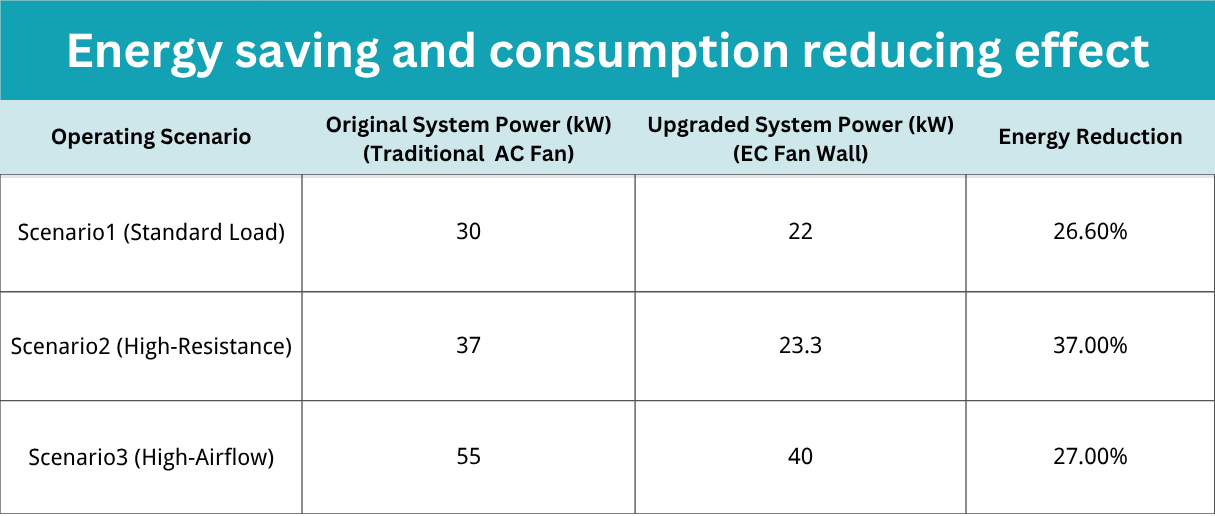 |
| Pic.2 Energy saving and consumption reducing effect |
Beyond power reduction, the retrofit also improved: airflow stability/ controllability/ maintenance accessibility/ system cleanliness/ operational redundancy (system stays online even if a single fan fails.
Across data centers, industrial facilities, and high-efficiency HVAC projects, Beijing Hengrui is seeing a growing shift toward EC retrofit solutions — especially in applications where energy efficiency, controllability, and lifecycle cost are becoming critical priorities.
And in many retrofit projects, the challenge is no longer simply “moving air.”
It’s about:
Have you faced similar challenges with traditional belt-driven AHU systems in industrial facilities?
We’d be interested to hear how others are approaching EC retrofit projects, airflow optimization, or HVAC energy reduction in industrial environments.
 whatsapp


