 English
 Français
 Deutsch
 Português
 Español
 русский
  한국어
한국어 العربية
 Italiano
 Indonesia
 Schweiz
 Polski
 Nederlands
 ישראל - עברית
 Perzisch
 ไทย
ไทย 日本語
日本語 ኢትዮ-አማርኛ
 Việt Nam
 Kiswahili
 Srpski
 Ελληνικά
 简体中文
简体中文Global Regulations Are Reshaping Cooling Systems. Is Your Facility Ready?
 |
|
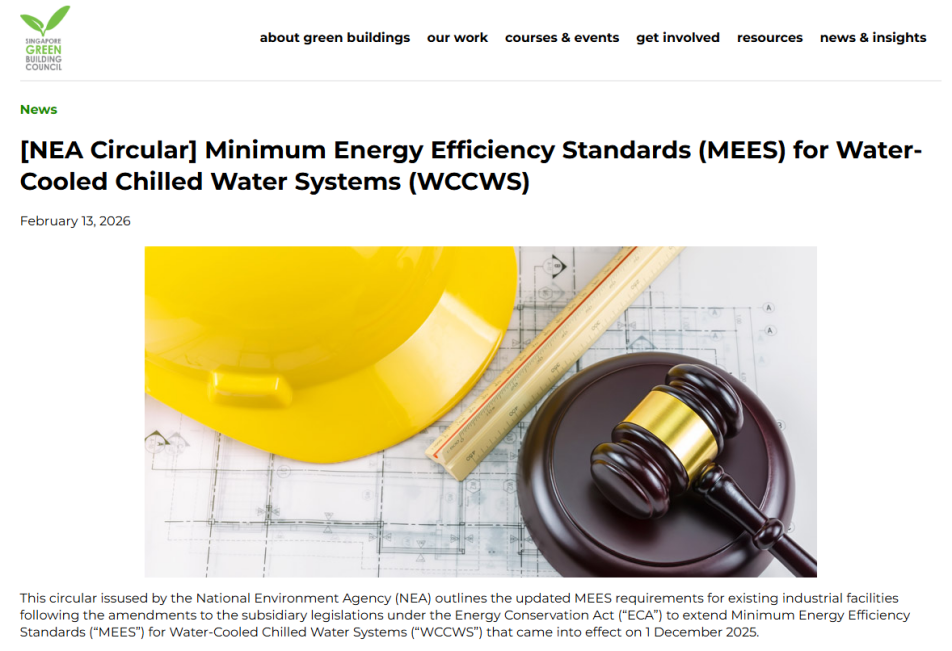
Pic.1 Singapore extends Minimum Energy Efficiency Standards (MEES) to water-cooled chiller systems (WCCWS) in existing industrial facilities(Source from :Singapore Green Building Council) |
Global cooling demand is growing rapidly.
From cold storage facilities and food processing plants to commercial buildings and data centers, cooling systems are consuming more energy than ever before.At the same time, governments around the world are introducing stricter energy-efficiency regulations, carbon-reduction targets, and sustainability requirements.The result is a global shift toward one common objective:
Improve cooling efficiency without compromising performance.
The push for more efficient cooling systems is no longer driven solely by rising electricity costs. Increasingly, it is being driven by policy.
In Europe, new Ecodesign regulations are raising efficiency requirements for industrial fans and cooling equipment, while F-Gas regulations continue to accelerate the transition toward lower-emission refrigeration systems.
In the United States, DOE efficiency standards and the AIM Act are encouraging facility owners to modernize cooling infrastructure and improve overall system performance.
Across Southeast Asia, countries including Singapore, Malaysia, and Thailand are implementing energy-efficiency initiatives aimed at reducing power consumption from commercial and industrial cooling systems.
Although the regulations vary by region, the message is clear:
Future cooling systems must be more efficient, more sustainable, and more intelligent.
For many facility owners, replacing an entire chiller plant or cooling system is difficult to justify.Existing equipment may still be operating reliably.Capital budgets are limited.Operational downtime can be costly.
 |
|
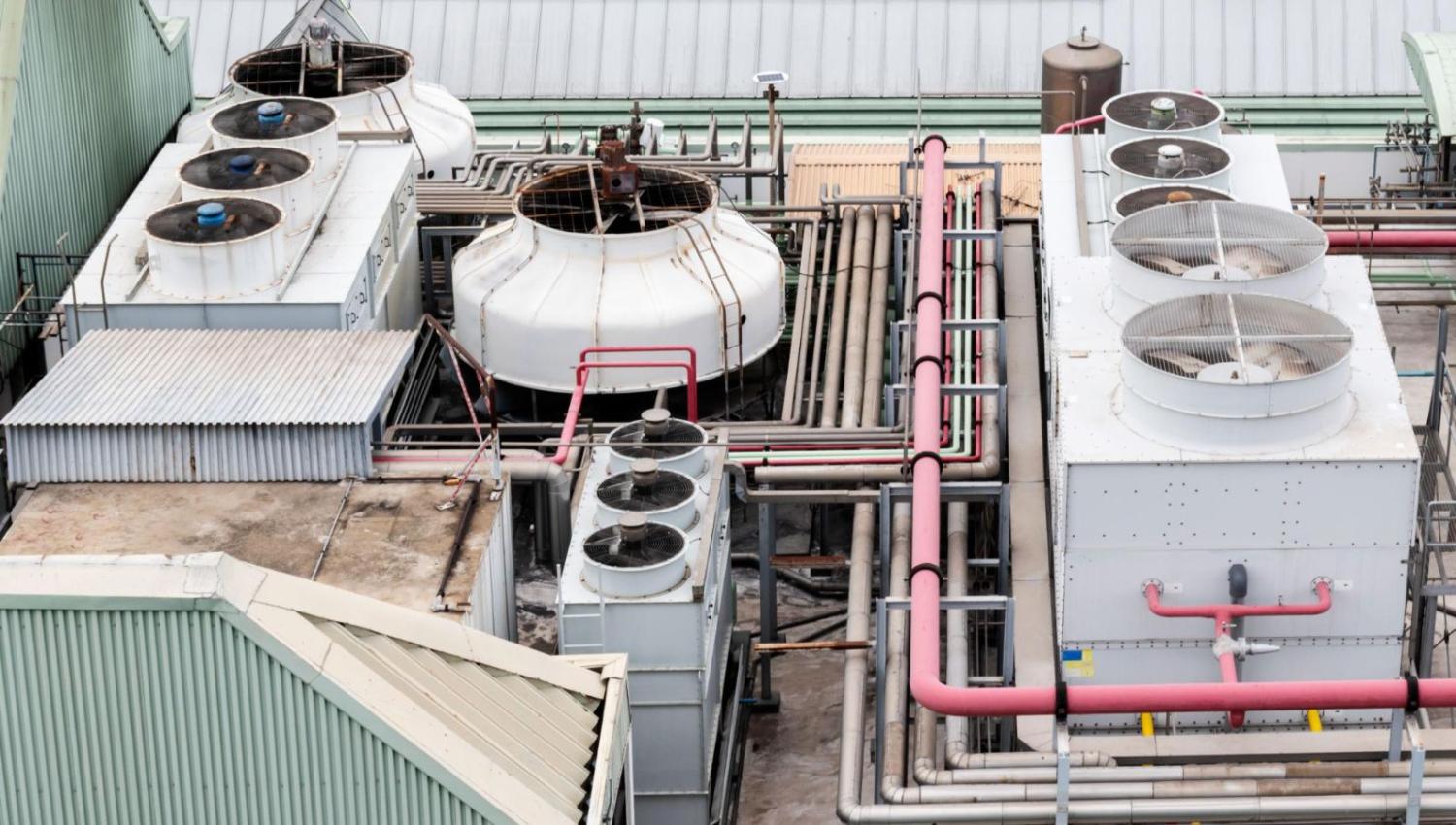
Pic.2 Water-Cooled Chiller System (Source from :ZABSI Industrial Ventilation Sdn. Bhd.) |
As a result, many organizations are looking for practical ways to improve energy efficiency while extending the life of existing assets.This is why cooling retrofits are becoming an increasingly attractive strategy.
When discussing chiller efficiency, compressors often receive the most attention.However, one of the most overlooked opportunities is the fan system.
Many chillers, condensers, dry coolers, evaporators, and HVAC systems still rely on conventional AC fan technology. While these fans may continue to operate effectively, they often consume more energy and provide limited control under varying load conditions.
This is particularly important because most cooling systems spend the majority of their operating hours at partial load.
Modern EC fan technology offers several advantages:
• Higher energy efficiency
• Precise speed control
• Improved part-load performance
• Lower maintenance requirements
• Reduced operating noise
• Better airflow management
 |
|
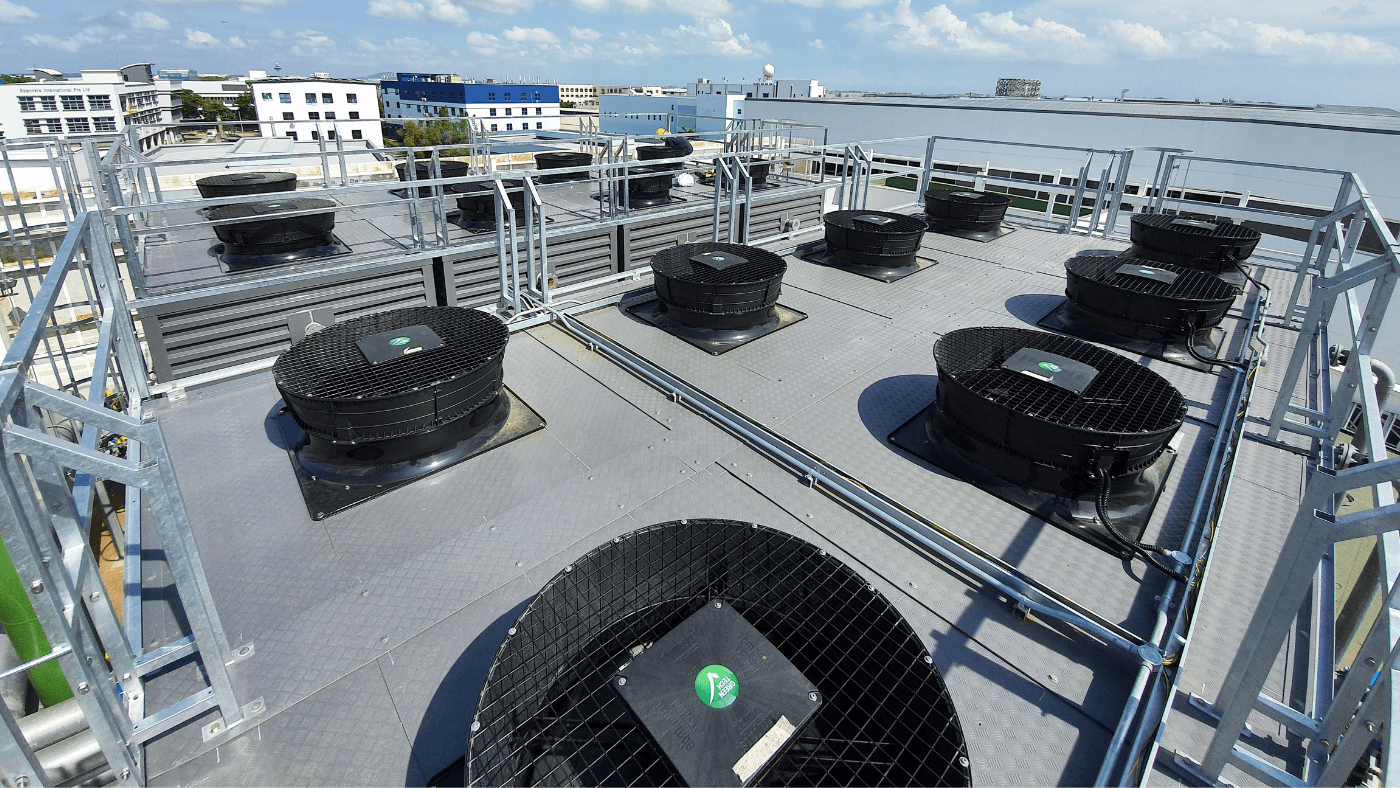
Pic.3 ebm-papst's EC Fan Renovation Case |
For many facilities, upgrading fan systems can deliver meaningful energy savings and improved system performance without major modifications to existing infrastructure.
A growing trend across the HVAC, refrigeration, and industrial cooling sectors is clear:
Modernization does not always require replacement.
Rather than investing in entirely new cooling systems, many facility owners are achieving measurable results through targeted upgrades.By focusing on critical airflow components, organizations can reduce energy consumption, improve reliability, minimize downtime, and accelerate return on investment.In many cases, fan upgrades provide one of the fastest and most cost-effective paths toward improving cooling system efficiency.
As cooling demand grows and regulations become more stringent, energy efficiency is no longer optional.Many facilities can achieve significant improvements without replacing their entire cooling system.
At Beijing Hengrui, we've found that airflow optimization and EC fan upgrades often deliver some of the fastest and most cost-effective results.
Considering a retrofit project? We'd be happy to share our experience and discuss potential solutions.
 whatsapp


