
 English
 Français
 Deutsch
 Português
 Español
 русский
  한국어
한국어 العربية
 Italiano
 Indonesia
 Schweiz
 Polski
 Nederlands
 ישראל - עברית
 Perzisch
 ไทย
ไทย 日本語
日本語 ኢትዮ-አማርኛ
 Việt Nam
 Kiswahili
 Srpski
 Ελληνικά
 简体中文
简体中文Cooling Tower Retrofit Case Study: How an EC Fan Wall Cut Energy Consumption by Over 50%
Many industrial cooling towers still rely on belt-driven fans powered by AC induction motors. While reliable, these systems often become inefficient over time, leading to higher energy consumption, frequent maintenance, increased noise, and limited control.
Recently, Beijing Hengrui developed an energy-saving retrofit solution for a large manufacturing facility, upgrading its traditional cooling tower with an ebm-papst EC Fan Wall and an intelligent digital control system.
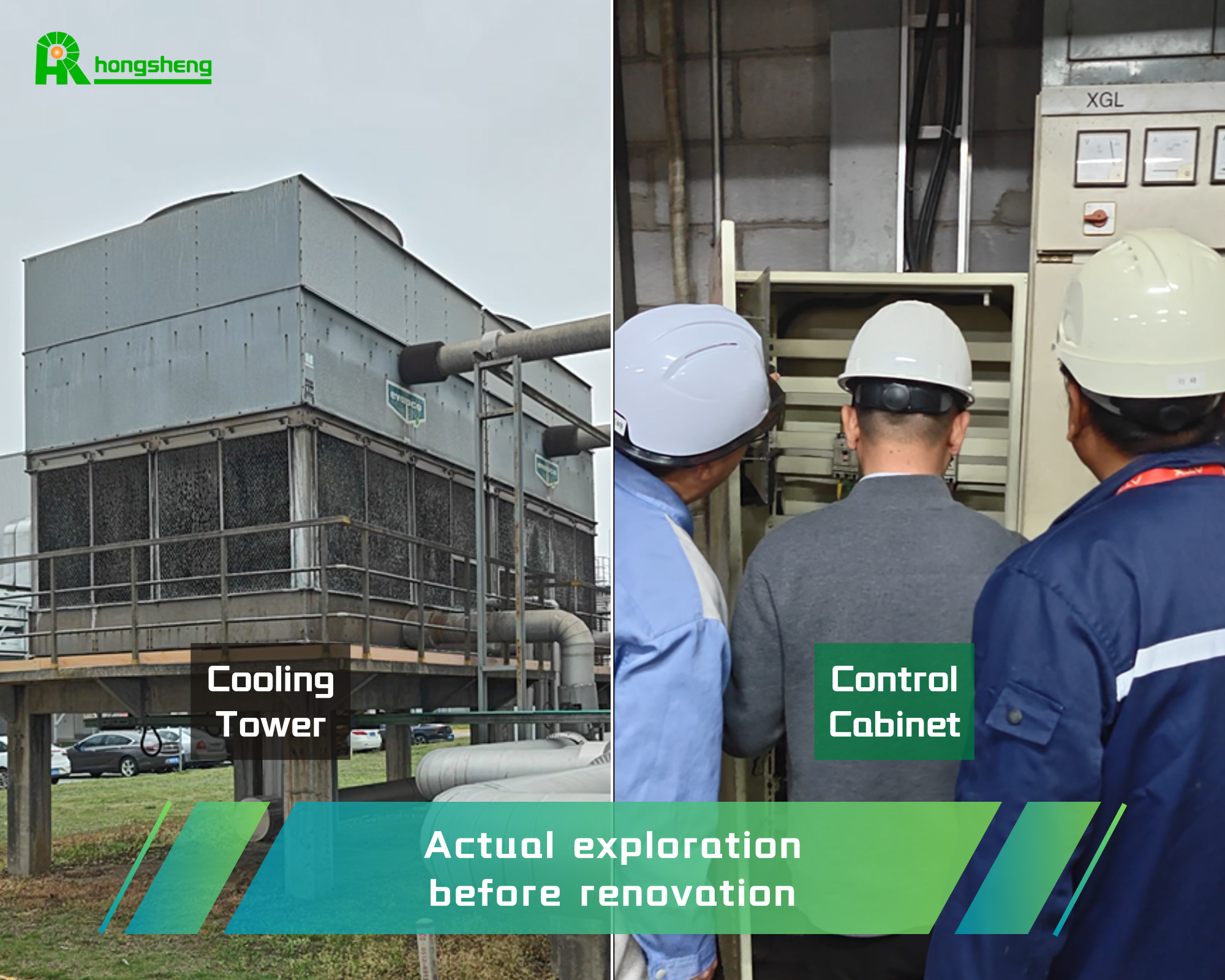
The original cooling tower used three 18.5 kW belt-driven fan systems (55.5 kW total). Over years of operation, several issues became increasingly apparent:
For facilities running 24/7, these issues directly impact operating costs and system reliability.
 |
|
Pic.1 Actual exploration before renovation |
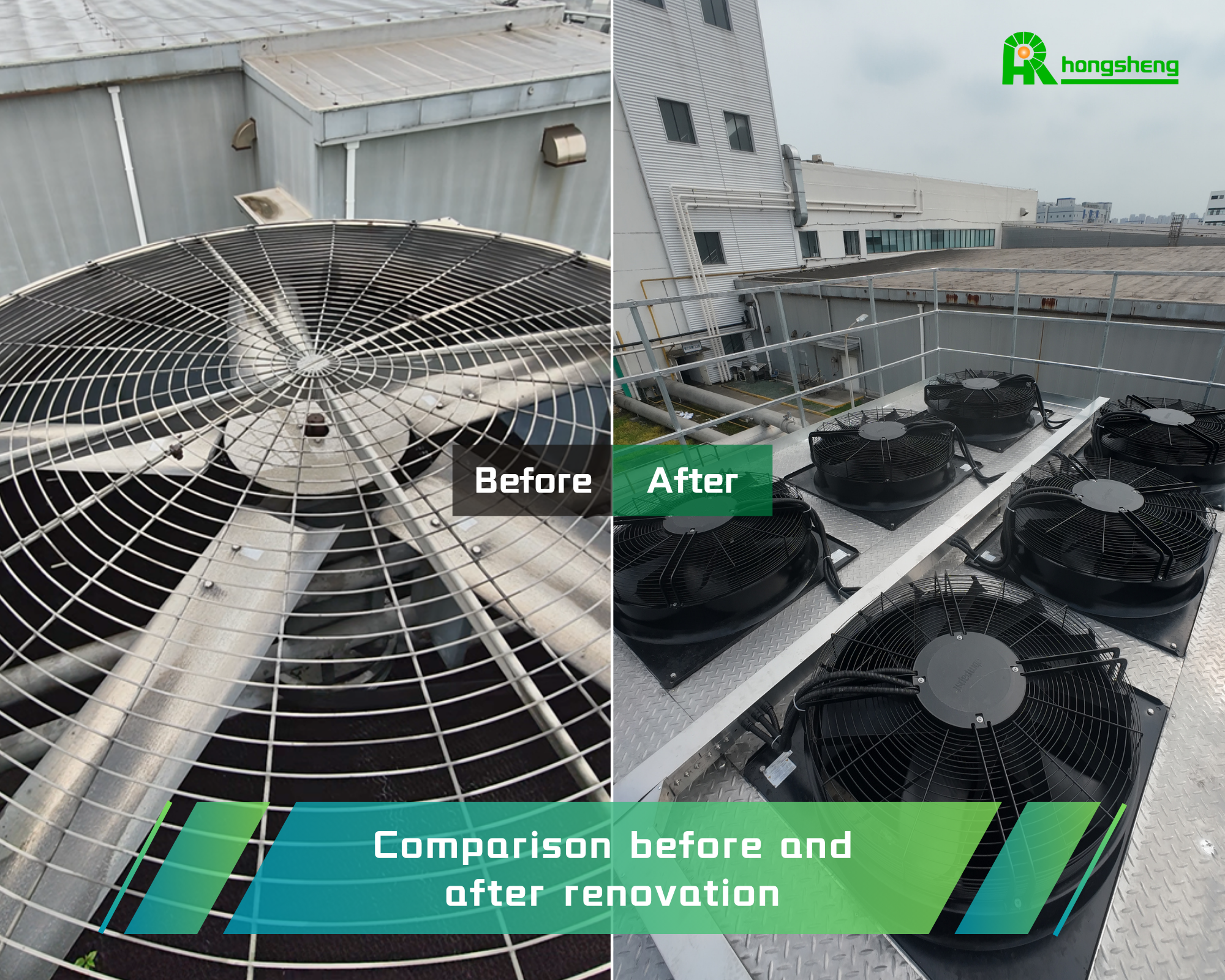
Instead of simply replacing the motors, the retrofit upgraded the entire airflow system with:
The multi-fan design also provides built-in redundancy—if one fan stops, the remaining fans automatically compensate to maintain cooling performance.
 |
|
Pic.2 Comparison before and after renovation |
 |
|
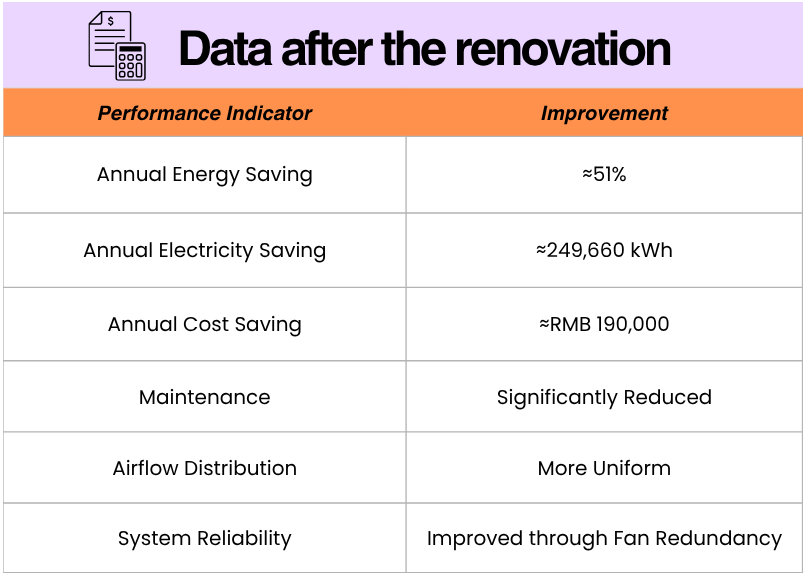
Pic.2 Result based on the project's operating conditions. |
Rather than simply reducing electricity consumption, the project improved the overall efficiency and stability of the cooling system.
The biggest improvement wasn't just lower electricity consumption.
The EC Fan Wall also delivered:
✔ More uniform airflow
✔ Lower noise and vibration
✔ Direct-drive operation with reduced maintenance
✔ Intelligent demand-based control
✔ Higher system reliability for continuous industrial operation
Many industrial cooling towers are still operating with traditional belt-driven fan systems.
As energy costs continue to rise, is it time to rethink the way cooling towers are designed?
If you're evaluating a cooling tower retrofit or exploring EC fan solutions, Beijing Hengrui would be happy to share practical experience from real industrial projects.
 whatsapp


