
 English
 Français
 Deutsch
 Português
 Español
 русский
  한국어
한국어 العربية
 Italiano
 Indonesia
 Schweiz
 Polski
 Nederlands
 ישראל - עברית
 Perzisch
 ไทย
ไทย 日本語
日本語 ኢትዮ-አማርኛ
 Việt Nam
 Kiswahili
 Srpski
 Ελληνικά
 简体中文
简体中文The Biggest Energy Waste in Large Warehouses Isn't the Fan—It's How the Airflow Is Controlled
Large warehouses and retail distribution centers aren't busy all day—but many of their HVAC systems still operate as if they are.
This is one of the most overlooked sources of energy waste in commercial buildings.
Occupancy can fluctuate dramatically throughout the day, yet traditional air handling units (AHUs) often continue delivering the same airflow regardless of actual demand. The result? Higher energy bills, unnecessary equipment wear, and inefficient operation.
A recent AHU retrofit project at a large furniture store and warehouse in Dubai demonstrates why improving HVAC efficiency requires more than simply replacing fans.
The Challenge Wasn't the Fans Alone
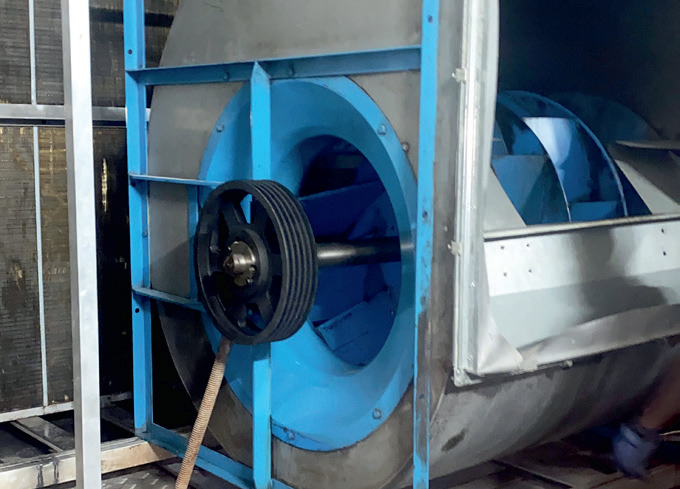
The facility relied on two large AHUs equipped with conventional belt-driven AC fans.
Although the systems were still operating, they faced several common limitations:
- Fixed-speed operation regardless of occupancy
- High maintenance due to belt-driven transmission
- One AHU operating at full load while the other remained idle for extended periods
- Significant energy waste during low-occupancy hours
The issue wasn't insufficient airflow—it was delivering the wrong amount of airflow at the wrong time.
 |
|
Pic.1 Traditional belt-driven AC fans before renovation(Source from:Qey Energy Solutions) |
A Smarter Retrofit Strategy
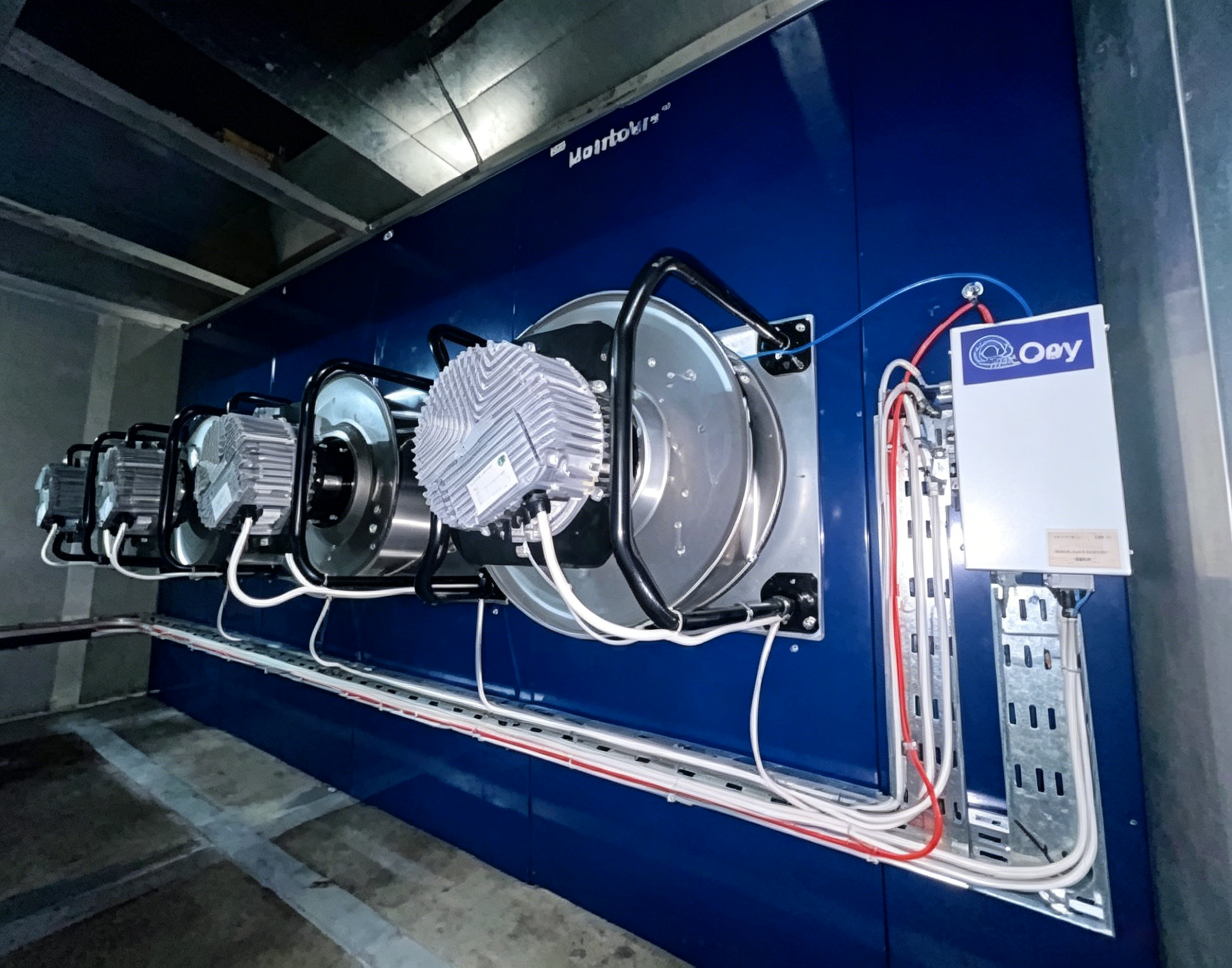
Instead of replacing the entire AHU system, the project upgraded both units with 28 ebm-papst RadiPac EC fans configured as FanGrids.
More importantly, the retrofit went beyond hardware.
By integrating the EC fans with the building management system (BMS) through RS485/MODBUS RTU communication, the control strategy was completely redesigned. Airflow was automatically adjusted based on occupancy and operating schedules, allowing both AHUs to share the load dynamically rather than running one unit continuously at full capacity.
The result was a ventilation system that responded to real building demand—not fixed assumptions.
 |
|
Pic.2 The renovated fan grids(Source from:Qey Energy Solutions) |
More Than Energy Savings
The project achieved an impressive 79% reduction in power consumption, but the benefits extended well beyond lower electricity costs.
 |
|
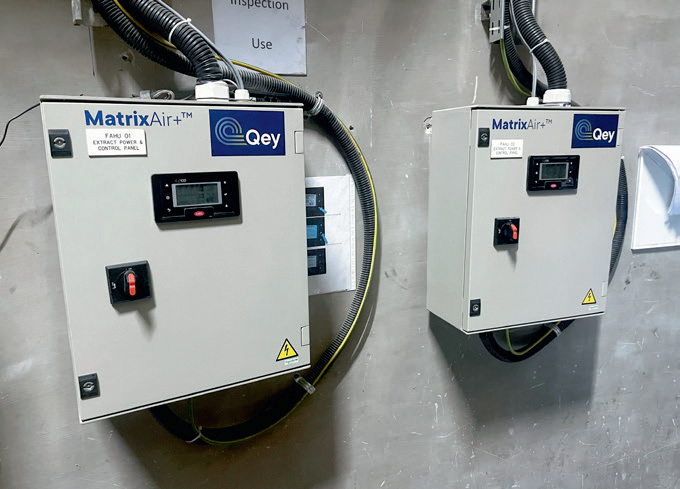
Pic.3 Optimized control system(Source from:Qey Energy Solutions) |
The new system also delivered:
• Demand-based airflow control
• Lower maintenance through direct-drive EC technology
• Improved system reliability with FanGrid redundancy
• Reduced operating noise
• Better long-term operational flexibility
This project highlights an important industry shift: the greatest efficiency gains often come from combining intelligent control strategies with modern EC fan technology—not from replacing equipment alone.
Looking Beyond the Retrofit
As warehouses, logistics centers, and large commercial buildings continue to pursue higher energy efficiency, the focus is shifting from equipment replacement to system optimization.
At Beijing Hengrui, we help customers maximize the performance of existing HVAC systems through application-focused fan selection, airflow optimization, and retrofit engineering. Because every building operates differently, every retrofit should begin with understanding how the system actually performs—not simply replacing components.
Is your AHU delivering the airflow your building needs today—or the airflow it was designed for years ago? We'd love to hear how you're approaching HVAC modernization in your projects.
 whatsapp


