
 English
 Français
 Deutsch
 Português
 Español
 русский
  한국어
한국어 العربية
 Italiano
 Indonesia
 Schweiz
 Polski
 Nederlands
 ישראל - עברית
 Perzisch
 ไทย
ไทย 日本語
日本語 ኢትዮ-አማርኛ
 Việt Nam
 Kiswahili
 Srpski
 Ελληνικά
 简体中文
简体中文45°C Isn't Just a Water Temperature. It's Redefining AI Data Center Cooling
 |
Everyone is talking about liquid cooling for AI data centers.But one of the biggest changes isn't happening inside the server.It's happening outside the building.
As AI computing drives liquid cooling toward 40–45°C warm-water operation, engineers are beginning to rethink one fundamental question:
How should data centers reject heat most efficiently?
This shift isn't simply about adopting a new cooling technology. It's changing the way thermal management systems are designed—from cooling equipment selection to overall heat rejection architecture.
Why 45°C Matters
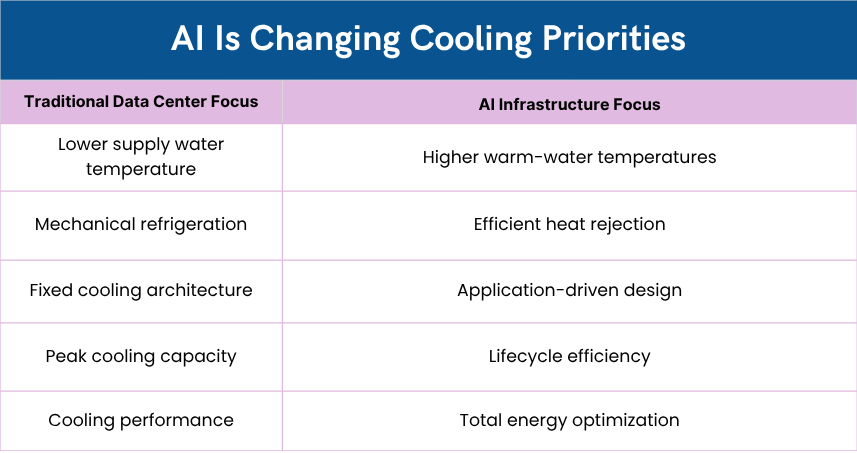
Traditional data centers typically rely on lower supply water temperatures, which often require chillers or cooling towers to reject heat efficiently.AI infrastructure is changing that equation.
With warm-water liquid cooling operating at around 40–45°C, the temperature difference between the cooling water and ambient air becomes much larger. In many climates, this creates new opportunities to reject heat more efficiently—sometimes reducing the need for complex mechanical refrigeration.
The result isn't that one cooling technology replaces another.Instead, engineers now have more options to optimize cooling based on project requirements, local climate, water availability, and lifecycle cost.
AI Is Changing Cooling Priorities
The conversation is no longer simply about keeping servers cold.It's about moving heat away from AI hardware in the most efficient and sustainable way possible.
 |
|
Pic.1 Al Is Changing Cooling Priorities |
This shift is encouraging designers to evaluate cooling systems from a broader thermal management perspective rather than focusing on individual pieces of equipment.
The Growing Importance of Air-Side Heat Rejection
As warm-water cooling becomes more common, air-side heat rejection equipment is taking on a more important role.
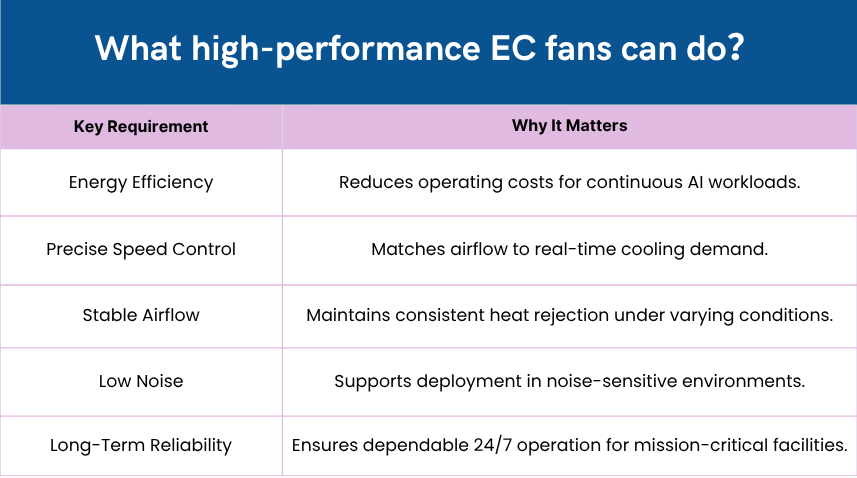
Whether the project uses dry coolers, hybrid cooling systems, or optimized heat exchangers, one component has a direct impact on overall performance: The fan system.
High-performance EC fans help improve:
 |
|
Pic.2 What high-performance EC fans can do? |
This is one reason why ebm-papst EC fan technology is increasingly adopted in advanced thermal management equipment. With high motor efficiency, intelligent speed control, and excellent part-load performance, EC fans help maximize heat rejection efficiency while minimizing energy consumption.
The Bigger Picture
Perhaps the biggest lesson from the rise of AI infrastructure is this:
The future of thermal management isn't about choosing between cooling towers, dry coolers, or liquid cooling.It's about selecting the right cooling architecture for each application.
As AI workloads continue to grow, engineers will increasingly evaluate solutions based on:
·Energy efficiency
·Water consumption
·Operational flexibility
·System reliability
·Lifecycle value
The most successful designs will be those that balance all of these factors—not just cooling capacity.
Looking Ahead
AI is redefining the way we think about thermal management.
And 45°C is more than just a water temperature.
It's a signal that data center cooling is entering a new phase—one where efficiency, intelligent control, and optimized heat rejection become just as important as the computing power itself.
Industry Discussion
As AI infrastructure continues to evolve, what do you believe will have the greatest impact on the next generation of thermal management?
·Higher energy efficiency?
·Smarter control strategies?
·Reduced water consumption?
·More flexible heat rejection architectures?
At Beijing Hengrui, we partner with dry cooler manufacturers, AI data center contractors, liquid cooling system suppliers, and thermal management engineers to deliver high-efficiency EC fan solutions for demanding cooling applications. Whether you're developing new AI infrastructure or optimizing an existing heat rejection system, we're always happy to exchange engineering insights and explore practical solutions together.
 whatsapp


