
 English
 Français
 Deutsch
 Português
 Español
 русский
  한국어
한국어 العربية
 Italiano
 Indonesia
 Schweiz
 Polski
 Nederlands
 ישראל - עברית
 Perzisch
 ไทย
ไทย 日本語
日本語 ኢትዮ-አማርኛ
 Việt Nam
 Kiswahili
 Srpski
 Ελληνικά
 简体中文
简体中文How an Electronics Manufacturer Reduced MAU Energy Consumption by Up to 36% with an EC Fan Wall Retrofit
In electronics manufacturing, Make-Up Air Units (MAUs) often operate around the clock to maintain stable indoor air quality and production environments.
While many facilities continue to rely on traditional belt-driven fan systems, rising energy costs and increasing maintenance requirements are prompting manufacturers to rethink their HVAC strategy.
Recently, Beijing Hengrui completed a feasibility study for an EC fan wall retrofit on two MAU systems in an electronics manufacturing facility.
The objective was straightforward:Maintain the required airflow while reducing energy consumption and simplifying long-term maintenance.
The Challenge
The existing MAUs were equipped with conventional belt-driven centrifugal fans powered by AC motors.
 |
|
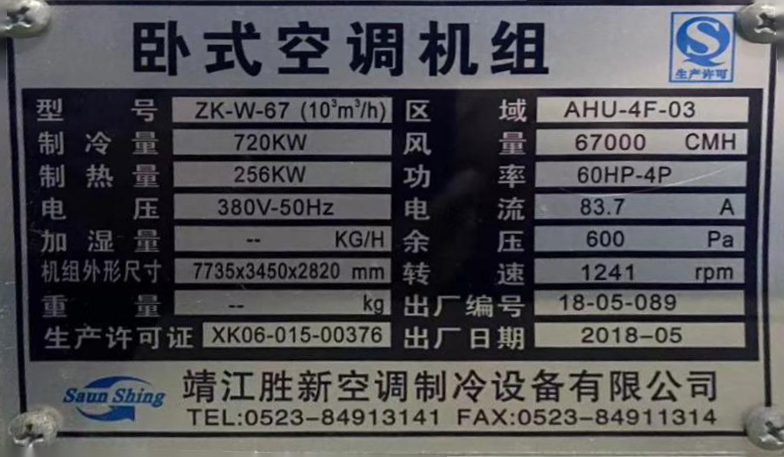
Pic.1 Equipment nameplate before renovation |
Although the systems were operating normally, they presented several common challenges:
• High energy consumption
For facilities running 24/7, these issues translate into higher operating costs year after year.
The Retrofit Solution
Instead of replacing the entire MAU, the proposed upgrade focused on replacing the original fan assemblies with high-efficiency EC fan wall systems.
The retrofit maintained the original airflow requirements while introducing multiple EC backward-curved centrifugal fans.
 |
|
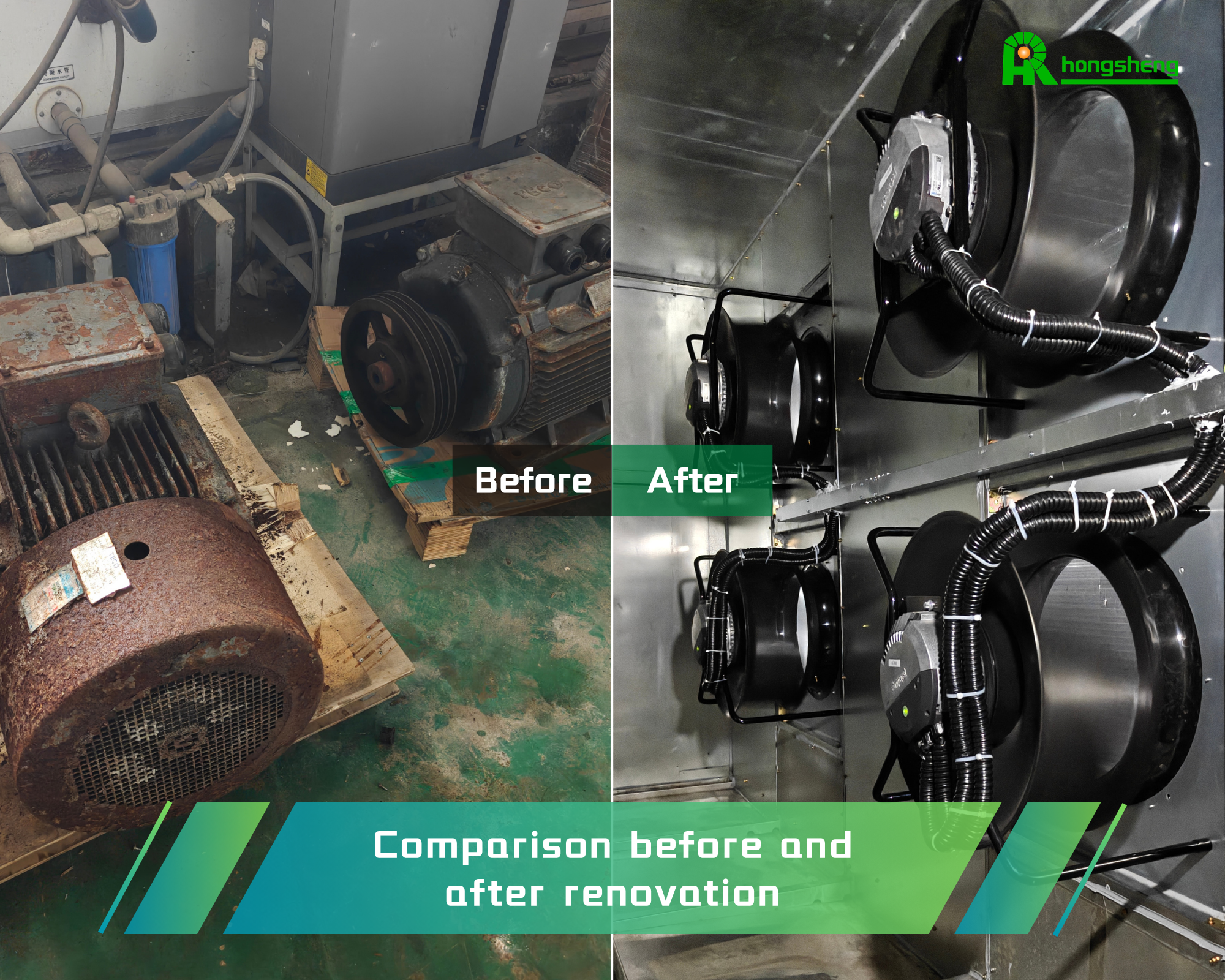
Pic.2 Comparison before and after renovation |
Compared with traditional belt-driven systems, EC fan walls offer:
Performance Results
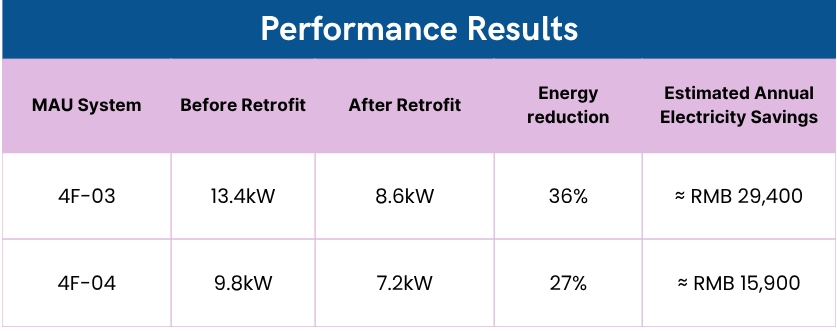
The engineering evaluation showed significant energy-saving potential while maintaining the original airflow requirements.
 |
|
Pic.3 Estimated savings (based on continuous 24/7 operation and local electricity pricing) |
Beyond Energy Savings
The benefits of EC fan wall retrofits extend well beyond lower electricity consumption.
The upgrade also helps improve:
Because the fan wall uses multiple EC fans instead of a single belt-driven assembly, the system also provides greater operational flexibility and easier servicing.
Why More Manufacturers Are Upgrading MAUs
For many industrial facilities, HVAC systems are no longer viewed as supporting equipment.
They have become an important part of overall operational efficiency.
As electricity prices continue to rise and manufacturers pursue smarter, lower-maintenance facilities, upgrading existing MAUs with EC fan wall technology offers a practical way to improve performance without replacing the entire air handling system.
Let's Discuss
Are your MAU or AHU systems still relying on traditional belt-driven fans?
Have you evaluated how much energy and maintenance cost an EC fan wall retrofit could save over the equipment's lifecycle?
At Beijing Hengrui, we work with electronics manufacturers, HVAC OEMs, cleanroom contractors, and industrial facility operators to optimize airflow performance through EC fan retrofit solutions. If you're considering an MAU or AHU upgrade, we'd be happy to exchange practical engineering insights from real-world retrofit projects.
 whatsapp


