
 English
 Français
 Deutsch
 Português
 Español
 русский
  한국어
한국어 العربية
 Italiano
 Indonesia
 Schweiz
 Polski
 Nederlands
 ישראל - עברית
 Perzisch
 ไทย
ไทย 日本語
日本語 ኢትዮ-አማርኛ
 Việt Nam
 Kiswahili
 Srpski
 Ελληνικά
 简体中文
简体中文Beyond Airflow: Why Power Factor Matters in Modern Data Center Cooling
When engineers evaluate cooling fans, the discussion usually focuses on:Airflow/Static Pressure/Efficiency/Noise.These parameters are important.
But as data centers become larger, denser, and more power-intensive, another electrical metric deserves more attention:Power Factor.
Although often overlooked in cooling system discussions, power factor affects how efficiently electrical energy is delivered and utilized throughout a facility.For modern data centers, cooling is no longer only about moving air.It is also about using energy intelligently.
What Is Power Factor?
Simply put, Power Factor (PF) measures how effectively electrical power is converted into useful work.
A higher power factor means electrical energy is utilized more efficiently, while a lower power factor can result in higher current demand and additional electrical losses.
In large-scale facilities operating thousands of cooling devices 24/7, these differences can impact overall system performance.
Why Does Power Factor Matter for Data Centers?
The electrical path inside a data center is highly interconnected:Grid → UPS → PDU → Cooling System → Fan
With the rapid growth of:
data centers are paying more attention to power quality and electrical efficiency.
Power Factor becomes part of a bigger question:How efficiently can the entire facility use the power it receives?
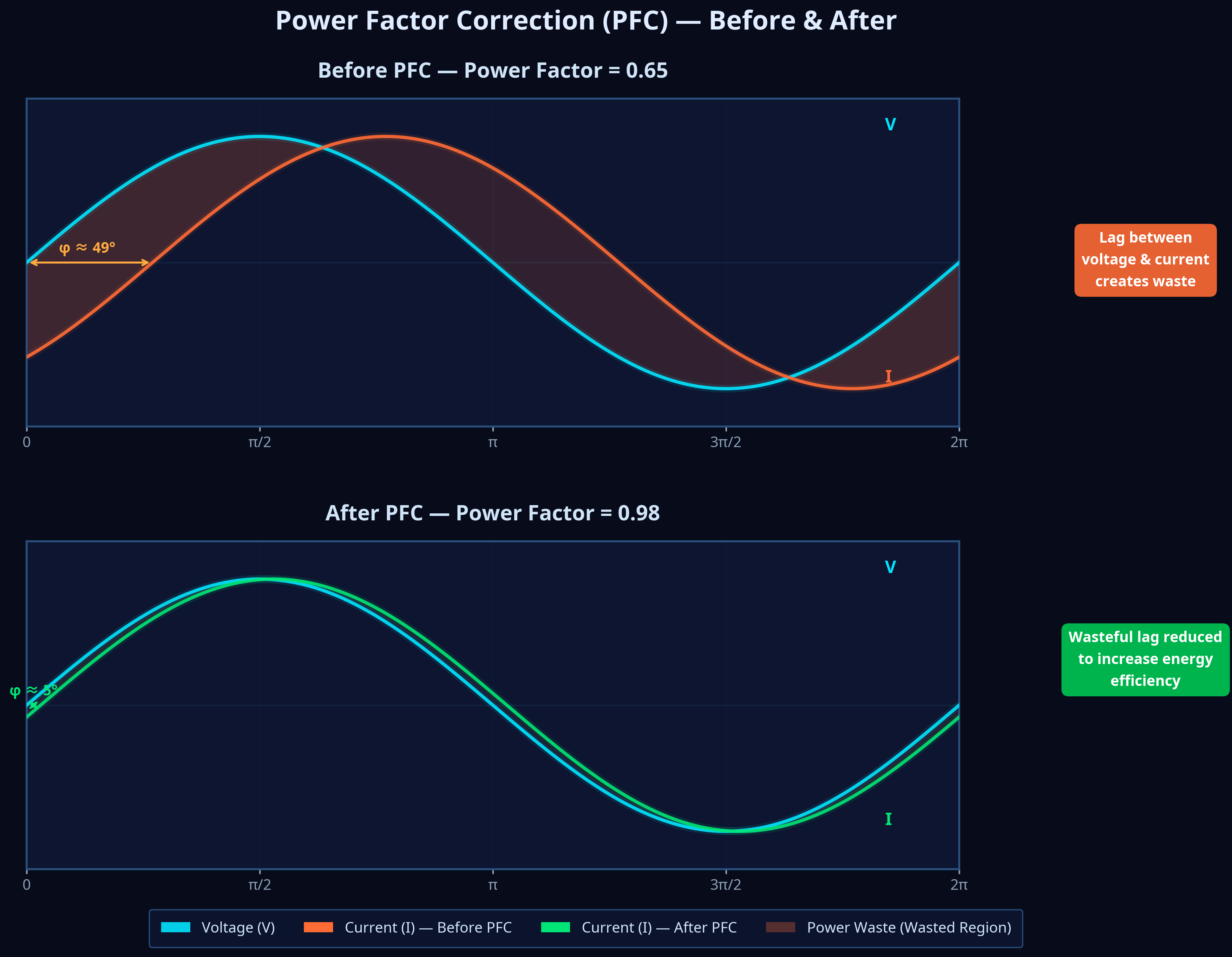 |
|
Pic.1 PFC before and after comparison |
Beyond Fan Efficiency: The Evolution of EC Technology
Traditional fan selection often focuses on:“How much air can the fan move?”
Modern cooling design requires another question:“How efficiently does the fan use electrical power?”
Advanced EC fan technology is evolving beyond high efficiency and variable speed control.Many modern EC solutions integrate features such as:
Active PFC helps optimize electrical performance and improve compatibility with modern power systems.
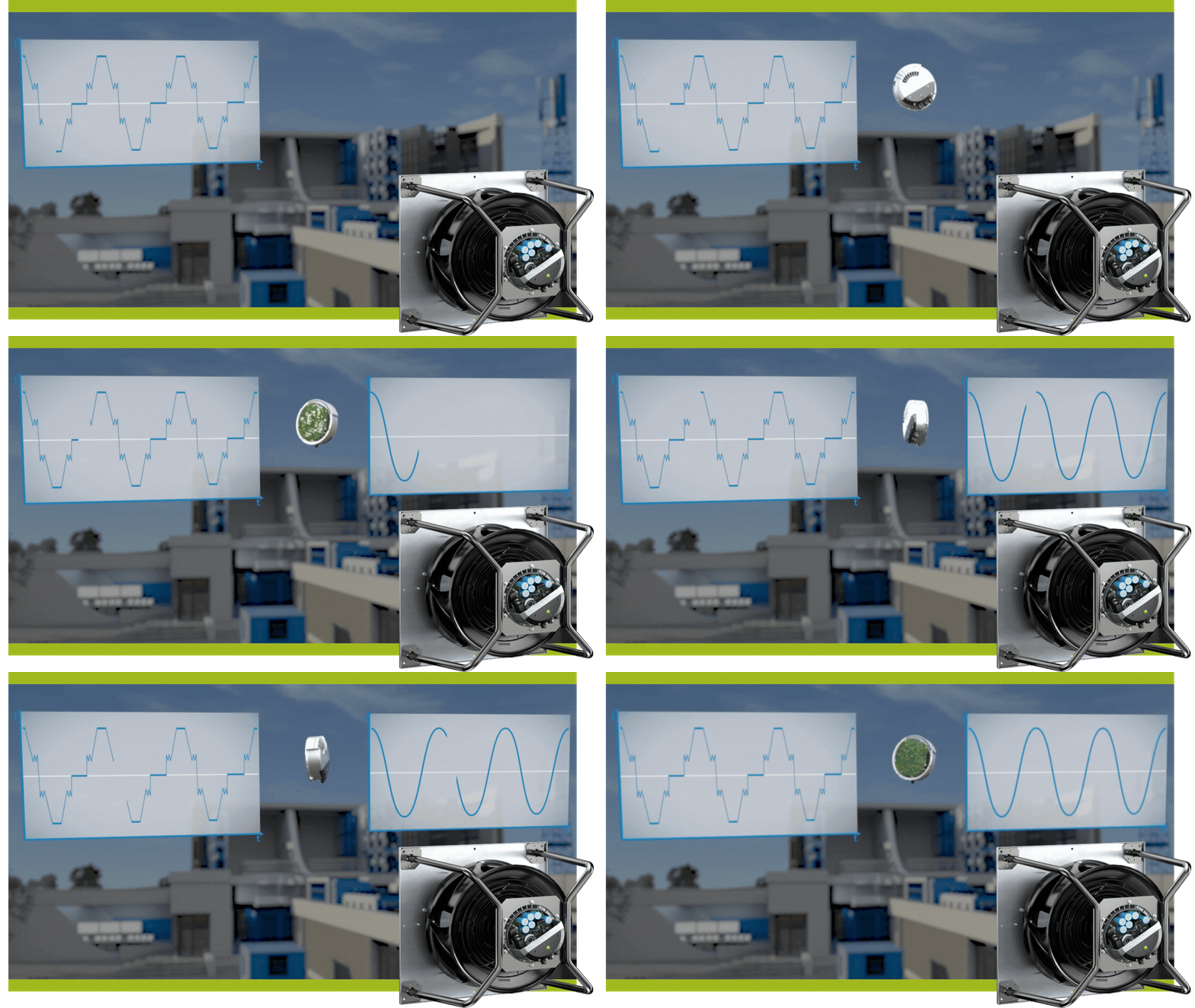 |
|
Pic.2 In-built active PFC in EC fan by ebm-papst(Source from:ebm-papst) |
What Should Engineers Consider When Selecting Cooling Fans?
Airflow and pressure remain essential.
But future-oriented data center cooling design should also consider:
Mechanical Performance:Airflow/Static Pressure/Efficiency/Noise
Electrical Performance:Power Factor/Harmonics/THD/Grid Compatibility
Because a cooling fan is not just an air-moving device.It is part of the facility’s complete energy system.
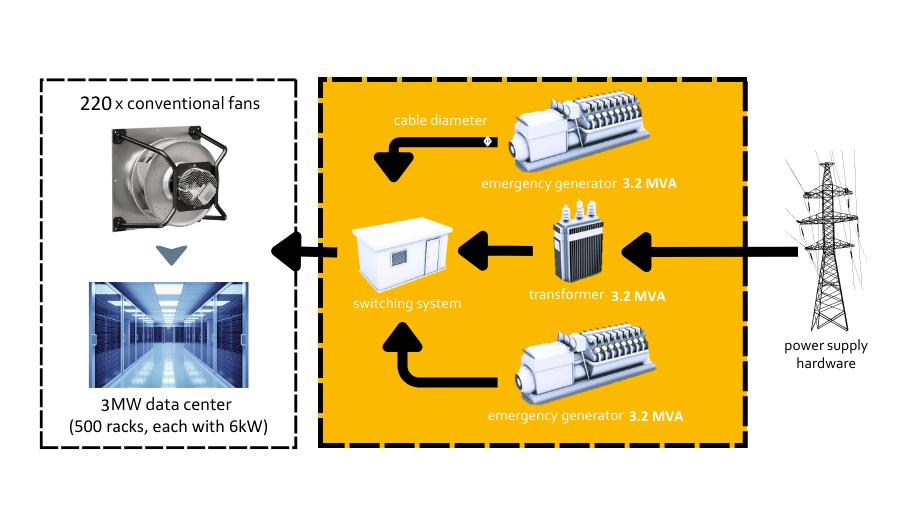 |
|
Pic.3 In-built Active PFC Enables Energy & Space Savings(Source from:ebm-papst) |
The Future of Data Center Cooling
As AI workloads continue to grow, cooling systems must become more efficient, intelligent, and electrically optimized.
The next generation of fan selection will not only be about:
How much air can a fan move?
It will also be about:
How efficiently can a fan use energy?
Understanding power factor today can help engineers design more reliable and sustainable data center cooling systems tomorrow.
At Beijing HENGRUI, we continue to explore how advanced EC fan technologies can help data center cooling systems achieve better efficiency, reliability, and electrical performance.
If you are evaluating cooling upgrades, new data center projects, or improving existing HVAC systems, we welcome technical discussions and experience sharing with engineers worldwide.
 whatsapp


