
 English
 Français
 Deutsch
 Português
 Español
 русский
  한국어
한국어 العربية
 Italiano
 Indonesia
 Schweiz
 Polski
 Nederlands
 ישראל - עברית
 Perzisch
 ไทย
ไทย 日本語
日本語 ኢትዮ-አማርኛ
 Việt Nam
 Kiswahili
 Srpski
 Ελληνικά
 简体中文
简体中文Every Successful AHU Retrofit Starts with the Right Assessment
Many HVAC retrofit projects begin with one simple question:"Which fan should we replace it with?"In reality, that's not where a successful retrofit starts.It starts with understanding the existing system.Without accurate site data, even the best EC fan may not be the right solution.
Take one of our recent AHU assessment projects for a pharmaceutical manufacturer as an example. Before recommending any upgrade, our engineering team first conducted a comprehensive site evaluation, including:
Because every successful retrofit starts with the right assessment—not just the right fan.
Step 1 — Understanding the Existing AHU System
Before recommending any retrofit solution, we first understand the existing equipment.
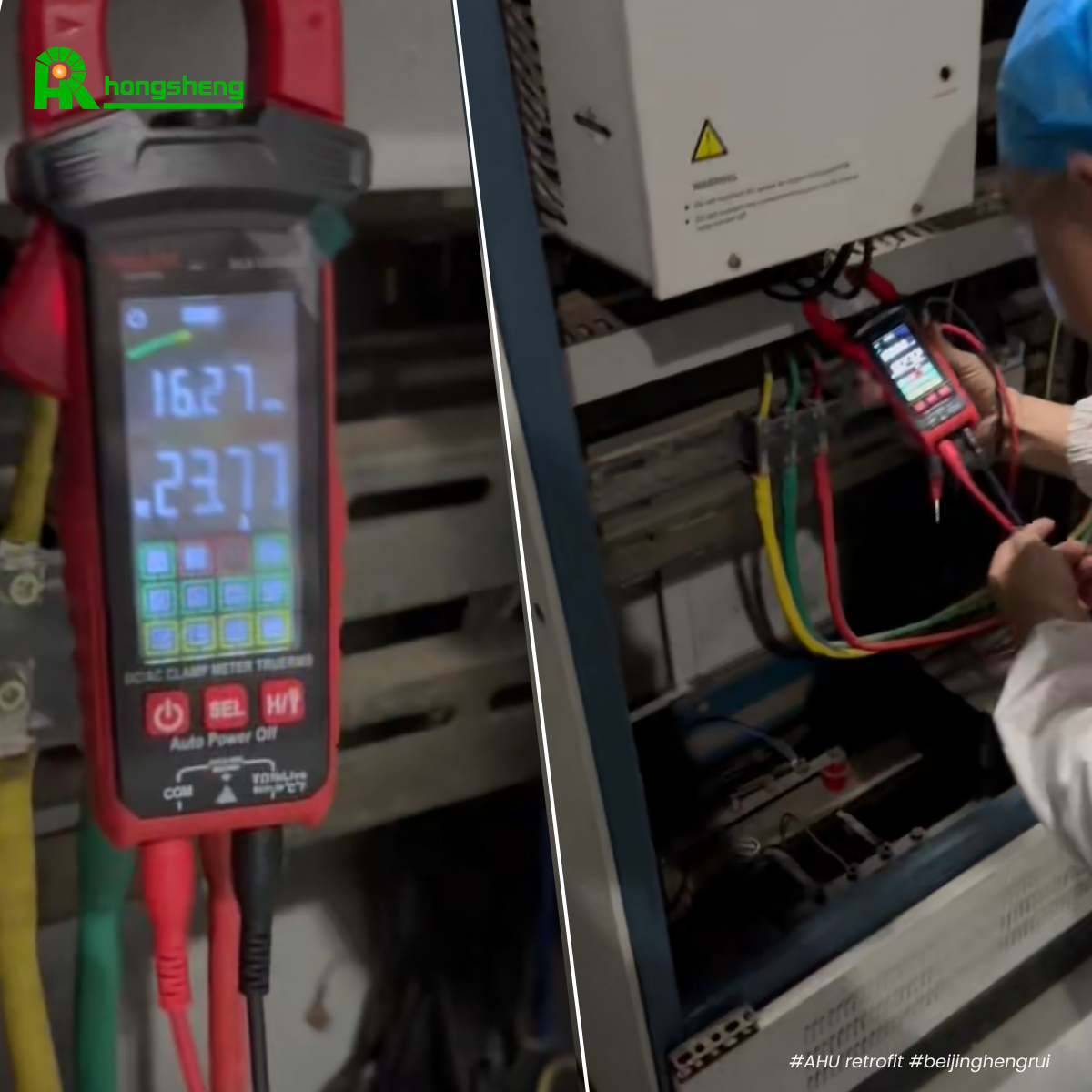
A fan replacement is not simply a mechanical swap.The fan operates as part of the entire airflow system.During the site assessment, our engineers check:
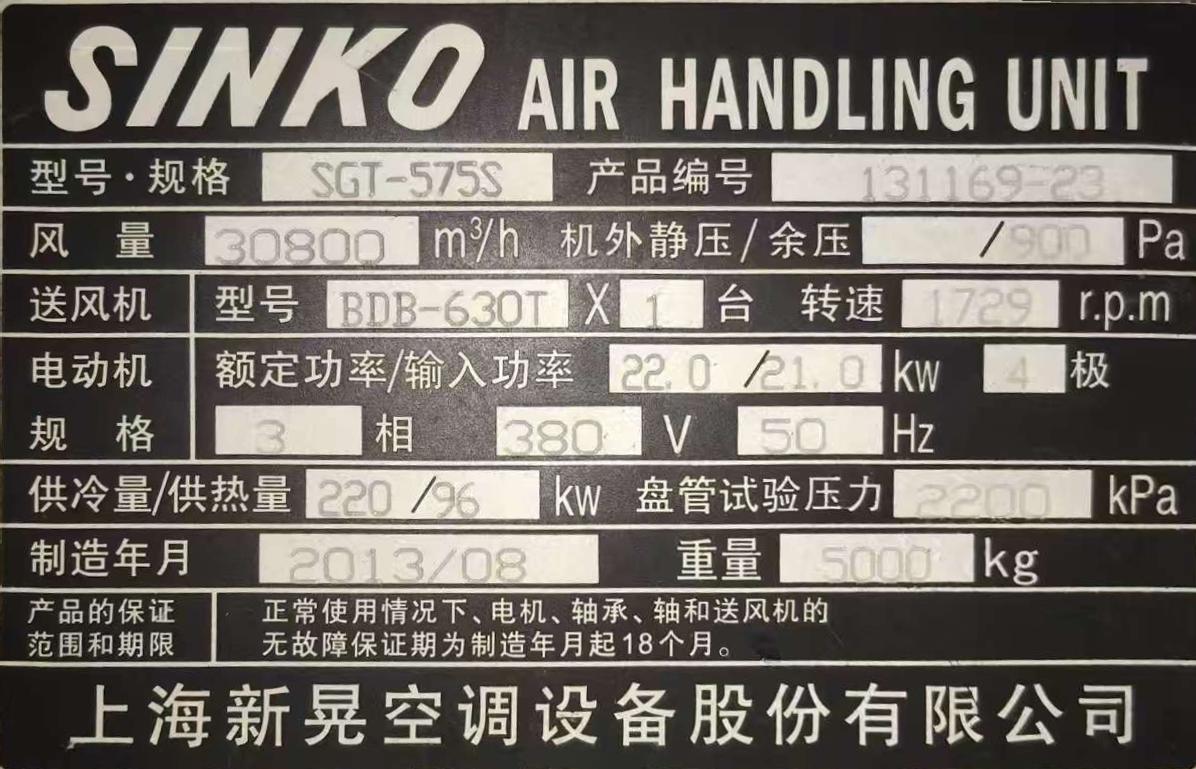
The nameplate provides valuable information about the original design conditions, including airflow, static pressure, motor power, and operating parameters.
 |
|
Pic.1 Engineer inspecting AHU system |
Step 2 — Collecting Real Operating Data
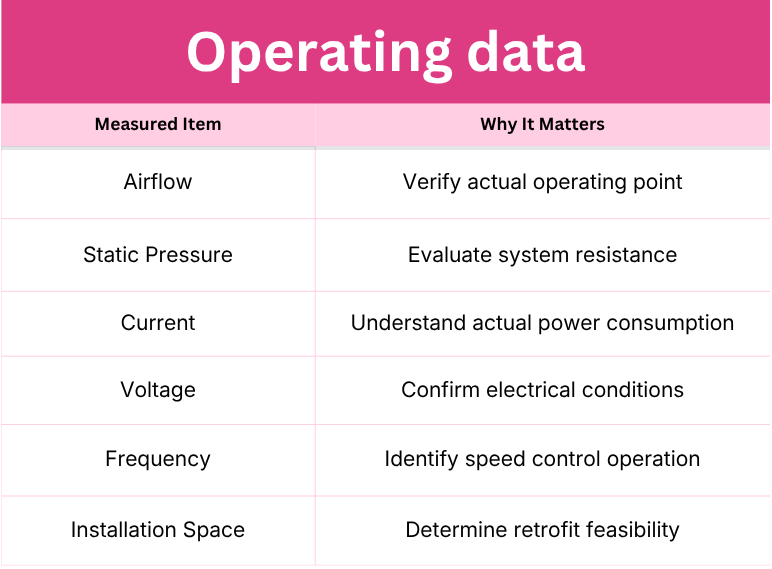
Equipment documentation tells us the original design.But actual measurements tell us how the system performs today.During the assessment, we collect operating data including:
 |
|
Pic.2 Operating data during assessment |
 |
|
Pic.3 AHU equipment nameplate information |
Step 3 — Engineering Analysis Before Solution Design
Data collection is only the beginning.
The most important step is understanding what the data means.
In many existing AHU systems, engineers may identify:
Instead of focusing on replacing individual components, we evaluate the complete airflow system.The goal is to identify where efficiency, reliability, and operational improvements can be achieved.
Step 4 — Developing the Right Retrofit Strategy
After understanding the system performance, we can define the appropriate upgrade direction.
For many aging AHU systems, an EC Fan Wall solution can provide advantages such as:
Higher efficiency:Direct-drive EC motors eliminate belt transmission losses.
Better control:Variable-speed control allows the system to match real demand.
Lower maintenance:Fewer mechanical components reduce maintenance requirements.
Improved reliability:Modular fan design provides operational flexibility.
The retrofit strategy is not selected because EC fans are a new technology.
It is selected because the engineering analysis shows it is the right fit.
Expected Performance Improvements
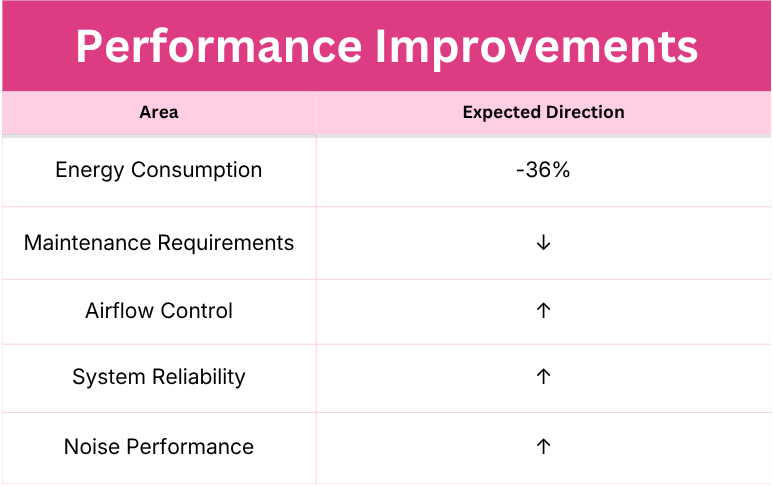
At this stage, we focus on engineering evaluation and expected improvements.Potential improvement areas include:
 |
|
Pic.4 Performance Improvements |
Actual performance improvements will be verified after project completion.
Conclusion
Good Retrofit Decisions Start with Good Data.
Every AHU retrofit project is unique. That is why we don't begin with product recommendations. We begin with engineering measurements. By understanding the existing system first, we can design retrofit solutions that improve efficiency, reliability, and long-term operation. Because a successful HVAC upgrade starts with accurate information.
This approach—assess, measure, analyze, and then design—ensures that every recommendation is grounded in real data, not assumptions. For teams evaluating an AHU retrofit, the process always begins with one question: What does the system actually look like today?
At Beijing Hengrui, we support HVAC manufacturers, industrial facility owners, EPC contractors, and consulting engineers with:
• AHU & MAU retrofit assessment
• EC fan upgrade evaluation
• Airflow performance analysis
• Fan selection support
• Global industrial cooling solutions
If you are asking how to start an AHU retrofit, the answer is simple: begin with a thorough site assessment.
When should you consider retrofitting your AHU? Look for signs such as high energy consumption, frequent belt or bearing replacements, or a lack of variable-speed control to match real demand.
What information do you need before selecting a new fan solution? Collect the existing nameplate data, actual airflow and static pressure readings, power consumption, and installation space constraints. These data points form the foundation of any reliable retrofit recommendation.
 whatsapp


