
 English
 Français
 Deutsch
 Português
 Español
 русский
  한국어
한국어 العربية
 Italiano
 Indonesia
 Schweiz
 Polski
 Nederlands
 ישראל - עברית
 Perzisch
 ไทย
ไทย 日本語
日本語 ኢትዮ-አማርኛ
 Việt Nam
 Kiswahili
 Srpski
 Ελληνικά
 简体中文
简体中文PWM vs 0–10V vs Modbus: How to Select the Right Fan Control Method for EC and DC Fans
For modern HVAC systems, industrial equipment, control cabinets, and automation applications, selecting the right fan is not only about airflow and pressure.
The control method is equally important.
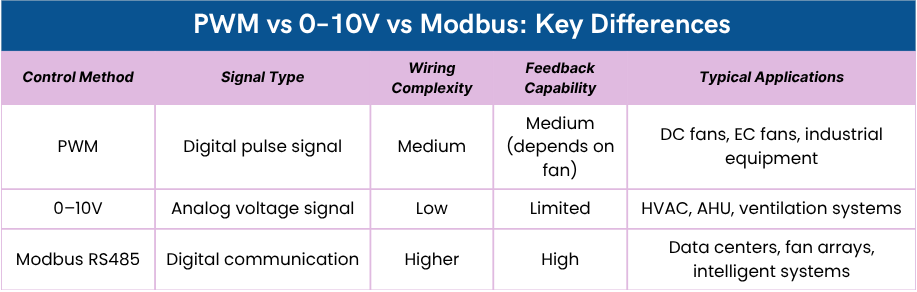
Today, EC and DC fans commonly support three control methods: PWM, 0–10V, and Modbus RS485. Although all three can adjust fan speed, they have significant differences in signal type, wiring complexity, feedback capability, and application scenarios.
Understanding these differences helps engineers avoid wiring mistakes and improve system reliability.
 |
|
Pic.1 Key Differences Among PWM vs 0–10V vs Modbus |
PWM Control: Precise Speed Adjustment Through Digital Signals
PWM (Pulse Width Modulation) controls fan speed by changing the duty cycle of a digital pulse signal.
The main factors include:
Frequency – determines the signal cycle
Voltage level – defines signal amplitude
Duty cycle – directly affects the fan speed command
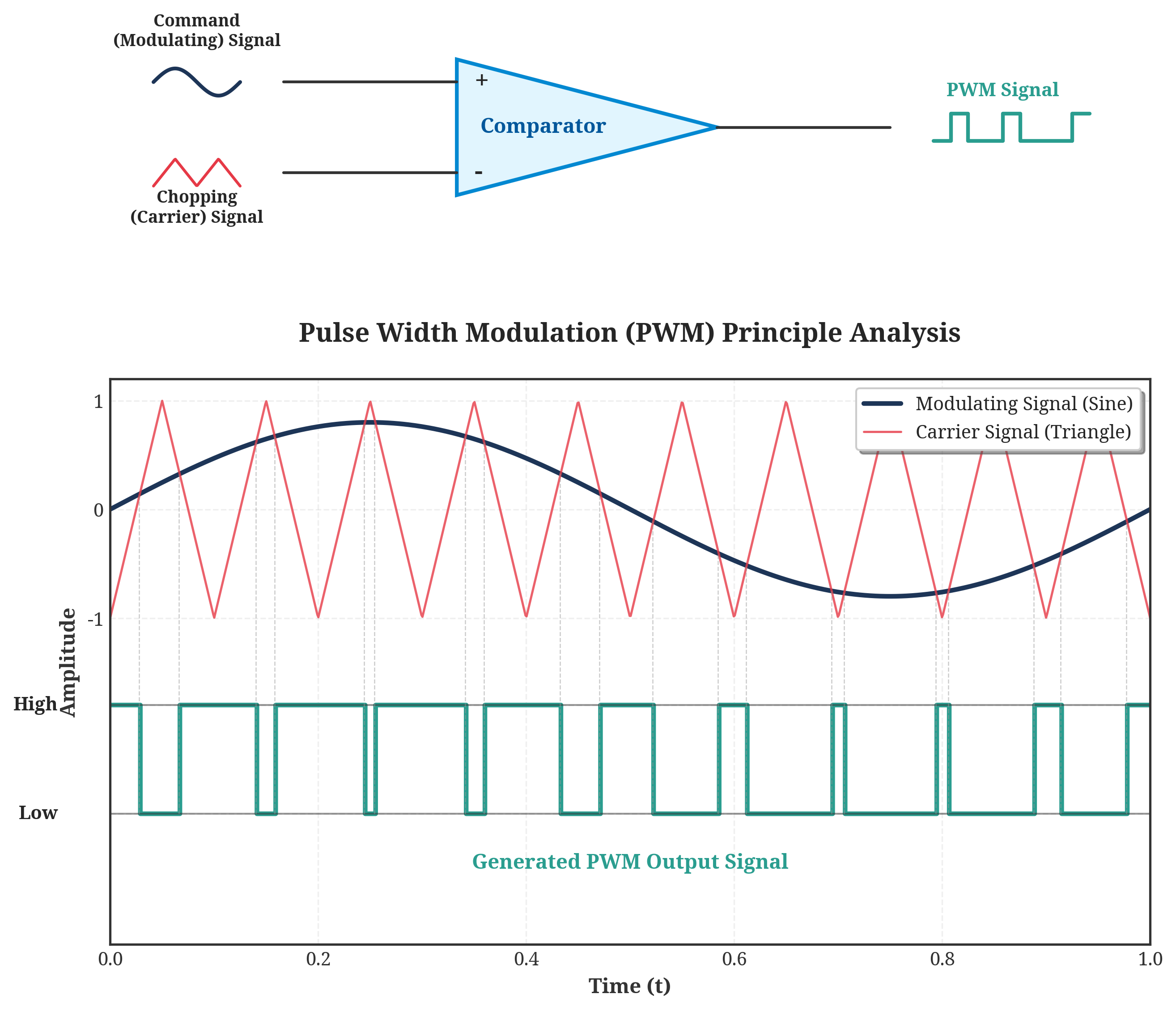 |
Pic.2 PWM control |
PWM is widely used because it provides accurate speed control and smooth adjustment.
However, one common misunderstanding is:
A fan supporting PWM does not mean any PWM signal can be connected directly.
Different manufacturers may define PWM inputs differently, including:
Incorrect wiring may result in:
Always check the manufacturer's wiring definition before commissioning.
Why Can PWM Speed Response Be Reversed?
If increasing the PWM duty cycle decreases fan speed, engineers should check:
1. Control Logic
Some fans use:Higher duty cycle = higher speed
while others may use:Higher duty cycle = lower speed
2. Wiring Connection
Common mistakes include:
3. Controller Configuration
PLC or controller software may have an inversion setting that reverses the output logic.
0–10V Control: Simple Analog Integration
0–10V control adjusts fan speed through an analog voltage signal.
Typical operation:
Lower voltage → lower speed
Higher voltage → higher speed
Its biggest advantage is simplicity, making it common in HVAC and building automation systems.
 |
|
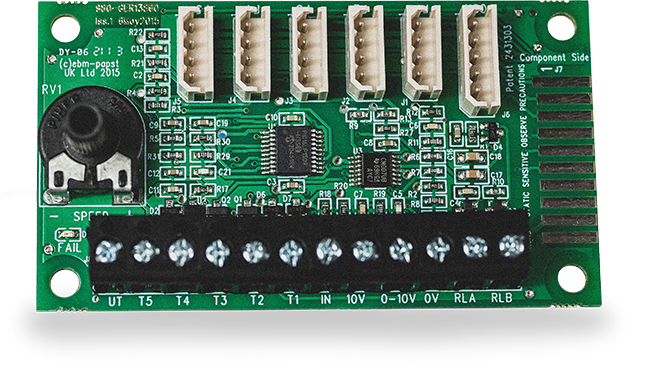
Pic.3 ebm-papst 0-10V control module |
However, engineers should consider:
Signal Reference
The fan and controller need a correct common reference point. Poor grounding can cause unstable speed control.
Signal Quality
Long cables or electrical noise from motors and inverters may affect signal accuracy.
Isolation
For industrial environments, isolated signal interfaces may be necessary to protect equipment and improve stability.
Modbus RS485: Intelligent Control and Monitoring
Unlike PWM and 0–10V, Modbus provides two-way communication between the controller and fan.
Engineers can:
Modbus is especially suitable for:
When dozens of fans need centralized management, Modbus provides much more flexibility than traditional analog control.
 |
|
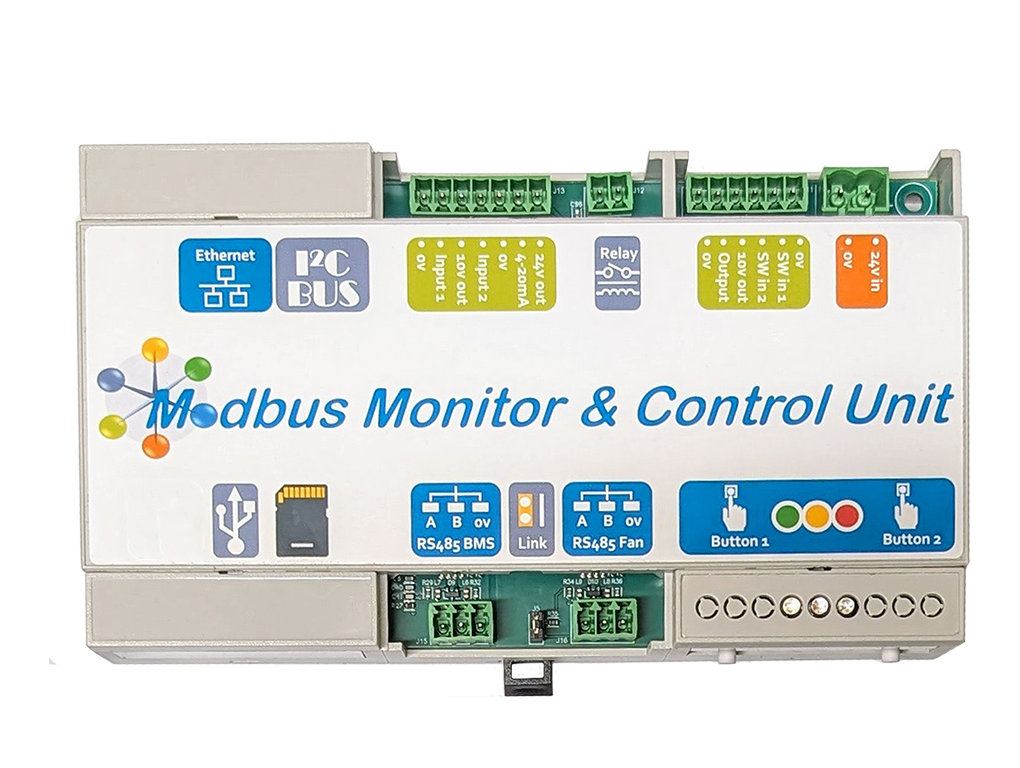
Pic.4 ebm-papst Modbus Monitor & Control Unit (MMCU) |
How to Choose the Right Control Method?
Choose PWM when:
✔ Precise speed control is required
Choose 0–10V when:
✔ Simple integration is needed
Choose Modbus when:
✔ Multiple fans need management
Final Thoughts
PWM, 0–10V, and Modbus are not just different wiring methods—they represent different levels of system control.
For engineers designing EC fan systems, industrial cooling equipment, and automation solutions, selecting the correct control method at the beginning can significantly reduce commissioning problems.
A reliable fan solution depends not only on motor performance, but also on how effectively the fan communicates with the entire system.
 whatsapp


