
 English
 Français
 Deutsch
 Português
 Español
 русский
  한국어
한국어 العربية
 Italiano
 Indonesia
 Schweiz
 Polski
 Nederlands
 ישראל - עברית
 Perzisch
 ไทย
ไทย 日本語
日本語 ኢትዮ-አማርኛ
 Việt Nam
 Kiswahili
 Srpski
 Ελληνικά
 简体中文
简体中文Case Study: Upgrading an Aging Ventilation System with EC FanGrid Technology
When an industrial ventilation system has been operating for more than a decade, the biggest challenge is not always capacity.It is reliability, maintenance, and rising operating costs.
A recent retrofit project at a manufacturing facility in Germany is a good example.
After approximately 15 years of operation, the existing ventilation system was becoming increasingly difficult to maintain. The original centrifugal fans were driven by IE4 motors through V-belts, resulting in mechanical transmission losses and increasing maintenance requirements. More importantly, a failure of a single fan could bring the entire ventilation system to a standstill.
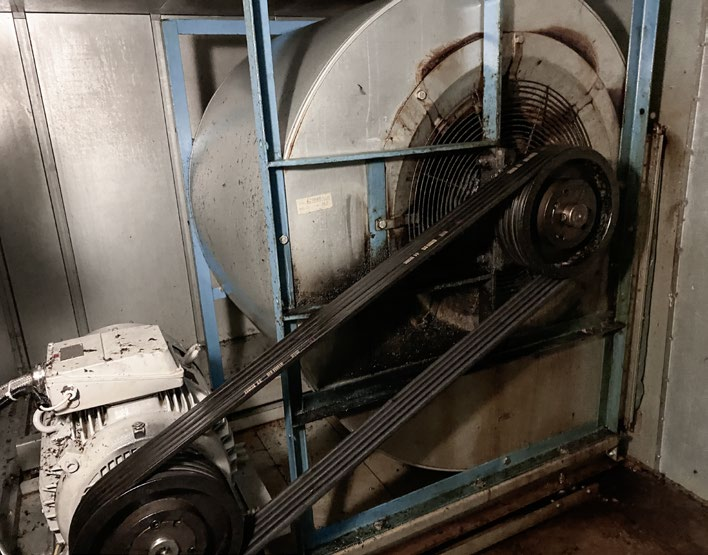
Pic.1 The efficiency of belt transmission is relatively low, and there is a large space for renovation(Source|AIRnorm GmbH)
For a production environment where ventilation was directly connected to process-air extraction, this was more than a maintenance issue—it was a production continuity risk.
The Retrofit Strategy
Instead of replacing the complete ventilation system, the project focused on modernizing the fan section.
The original AC fan configuration was replaced with 10 RadiPac C EC centrifugal fans arranged in two FanGrids—one for supply air and one for exhaust air. The fans were installed in custom aluminum frames, providing a compact and modular solution.
The system also incorporated Modbus-based control, allowing operating parameters to be monitored and adjusted without requiring major modifications to the existing control architecture.
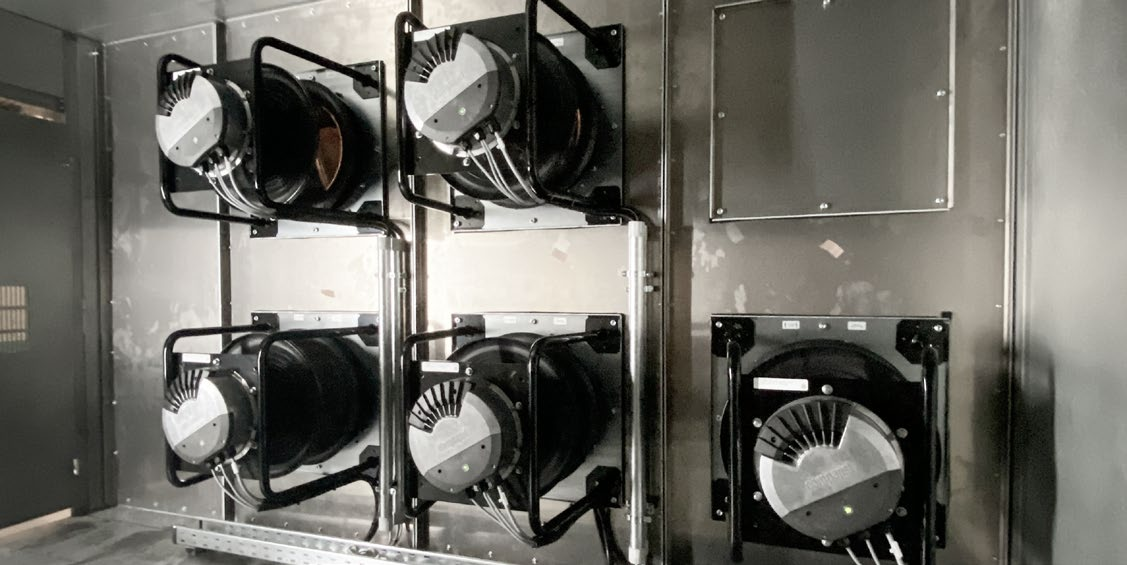
Pic.2 The FanGrid has been designed so that an additional fan can be easily installed at any time(Source|AIRnorm GmbH)
The Results
Post-retrofit measurements confirmed approximately 30% energy savings, equivalent to around 54,000 kWh per year. The project also achieved a payback period of approximately three years.
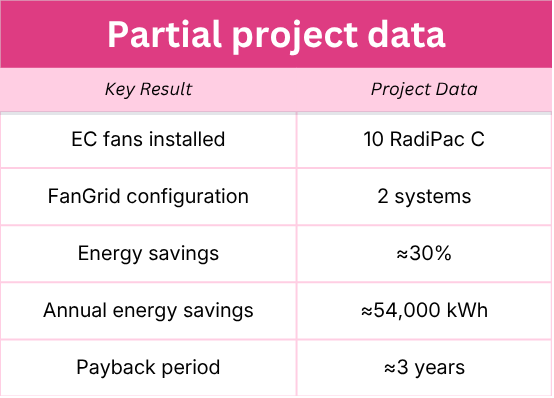
Pic.3 Partial project data after retrofit
Just as importantly, the entire retrofit—including commissioning—was completed within only three-and-a-half days. This highlights a practical advantage of an EC FanGrid retrofit: an existing ventilation system can be modernized quickly, helping minimize downtime and avoid unnecessary disruption to ongoing production.
But energy efficiency was only part of the value.
With multiple fans operating in parallel, FanGrid redundancy means that if one fan fails, the remaining fans can compensate for the lost capacity, allowing the ventilation system to continue operating. For process-critical environments, this can be just as important as energy savings.
The Engineering Takeaway
A successful ventilation retrofit is not simply about replacing an old fan with a more efficient one. It is about improving the entire operating strategy—efficiency, controllability, maintenance, and system availability.
At Beijing HENGRUI, we bring 20+ years of HVAC experience to retrofit projects, supporting contractors, facility owners, AHU manufacturers.With access to leading fan brands and extensive application experience, we don't simply supply a replacement fan—we help identify the right fan, the right configuration, and the right retrofit approach for your system.
If you're facing aging fans, high energy consumption, difficult maintenance, or limited spare-parts availability, send us your current fan model, airflow, static pressure, and application.
We'll help you evaluate whether a targeted fan upgrade can improve your system—without replacing everything.
 whatsapp


