
 English
 Français
 Deutsch
 Português
 Español
 русский
  한국어
한국어 العربية
 Italiano
 Indonesia
 Schweiz
 Polski
 Nederlands
 ישראל - עברית
 Perzisch
 ไทย
ไทย 日本語
日本語 ኢትዮ-አማርኛ
 Việt Nam
 Kiswahili
 Srpski
 Ελληνικά
 简体中文
简体中文AHU EC Fan Retrofit Case Study: Reducing Fan Power from 51 kW to 32.5 kW
Hengrui’s Approach to AHU Fan Retrofit
01 — PROBLEM | High fan power
The existing system was operating at approximately 61,000 m³/h airflow and 1,300 Pa pressure, with measured power consumption of around 51 kW.
02 — SOLUTION | Re-engineer the fan section
Hengrui proposed nine ebm-papst EC fans,configured as a fan grid and matched to the existing system requirements.
03 — KEY RULE | Retrofit from the operating point
The right replacement fan is not determined by motor size alone.Actual airflow, system pressure, and operating power provide the engineering basis for an effective retrofit.
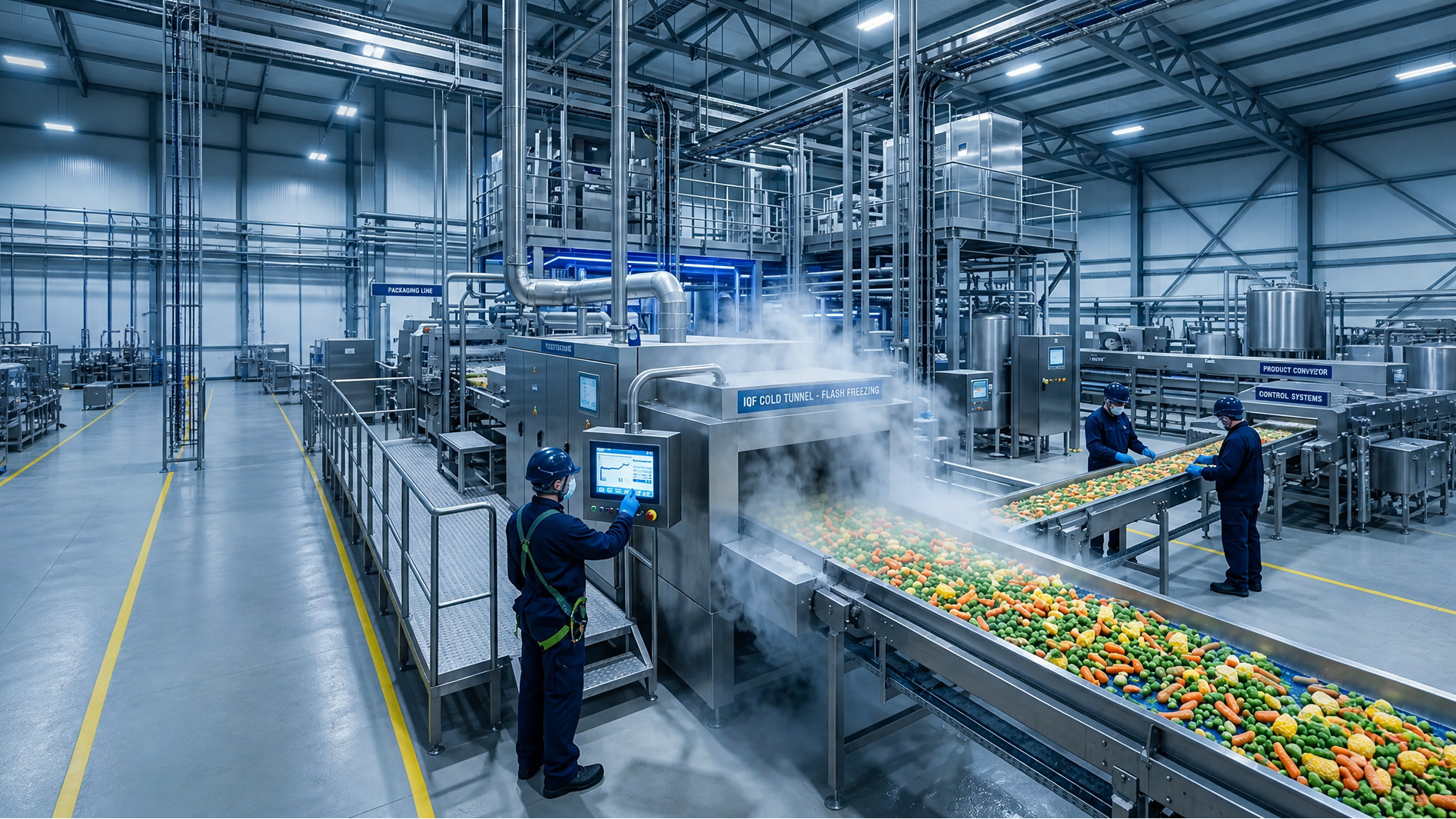
In food manufacturing, AHUs and MAUs often run for long production hours. When a conventional belt-driven fan consumes excessive power, even a relatively small efficiency gap can become a significant operating cost over time.
But replacing the entire air-handling system is not always necessary.
In Hengrui’s recently project,the existing AHU system was consuming approximately 51 kW while delivering around 61,000 m³/h of airflow at 1,300 Pa.
The question was straightforward:Could the same operating requirement be achieved with significantly lower fan power?
Hengrui’s answer was an EC fan grid retrofit—using nine ebm-papst EC fans to replace the existing belt-driven fan system.The preliminary result: 32.5 kW instead of 51 kW.
The Key Question: Can the Same Airflow Be Delivered with Less Power?
This was the central question in the project.
Rather than replacing the complete AHU, Hengrui focused on the fan system—the component directly responsible for moving air and consuming a significant amount of operating power.
At the target operating point, the proposed EC fan grid operate at 32.5 kW, compared with the existing system's measured 51 kW.That is an 18.5 kW reduction in operating power
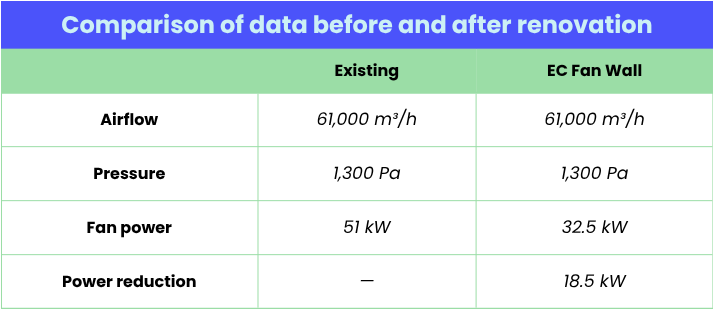
Pic.1 Data comparison
Under an assumed electricity rate of RMB 0.75/kWh and 16.5 operating hours per day, this corresponds to a preliminary annual electricity saving of approximately RMB 83,500.
Why Replace the Fan Instead of the AHU?
This is where retrofit engineering becomes important.
If the existing cabinet, coils, filters, ductwork, and other components remain suitable for continued operation, replacing the entire AHU may be unnecessary.
A fan-section retrofit can target the primary source of inefficiency while retaining usable infrastructure.
The EC fan grid also removes the belt transmission system, reducing belt-related mechanical losses and maintenance requirements. Its variable-speed capability provides greater flexibility to adjust airflow according to actual demand rather than relying on fixed-speed operation.
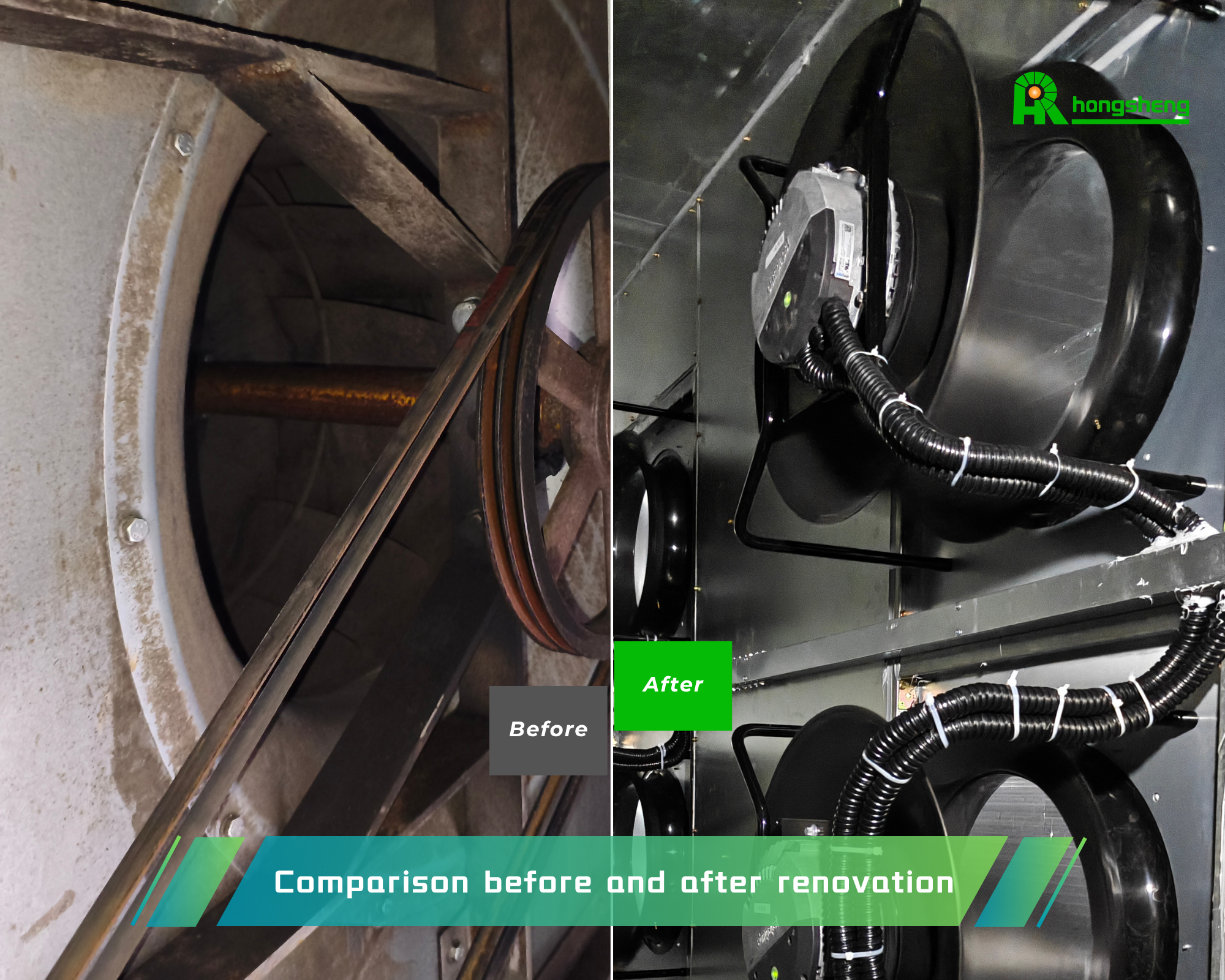
Pic.2 Comparison before and after renovation
And with multiple fan modules working together, maintenance can be handled at the module level rather than treating the entire fan assembly as one unit.
For a food manufacturing facility operating its air-handling system for extended hours, these improvements can matter beyond the initial energy calculation.
The Bigger Lesson for Existing AHU Systems
The project highlights a practical approach to HVAC energy optimization:
Don't start by asking which fan should replace the existing fan.
Start by asking:
What is the system actually delivering?
Once the real operating point is known, the retrofit can be evaluated around airflow, pressure, power consumption, installation constraints, and control requirements.
That turns an EC fan upgrade from a product replacement into an engineering decision with measurable performance targets.
For existing AHU systems with high fan energy consumption, a properly engineered EC fan retrofit can be a practical way to pursue efficiency improvements without rebuilding the entire air-handling system.
Pic.3 Hengrui provides you with professional services
Is your AHU delivering the required airflow—but using more power than necessary?
Let’s start with the operating point. Hengrui can support your AHU retrofit with fan assessment, EC fan selection, fan grid integration, and commissioning.
 whatsapp


