
 English
 Français
 Deutsch
 Português
 Español
 русский
  한국어
한국어 العربية
 Italiano
 Indonesia
 Schweiz
 Polski
 Nederlands
 ישראל - עברית
 Perzisch
 ไทย
ไทย 日本語
日本語 ኢትዮ-አማርኛ
 Việt Nam
 Kiswahili
 Srpski
 Ελληνικά
 简体中文
简体中文How to Reduce Data Center Cooling Fan Noise Without Sacrificing Airflow
HENGRUI 3-Step Approach to Data Center Fan Noise
01 — PROBLEM | Cooling vs. Acoustic Performance
02 — SOLUTION | Optimize the Operating Point
03 — KEY RULE | Compare Noise at the Same Duty Point
As data center power density increases, cooling systems are moving more air for longer hours. But higher airflow and fan speed can also create a growing challenge:
How can operators reduce cooling fan noise without compromising thermal performance?
The answer is not simply to choose a “quieter fan.” Noise reduction needs to be considered together with airflow, static pressure, operating speed, system resistance, and control strategy.

Pic.1 Data centers are constantly expanding
Start With Airflow and Static Pressure
Fan selection should begin with the actual operating point—not the fan model number.
For a data center cooling application, engineers should verify:
Airflow + Static Pressure + RPM + Operating Conditions
A fan operating far from its preferred efficiency region may generate more noise and consume more energy.
This is why “maximum airflow” is not a meaningful basis for comparing fans. The more important question is:
What acoustic performance does the fan deliver at the required airflow and static pressure?
Control Fan Speed Instead of Running at Full Speed
Data center cooling loads change with IT load, ambient conditions, and operating schedules.
EC fans with variable-speed control can adjust airflow according to actual cooling demand rather than continuously operating at maximum speed.
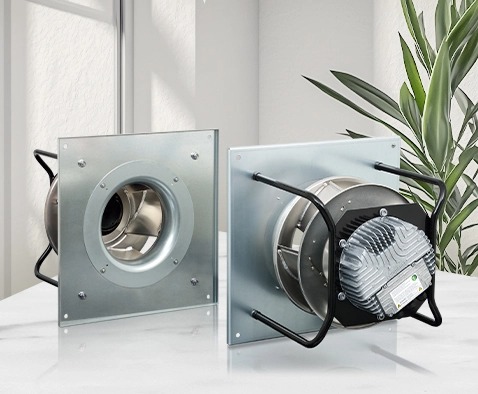
Pic.2 EC fans from ebm-papst
This can help optimize:
The key is not simply lower RPM, but the lowest practical RPM that still maintains the required cooling capacity.
Consider Multiple-Fan or Fan-Wall Configurations
Large cooling systems do not always need to rely on one large fan.
Multiple EC fans can share the airflow requirement and provide more flexibility in speed control and redundancy.
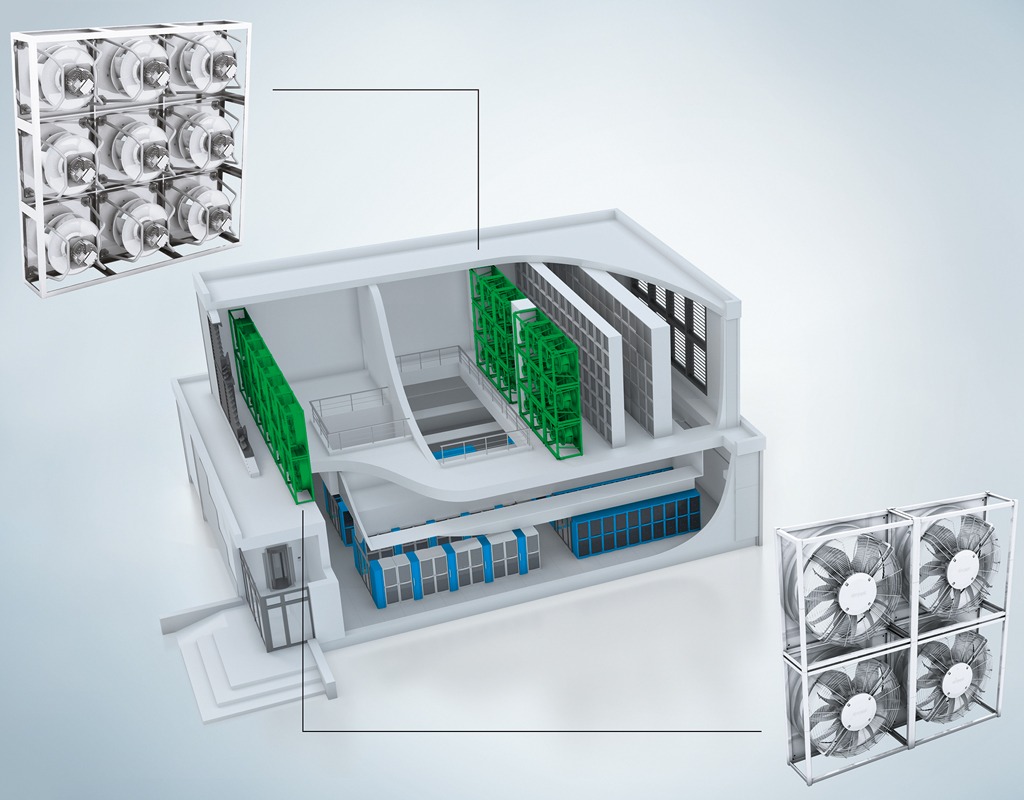
Pic.3 "Free cooling" is becoming an increasingly popular alternative for data centers(Source|ebm-papst)
A properly designed fan wall can therefore create a more flexible relationship between:
Cooling Load → Airflow → Fan Speed → Noise → Energy Consumption
However, fan quantity alone does not guarantee lower noise. Inlet conditions, system resistance, fan operating points, and airflow distribution still need to be evaluated.
Look Beyond the Fan: System Resistance Matters
Noise can also increase when the cooling system creates unnecessary pressure losses.
Common sources include:
Reducing unnecessary system resistance can allow the fan to operate at a more favorable point, potentially improving both efficiency and acoustic performance.
Don't Compare Fans by dB(A) Alone
This is one of the most important rules in low-noise fan selection.
When comparing fans, check whether the data refers to the same:
Airflow → Static Pressure → RPM → Test Conditions → Sound Measurement Method
Also distinguish between sound power and sound pressure.
A sound-pressure value depends on the measurement environment and distance, while sound-power data provides a more useful basis for comparing the acoustic output of different fan sources under defined test conditions.
Frequency also matters. A single dB(A) number may not reveal tonal or low-frequency noise that can be noticeable in a data center environment.
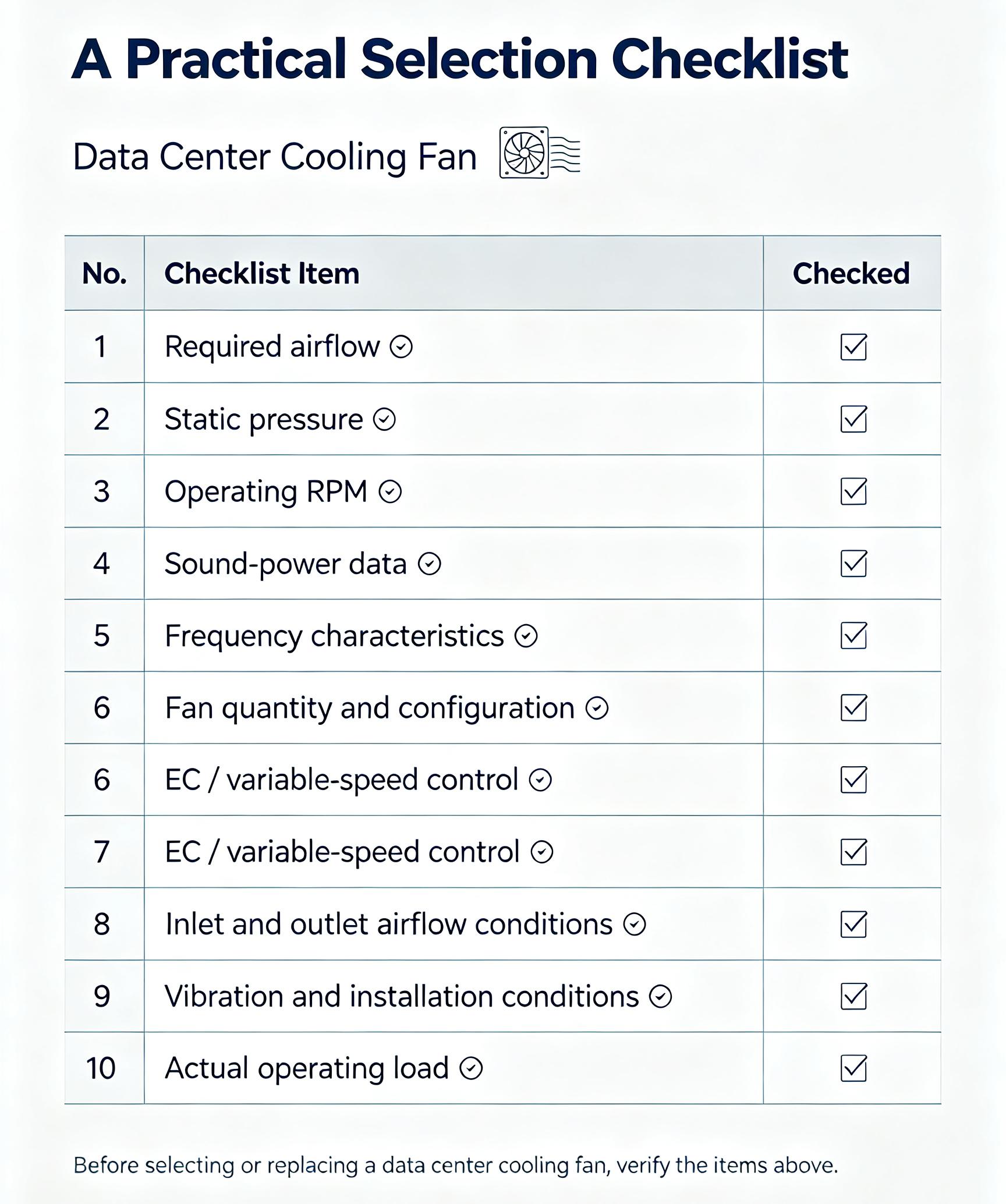
Pic.4 A Practical Selection Checklist
The Key Takeaway
The goal is not to find the quietest fan. It is to find the fan and control strategy that can deliver the required airflow and static pressure with the lowest practical acoustic output.
For new data center cooling systems or retrofit projects, HENGRUI supports fan selection and replacement assessment based on airflow, static pressure, acoustic requirements, operating conditions, and control strategy.
Need to evaluate a low-noise fan for a data center, dry cooler, CRAH/CRAC, or AHU? Contact Beijinghengrui to review your operating point and identify a suitable fan solution.
 whatsapp


