
 English
 Français
 Deutsch
 Português
 Español
 русский
 한국어
 العربية
 Italiano
 Indonesia
 Schweiz
 Polski
 Nederlands
 ישראל - עברית
 Perzisch
 ไทย
 日本語
 ኢትዮ-አማርኛ
 Việt Nam
 Kiswahili
 Srpski
 Ελληνικά
 简体中文
How to Read a Fan Nameplate: Model Identification and Replacement
Beijinghengrui 3-Step Approach
01 — PROBLEM
A fan nameplate provides essential identification data, but it may not tell the whole story.
02 — SOLUTION
Read the model and electrical details, then verify the key requirements for replacement.
03 — KEY RULE
Identifying the original fan is the first step. Confirming replacement compatibility is the next.
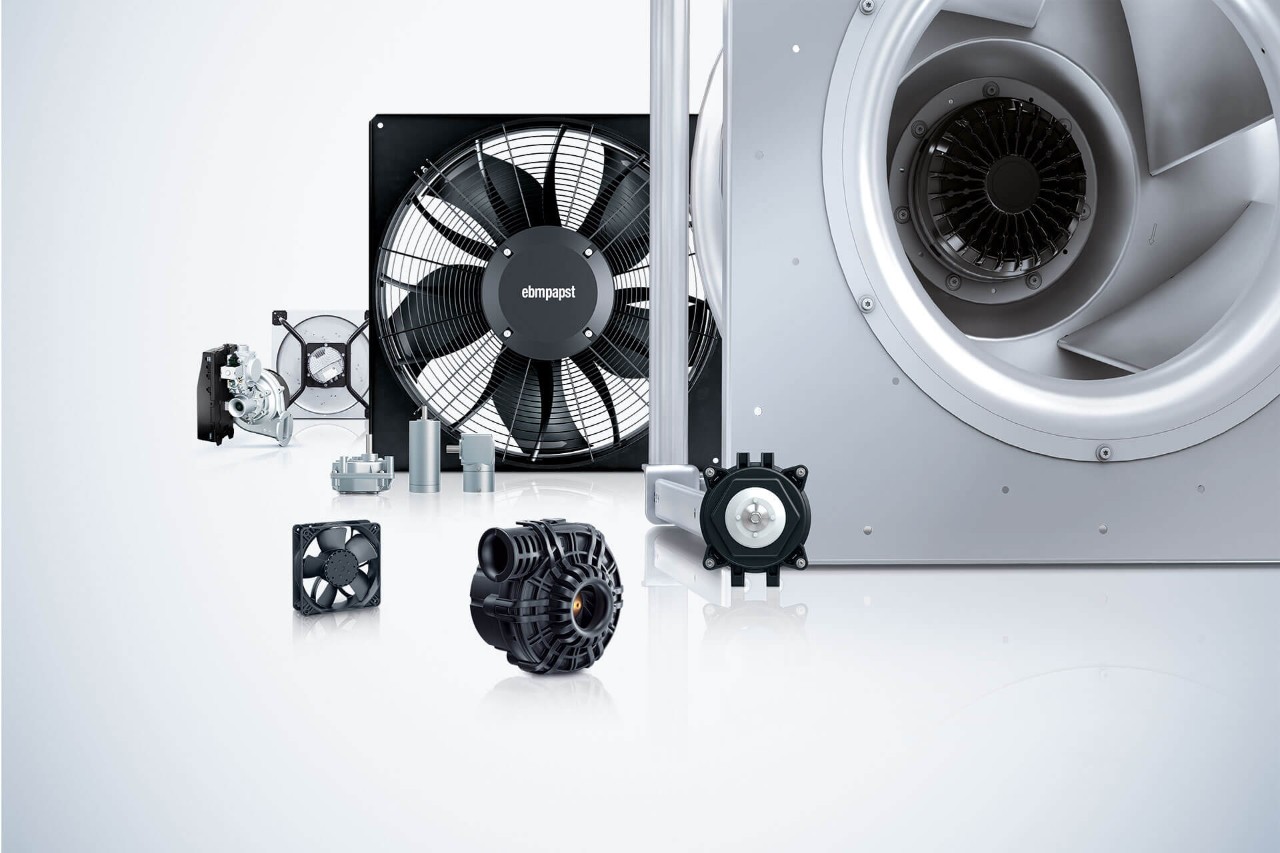
Pic.1 The nameplate content of fans from different brands is different
A fan nameplate is a manufacturer-attached label that records a product's model designation, electrical ratings, and other key identification data. When an industrial cooling fan fails, it is usually the best place to start — it may identify the manufacturer, complete model number, rated voltage, frequency, current, and power.
However, a nameplate alone does not confirm whether another fan is a suitable replacement. Dimensions, connections, control interfaces, airflow, static pressure, and operating conditions may also need checking. Understanding these details helps avoid ordering a fan that looks similar but does not work in the existing equipment.
1. Where to Find the Fan Nameplate
The nameplate is usually attached to the fan housing or motor; location and format vary by manufacturer. Before searching for a replacement, take a clear photo of the complete label — model number, electrical ratings, and all suffixes visible. If the label is hard to access or damaged, photograph the whole fan and its installation position as well.
Note that one fan may carry more than one label — many fans have a separate motor label. Photograph all of them (see Section 3).
2. How to Read the Key Information
Different manufacturers use different label formats. The table below explains common fields.
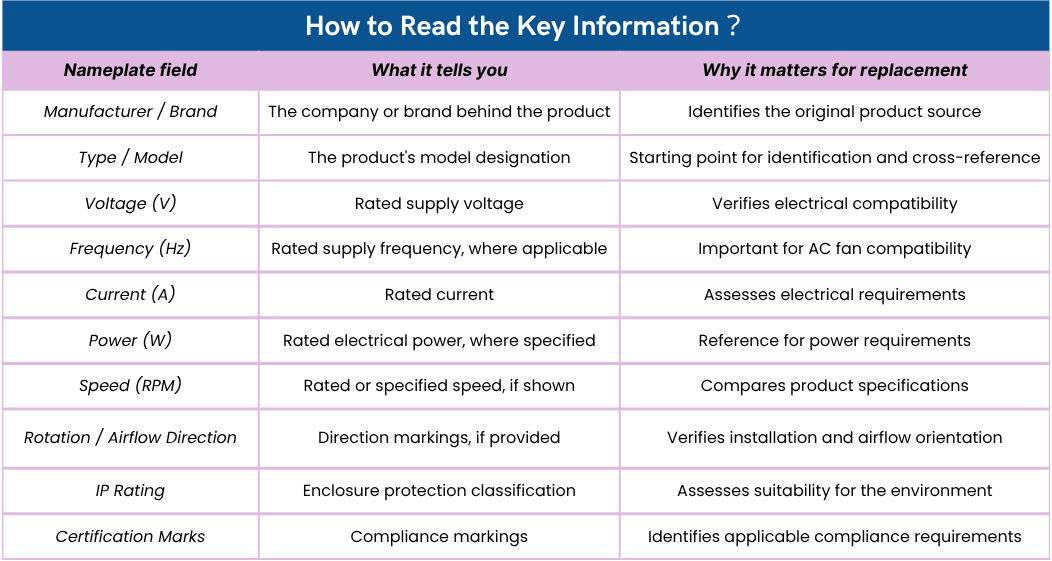
Pic.2 How to Read the Key Information?
Not every nameplate contains all these fields — airflow, static pressure, control signals, and performance curves may need to come from the manufacturer's datasheet. And do not assume a label value shows maximum performance: confirm whether it is a rated value, a limit, or another specified condition.
3. Why the Complete Model Number Matters
One of the most common replacement mistakes is recording only part of the model number. Letters, numbers, and suffixes distinguish variants — electrical configuration, control options, or construction. Never identify a replacement from a shortened code or a visually similar product.
Decoding example: W3G910-KU25-03/F01
Take the nameplate below, from an EC axial fan we supplied to a customer:
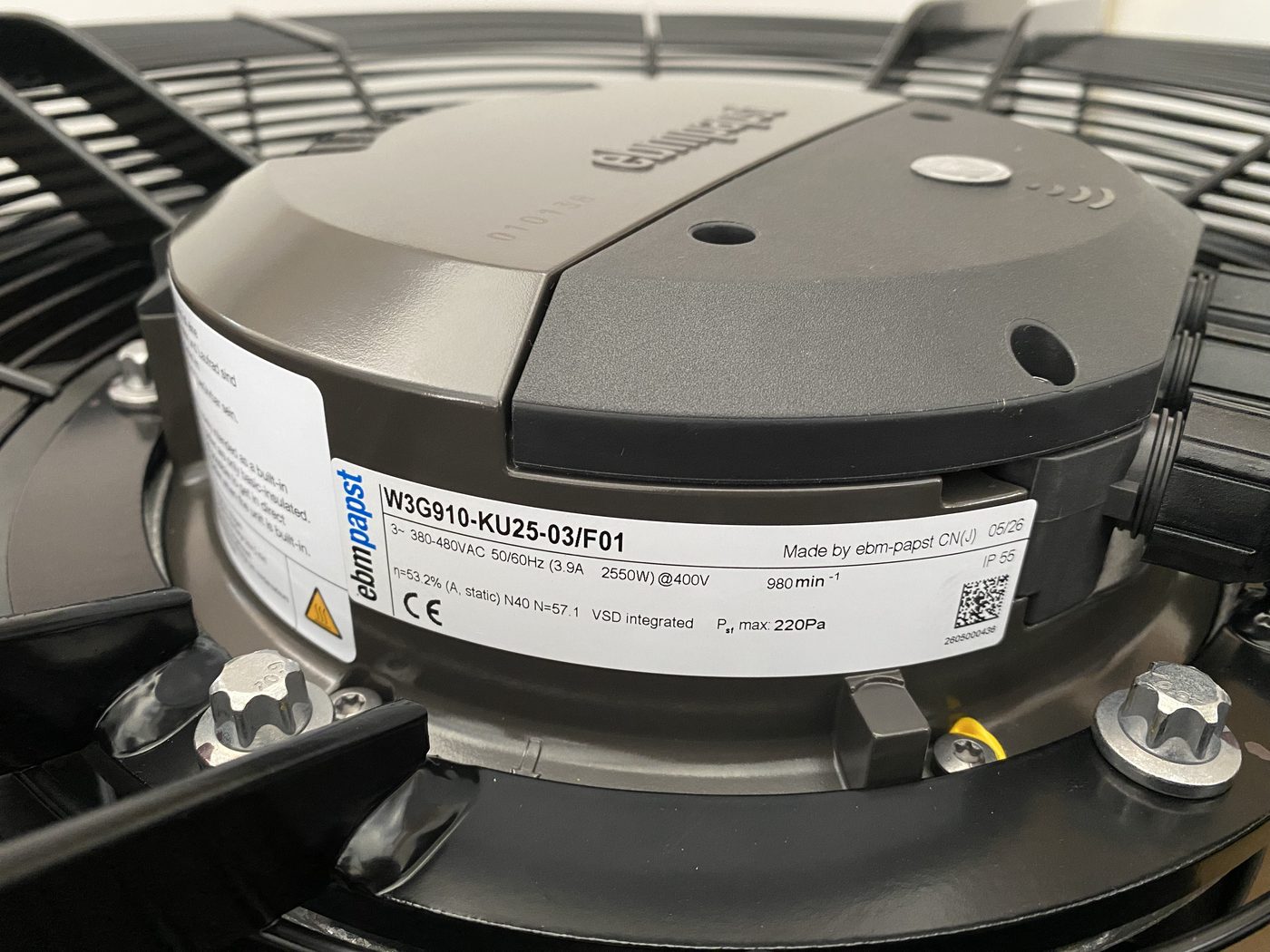
Pic.3 Nameplate for W3G910-KU25-03/F01
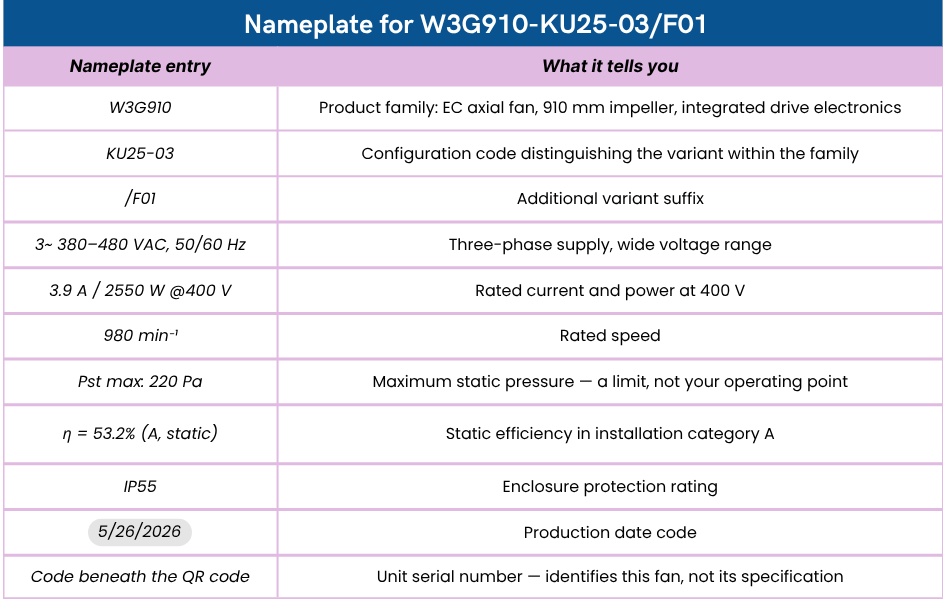
Pic.4 What can you know from the nameplate?
Three lessons from this example:
4.Why does this fan have two nameplates?
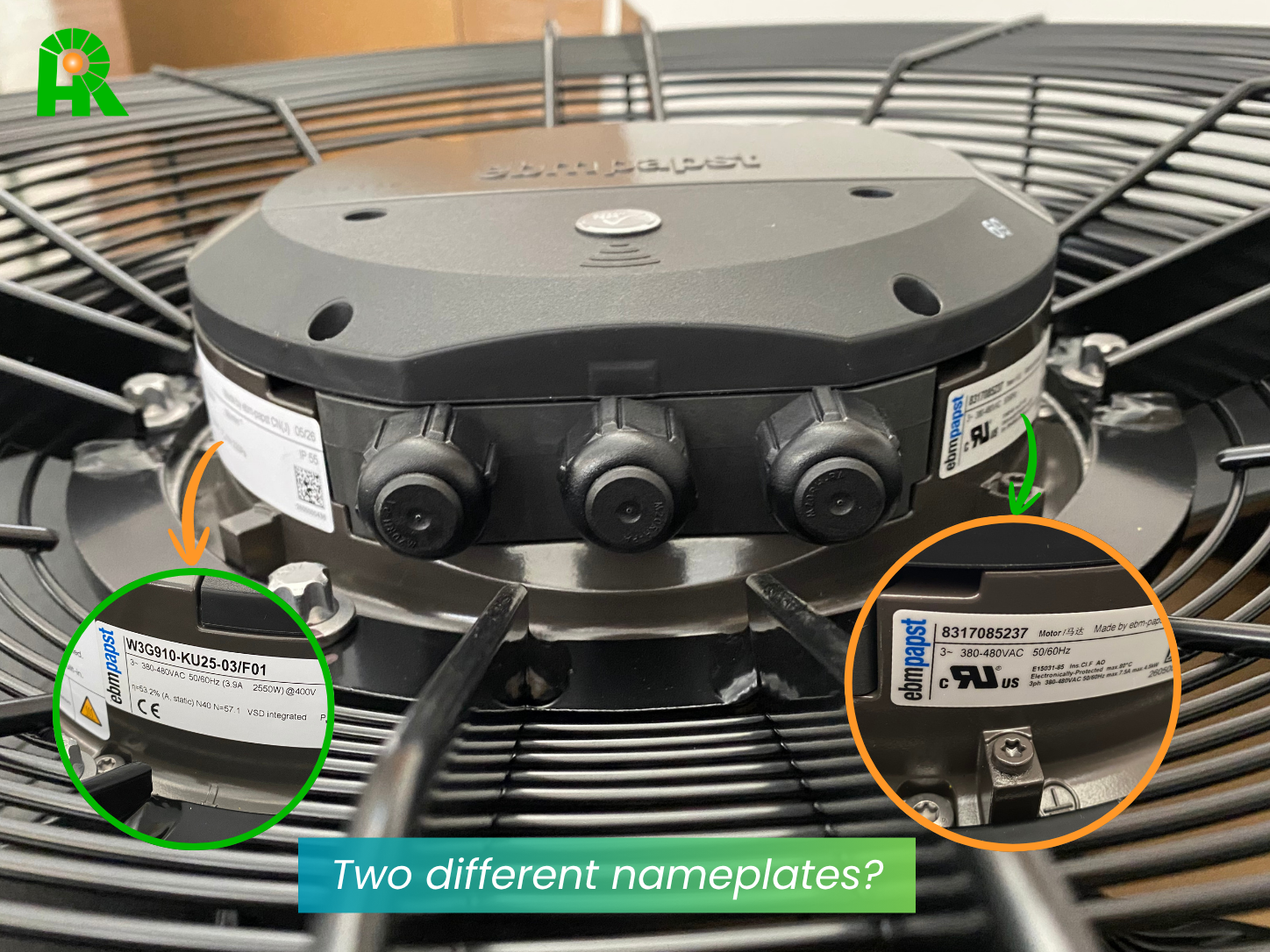
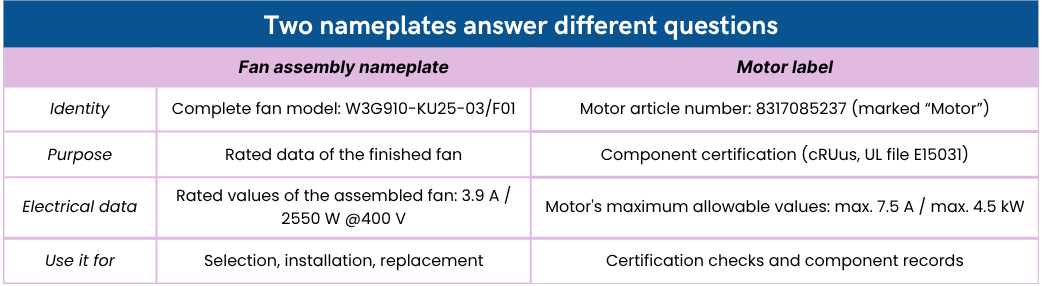
The reason is structural: the EC motor with integrated electronics is manufactured and certified as a separate component, and the same motor can be built into different fan variants.
The practical rule: work from the assembly nameplate and its complete model number. The motor label's maximum values describe what the motor can handle — not what the fan delivers; quoting them to a supplier can lead to an oversized or mismatched replacement. Capture both labels when photographing for an inquiry. If any entry is unclear, verify it against the manufacturer's documentation — or send us the photos. As an authorized ebm-papst distributor, Beijinghengrui can check the exact configuration.
5. How to Verify a Replacement Fan
Finding the original model is only the first step — the replacement must also be compatible with the equipment it will run in. Check four areas:
A. Electrical compatibility — voltage, AC/DC configuration, frequency, current, and connections. If the original uses PWM or 0–10 V control, verify the replacement supports the same signal and logic. Matching voltage alone does not make two fans interchangeable.
B. Dimensions and installation — overall dimensions, mounting holes, depth, connector arrangement, clearance. Similar external dimensions can still hide mounting or wiring differences.
C. Airflow and static pressure — the replacement must deliver the required airflow against actual system resistance (filters, coils, grilles, ducts). A maximum airflow rating does not establish installed performance; compare the required operating point against the fan curve.
D. Operating environment — ambient temperature, humidity, dust, corrosion risk, indoor/outdoor installation, duty cycle, and required IP rating.
Engineering rule: a suitable replacement matches the original's essential electrical and mechanical requirements and the equipment's actual airflow, pressure, control, and environmental needs.
6. What If the Nameplate Is Blurry, Missing, or the Model Is Discontinued?
A damaged or incomplete nameplate does not make identification impossible. Collect supporting information:
7. Fan Replacement Checklist
Provide what is available — you do not need every parameter to start an inquiry:
A clear nameplate photo and the original model are often enough for a useful first step.
Frequently Asked Questions
Q1: Can I replace a fan using only its model number?
The complete model number identifies the original product — often a clear nameplate photo is enough to start. But compatibility must also be checked against connections, dimensions, control requirements, and operating conditions.
Q2: What is the difference between a model number and a serial number?
The model number identifies the product's specification; the serial number identifies the individual unit. Replacement selection relies on the complete model number, including all suffixes.
Q3: What if the original model is discontinued?
A successor or approved alternative may exist — but never assume. Verify any candidate against the original's essential specifications and the equipment's requirements.
Q4: How long does identification and replacement confirmation take?
With a complete model number or clear nameplate photo, Beijinghengrui typically returns an identification result and replacement recommendation within 1–2 working days, including availability and delivery options.
Need Help Identifying or Replacing an Industrial Fan?
Correct identification saves time in maintenance and sourcing — and the goal is not a similar-looking fan, but a verified match. Beijinghengrui is an authorized ebm-papst distributor, supporting industrial customers with model identification, cross-reference checks, replacement assessment, availability inquiries, and engineering selection for HVAC, refrigeration, and industrial cooling applications. Common models are held in stock, and delivery for project quantities can be coordinated quickly.
Already have a fan to replace? Send us the model number or a clear nameplate photo — plus the motor label if present. We typically reply within 1–2 working days with an identification result and replacement recommendation.
 whatsapp


