
 English
 Français
 Deutsch
 Português
 Español
 русский
 한국어
 العربية
 Italiano
 Indonesia
 Schweiz
 Polski
 Nederlands
 ישראל - עברית
 Perzisch
 ไทย
 日本語
 ኢትዮ-አማርኛ
 Việt Nam
 Kiswahili
 Srpski
 Ελληνικά
 简体中文
Quiet Ventilation for Modern Homes: Fan Selection Inside a Compact Ventilation Box
BeijingHengrui 3-Step Approach
01 — PROBLEM
Residential ventilation units must provide the required ventilation while accounting for limited space and noise expectations in everyday living environments.
02 — SOLUTION
Examine the application requirements, fan characteristics, and operating conditions together rather than selecting a fan based on a single specification.
03— KEY RULE
Choose a fan for the complete application — not airflow alone. Noise, system resistance, installation constraints, and control requirements all deserve consideration.
In modern homes, ventilation should do more than move air. It also needs to fit within limited installation space and meet the acoustic expectations of everyday living.
For manufacturers of residential ventilation equipment, these requirements can make fan selection a critical part of product development. A fan must be suitable for the intended airflow and system conditions, while its noise characteristics and configuration also need to fit the overall equipment design.
An ebm-papst case study of the DucoBox Reno application provides a practical example of how low-noise fan requirements influence component selection in compact residential ventilation equipment.
The Application: Ventilation in Compact Residential Spaces
The DucoBox Reno, developed by Belgian manufacturer DUCO, is a ventilation box without heat recovery. It is designed for residential buildings, including houses and apartments, with applications particularly relevant to rooms such as kitchens and bathrooms.
The system supports demand-controlled ventilation based on CO₂ and/or humidity measurements. Instead of treating ventilation demand as permanently fixed, this approach allows the system to respond to the measured conditions.
Within this application, the fan is an important component. Its characteristics need to suit the equipment's ventilation requirements and the expectations associated with residential use.
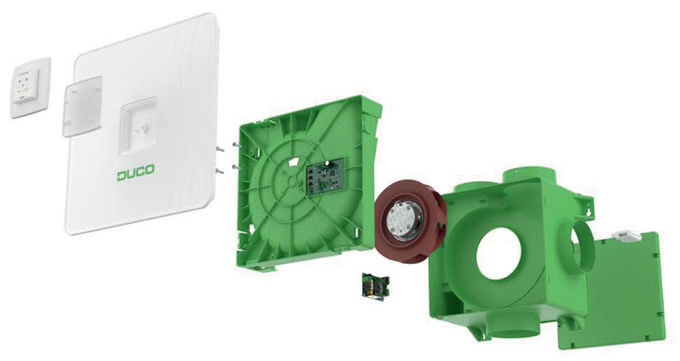
Pic.1 Structural diagram of DucoBox Reno
The solution uses the ebm-papst RER175 backward-curved centrifugal fan with a RadiCal impeller.
According to the ebm-papst case study, low noise was a key reason DUCO selected this fan. Its three-phase drive and commutation electronics were highlighted for their quiet operation. Following the first pre-series delivery in early 2022, customer orders for 11,000 units were received, with series deliveries beginning in August 2022.
Why Does Low-Noise Fan Selection Matter in Residential Ventilation?
Residential ventilation equipment operates in environments where noise can affect occupants' perception of comfort. This makes acoustic performance an important consideration alongside airflow and installation requirements.
Three factors are particularly relevant when evaluating a fan for a compact ventilation unit.
1. Noise Characteristics
A fan's noise performance should be considered in relation to the intended application. For residential equipment, the goal is not simply to move air, but to select a solution whose acoustic characteristics are appropriate for the operating environment.
The DucoBox Reno case illustrates this priority: DUCO selected the RER175 in part because of its low-noise characteristics.
However, the noise of the complete ventilation system also depends on factors such as airflow paths, installation, vibration transmission, and operating conditions. Fan specifications alone cannot establish the final sound level of an installed unit.
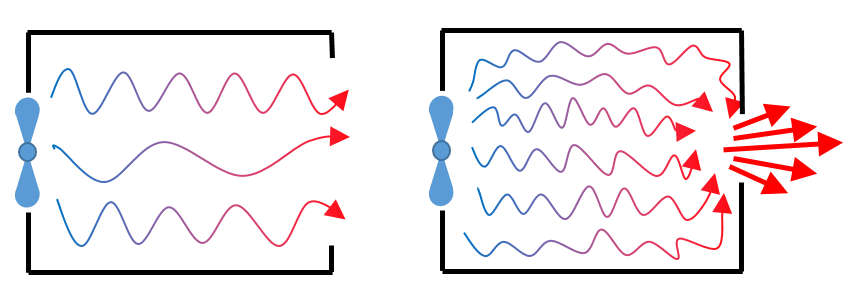
Pic.2 A large exhaust/intake port (L) allows for low flow speeds through the port, low pressure drops across it, and quiet flow, whereas a small port (R) results in large pressure drops and fast, noisy air flows.
2. Airflow and System Resistance
A fan's published free-airflow rating does not represent the airflow it will necessarily deliver after installation.
Once integrated into a ventilation box and connected to ductwork, the fan operates against system resistance. The actual operating point depends on the fan's performance characteristics and the system curve.
For this reason, fan selection should consider the required airflow and pressure under the intended operating conditions — not just a headline airflow figure.
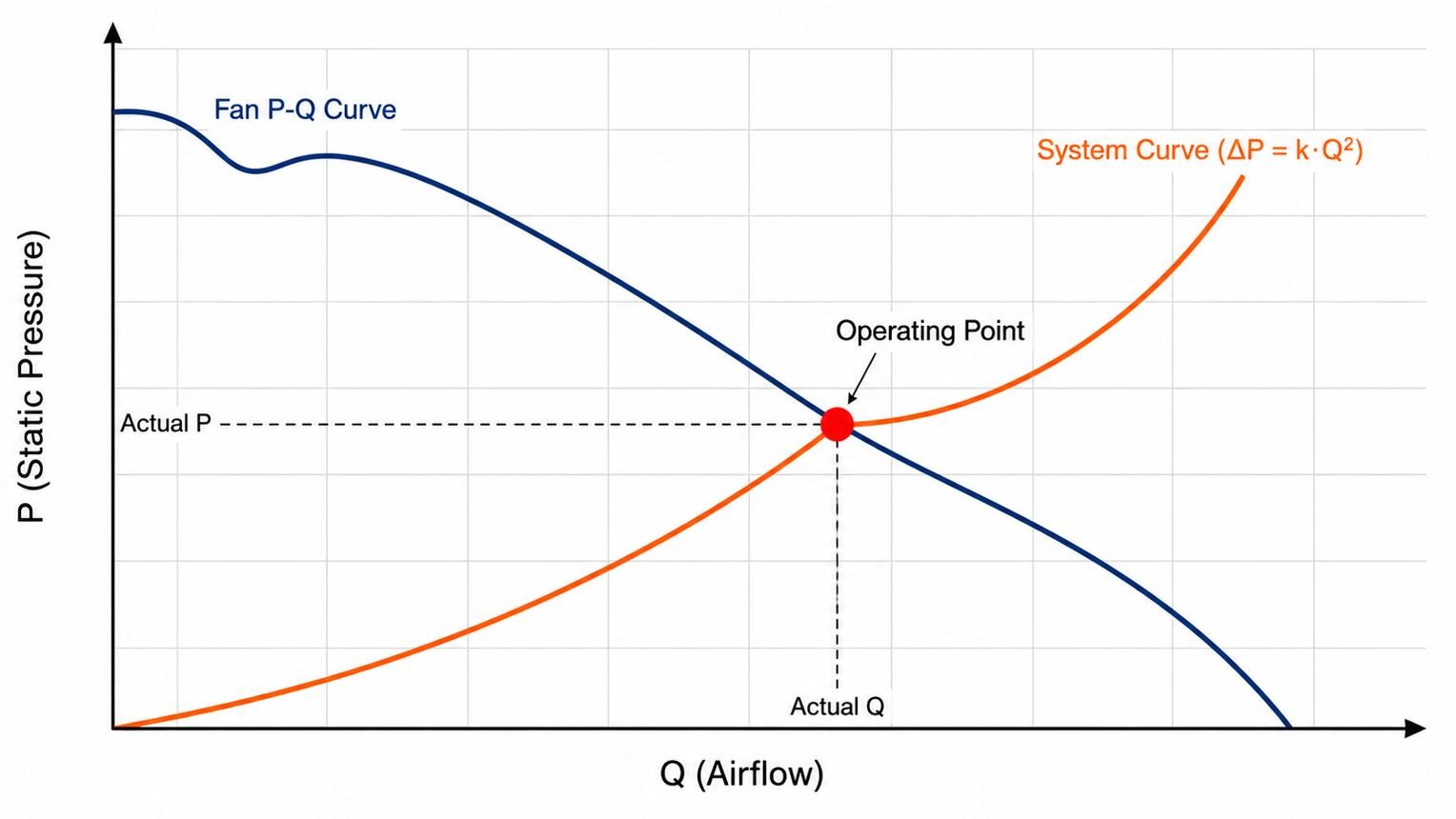
Pic.3 Fan performance curve and system resistance curve
3. Control Requirements and Operating Conditions
Demand-controlled ventilation introduces another consideration: the fan must be suitable for the system's intended control strategy.
In the DucoBox Reno application, ventilation demand is informed by CO₂ and/or humidity measurements. When evaluating a similar application, equipment manufacturers should confirm the required speed-control method, operating range, and compatibility between the fan and the control system.
What Can Ventilation Equipment Manufacturers Learn from This Case?
The DucoBox Reno application highlights an important principle for residential ventilation design: fan selection should begin with the requirements of the complete unit.
Before specifying a fan for a similar application, equipment manufacturers should review:
- Application: Which rooms and operating conditions will the ventilation unit serve?
- Airflow and pressure: What performance is required at the intended operating point?
- Acoustics: What noise expectations apply to the installed equipment?
- Space and integration: Do the fan dimensions and configuration suit the unit's design?
- Control: Is the fan compatible with the intended demand-control strategy?
Considering these factors together can help engineering and purchasing teams evaluate whether a proposed fan is suitable for the application. The final decision should be based on verified specifications and operating requirements, not a single parameter or a general product description.
Frequently Asked Questions
Q1: What is demand-controlled ventilation based on CO₂ or humidity?
Instead of running at a fixed rate, the ventilation system adjusts operation according to measured CO₂ concentration and/or humidity levels, providing ventilation when conditions require it.
Q2: Does a fan's free-air airflow rating equal its installed airflow?
No. Free-air ratings are measured without system resistance. Once installed in a unit and connected to ductwork, the fan operates at a duty point determined by its performance curve and the system resistance — installed airflow is typically lower than the free-air figure.
Q3: How should I select a low-noise fan for residential ventilation equipment?
Evaluate airflow and pressure at the actual operating point, acoustic characteristics in the intended installation, dimensions and integration constraints, and compatibility with the control strategy. Fan specifications alone cannot establish the final sound level of an installed unit.
How BeijingHengrui Supports Fan Selection
A fan that suits one ventilation unit is not automatically the right choice for another. Differences in airflow requirements, system resistance, acoustic expectations, installation space, and control configuration can all affect selection.
BeijingHengrui is an authorized ebm-papst distributor, supporting industrial and HVAC customers with fan model identification, specification checks, application-oriented selection assistance, and sourcing coordination.
If you are developing a residential ventilation unit or evaluating a replacement fan, share the existing model or nameplate photo together with your required airflow, pressure, installation constraints, and control requirements. BeijingHengrui can help review the available information and identify the details needed for a more informed selection.
The right fan choice starts with understanding where and how it will operate.
These details should be checked against the actual product configuration and technical documentation rather than assumed from the fan category alone.
 whatsapp


