
 English
 Français
 Deutsch
 Português
 Español
 русский
 한국어
 العربية
 Italiano
 Indonesia
 Schweiz
 Polski
 Nederlands
 ישראל - עברית
 Perzisch
 ไทย
 日本語
 ኢትዮ-አማርኛ
 Việt Nam
 Kiswahili
 Srpski
 Ελληνικά
 简体中文
Liquid Cooling Is Changing Data Centers. Where Do Fans Still Matter?
BeijingHengrui 3-Step Approach
01 — PROBLEM
Liquid cooling is changing data center thermal management, creating uncertainty about where fans remain necessary and how they should be selected.
02 — SOLUTION
Trace the heat-transfer path through the complete cooling system to identify where fans still support heat rejection, equipment cooling, and airflow management.
03 — KEY RULE
Do not judge fan requirements by whether a data center uses air cooling or liquid cooling. Evaluate the actual system architecture and operating conditions.
AI servers and high-density GPU clusters are changing how data centers manage heat. Liquid cooling is gaining attention because it can transfer heat away from high-power processors more effectively than conventional air cooling in many demanding applications.
But does the growth of liquid cooling mean fans are becoming obsolete?
Not necessarily. Liquid cooling changes how heat is transferred; it does not automatically eliminate the need for air-side heat rejection. The role of a fan depends on the cooling architecture, the heat exchanger design, and the operating requirements of the system.
Liquid Cooling Moves Heat. It Does Not Make Heat Disappear.
In a direct-to-chip liquid cooling system, cold plates absorb heat from processors and other high-power components. Coolant carries that heat through a circulating loop — typically via a coolant distribution unit (CDU), which pumps and regulates the flow between the IT equipment and the heat-rejection stage — to a heat exchanger, where the heat is transferred to another medium or cooling circuit.
The next step depends on the system design.
In an air-cooled heat rejection arrangement, a dry cooler or another air-side heat exchanger uses fans to move ambient air across heat-transfer surfaces. The airflow helps remove heat from the system so that the coolant can return at the required temperature.
The basic process is:Processor → Cold plate → Coolant loop (via CDU) → Heat exchanger → Heat rejection → Coolant returns
Where the heat exchanger relies on forced airflow, the fan is an important part of the heat-rejection process.
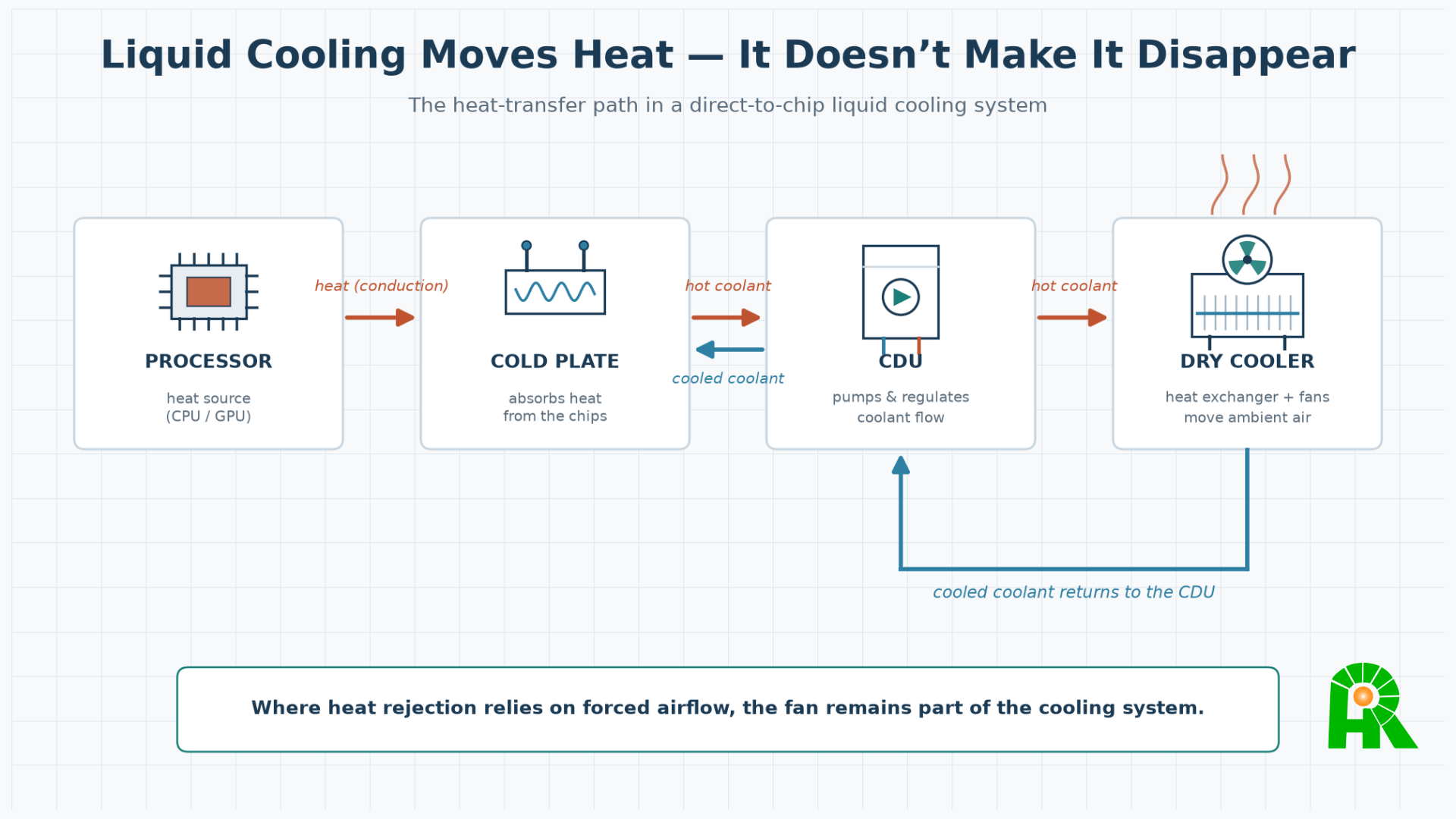
Pic.1 Heat transfer path of liquid cooling
However, not every liquid cooling system uses the same arrangement. Some systems transfer heat to another liquid circuit before it reaches the final heat rejection stage. Whether fans are required, and where they are installed, depends on the complete thermal design.
This distinction matters: liquid cooling and air-side heat rejection are not necessarily competing approaches. They can perform different functions within the same cooling infrastructure.
Where Do Fans Still Matter in Liquid-Cooled Data Centers?
Even as liquid cooling expands, fans can remain relevant in several parts of the wider data center infrastructure.
1.Air-side heat rejection equipment
Dry coolers and certain chiller or heat-exchanger configurations use fans to move air across coils and fins. In these applications, airflow and available static pressure affect the heat exchanger's ability to reject heat under the intended operating conditions.
Fan selection must therefore account for the equipment's actual airflow requirement, system resistance, ambient conditions, and operating range.
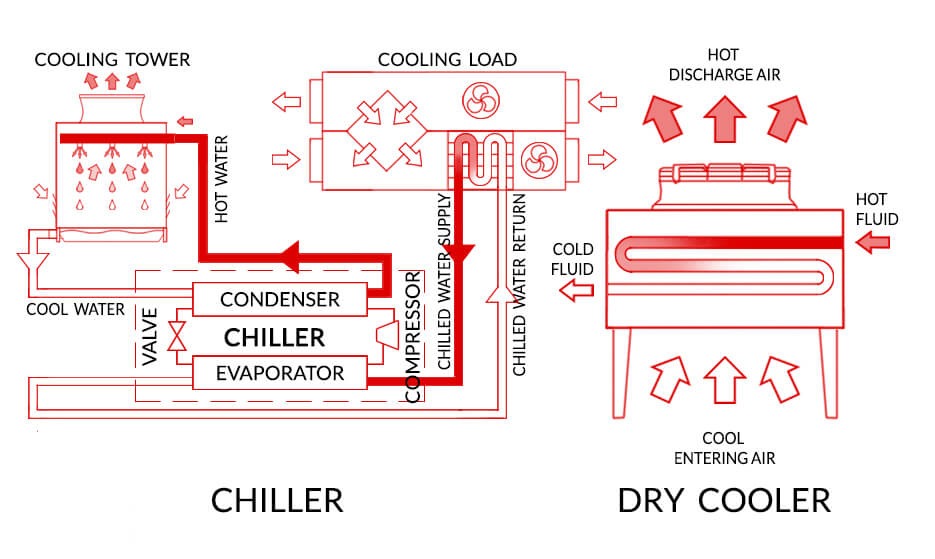
Pic. 2 Dry cooler and chiller heat transfer path
2.Fans inside the servers themselves
Cold plates typically cover processors and other high-power chips — not every heat source inside a server. Memory, power supplies, network adapters, and storage devices still generate heat, and most liquid-cooled servers still rely on internal fans to move air across these components. Adopting cold plates reduces the fan load; it does not usually eliminate it.
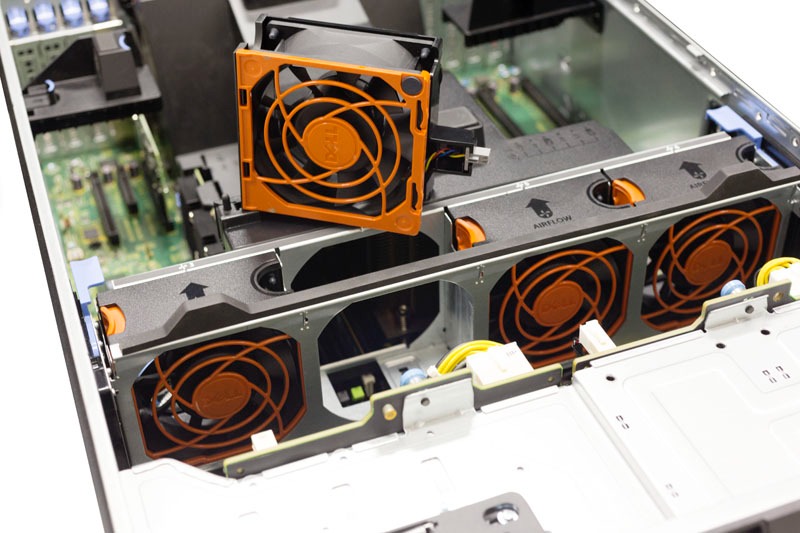
Pic.3 Fans in Servers
3.Power supplies and network equipment
Liquid cooling does not automatically bring every component inside a server rack into the liquid loop. Power conversion equipment, switches, network devices, and other electronics may continue to use forced-air cooling, depending on their design. These components can have their own airflow paths and thermal requirements, even when the main processors are liquid-cooled.
4.Control and auxiliary equipment
Control cabinets, drive electronics, monitoring devices, and other auxiliary components may also require ventilation or dedicated cooling. Their requirements differ from those of large heat-rejection fans. The appropriate solution depends on component heat dissipation, enclosure design, ambient temperature, and the manufacturer's cooling requirements.
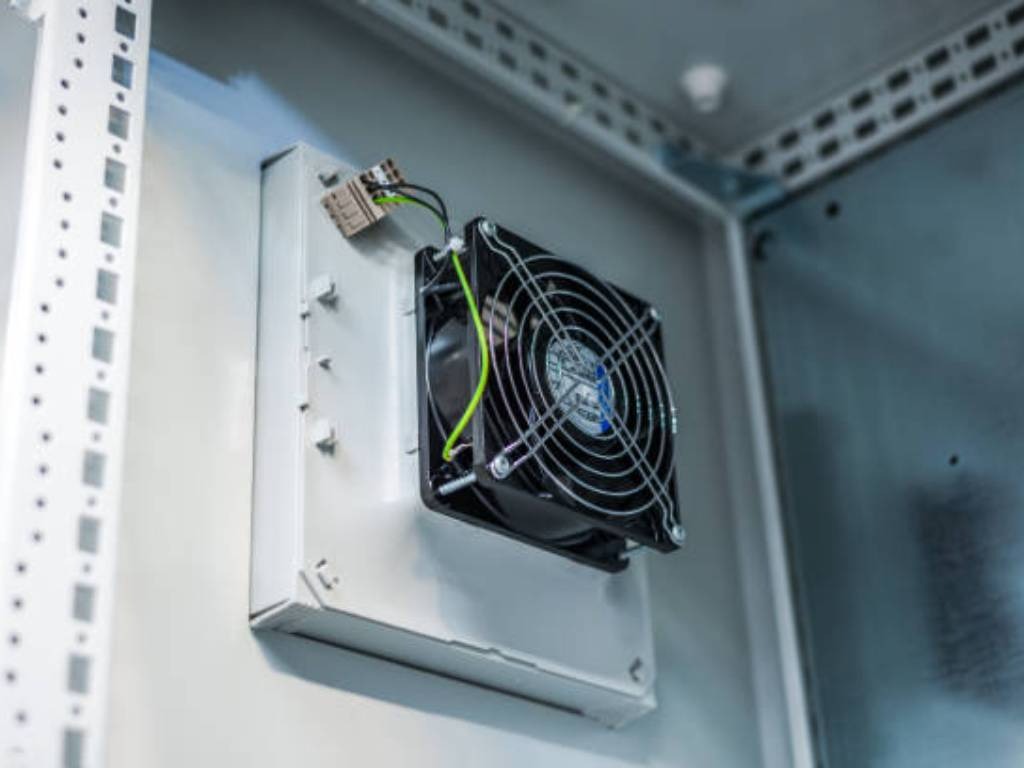
Pic.4 Fans in control cabinets
The engineering takeaway is straightforward: liquid cooling should be evaluated at the system level, while each fan should be selected for the specific task it performs.
Fan Selection Must Go Beyond Rated Power
As data center cooling architectures evolve, selecting a fan based only on nominal power, maximum airflow, or product dimensions can lead to an incomplete assessment.
Several factors deserve attention.
EC fans can offer integrated electronic commutation and speed-control capabilities, making them useful candidates for applications with variable cooling demand. However, the actual energy-saving result depends on the fan's operating point, system design, control strategy, and operating profile.
Likewise, a fan wall may offer modularity and operational flexibility in suitable systems, but its benefits depend on the overall design and required redundancy. Neither EC technology nor a fan wall should be treated as a universal solution for every cooling application.
The objective is not simply to install a more powerful fan. It is to achieve the required thermal performance with appropriate energy use, control, and reliability — measured, analyzed, selected, and verified against the actual application.
What This Means for Data Center Cooling Procurement
For new projects, procurement and engineering teams should confirm the cooling architecture first, then establish the required airflow, pressure, control strategy, and environmental conditions for each fan application.
For replacement projects, the existing model number is only a starting point. The team should also verify:
A replacement should be evaluated against the actual application rather than assumed compatible simply because the model appears similar.
This is particularly important when the cooling system has been modified, operating conditions have changed, or the original fan is no longer readily available.
FAQ
Q1: Do liquid-cooled data centers still need fans?
In most cases, yes. Fans remain in air-side heat rejection equipment such as dry coolers, inside servers for components not covered by cold plates, and in power, network, and auxiliary equipment that stays air-cooled.
Q2: What is the role of fans in a dry cooler?
Fans move ambient air across the heat-exchanger coils so the coolant or refrigerant can release heat to the atmosphere. The dry cooler's thermal capacity depends directly on airflow and available static pressure.
Q3: Does cold-plate cooling eliminate server fans?
Usually not. Cold plates cover processors and other high-power chips, but memory, power supplies, network adapters, and storage still need airflow. Cold plates reduce the fan load rather than eliminate it.
Conclusion: Cooling Architectures Evolve. Engineering Requirements Remain.
The growth of liquid cooling does not mean every fan will disappear from data centers. Instead, fan requirements increasingly depend on where heat is rejected, which components remain air-cooled, and how the complete system operates.
For cooling engineers and procurement teams, the priority is to understand the thermal architecture before choosing or replacing a fan. Airflow, static pressure, control, noise, reliability, and installation compatibility all remain important — but their relative importance depends on the application.
BeijingHengrui supports industrial fan identification, application-based selection, replacement assessment, and product availability checks for data center cooling and other industrial applications.
Planning a data center cooling project or replacing an existing fan?
Share the existing fan model or nameplate photo, required airflow and static pressure, voltage, control requirements, and installation dimensions. BeijingHengrui can help assess the application requirements, identify a suitable fan configuration, and check availability and delivery options.
The right fan is not defined by whether a system is air-cooled or liquid-cooled. It is defined by the job it needs to perform.
 whatsapp


