 English
 Français
 Deutsch
 Português
 Español
 русский
 한국어
 العربية
 Italiano
 Indonesia
 Schweiz
 Polski
 Nederlands
 ישראל - עברית
 Perzisch
 ไทย
 日本語
 ኢትዮ-አማርኛ
 Việt Nam
 Kiswahili
 Srpski
 Ελληνικά
 简体中文
As AI Data Centers Scale Up, What Does It Take to Build a Reliable Liquid Cooling System?
BeijingHengrui 3-Step Approach
01 — INDUSTRY SHIFT
The rapid growth of AI and high-performance computing (HPC) is increasing data center rack power densities, accelerating the demand for advanced liquid cooling infrastructure.
02 — SYSTEM CHALLENGE
High-capacity CDUs are only one part of the solution. Reliable liquid cooling also depends on heat exchange, fluid circulation, equipment integration, thermal management, and long-term component availability.
03 — KEY TAKEAWAY
Building a reliable liquid cooling system requires more than advanced cooling equipment. It requires coordinated system design, compatible components, and a dependable supply chain.
The development of larger-capacity Coolant Distribution Units (CDUs) reflects the changing requirements of AI-oriented data centers.
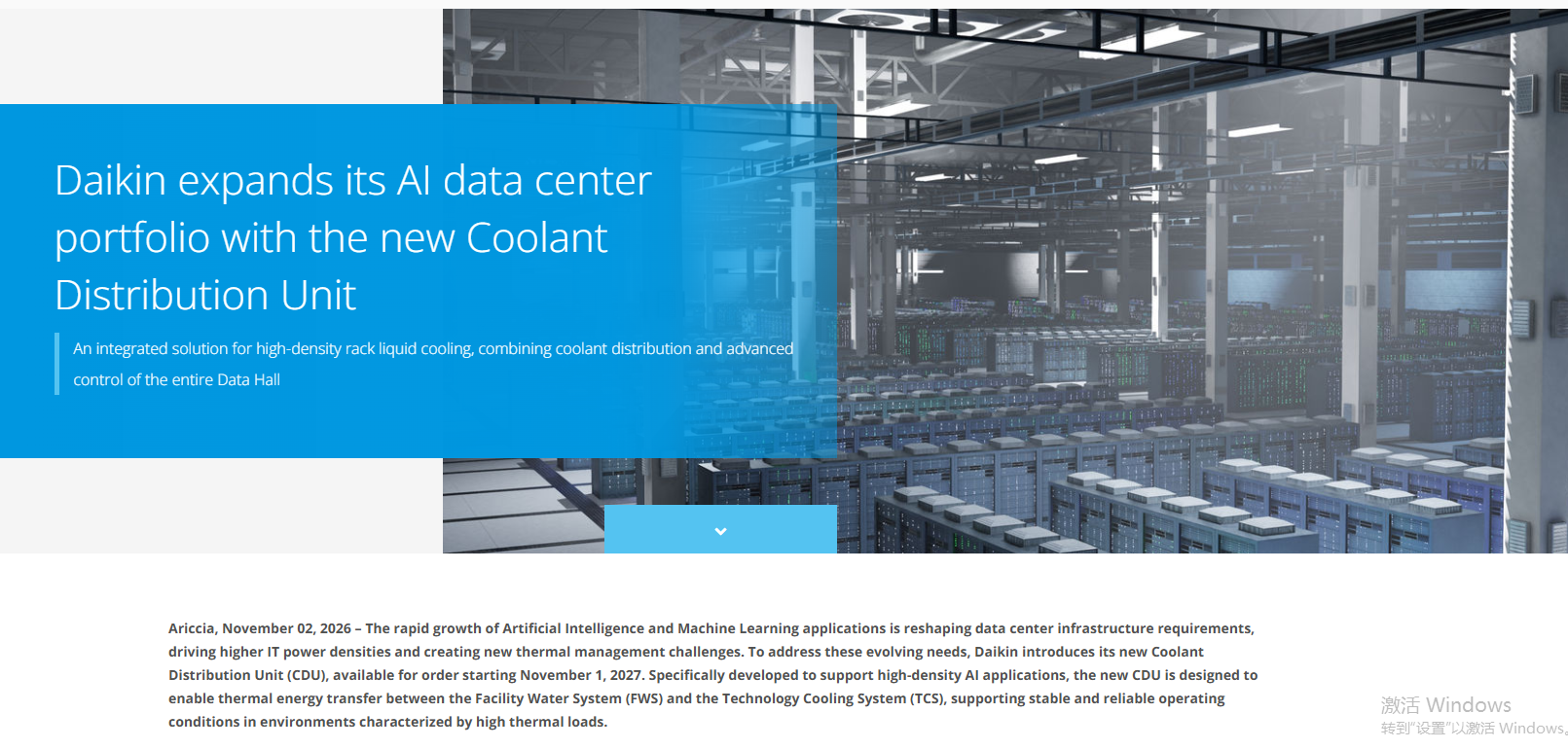
Figure1. Daikin introduces its new Coolant Distribution Unit (CDU)
On November 2, 2026, Daikin announced a new CDU range designed for high-density AI applications, with cooling capacities ranging from 400 kW to 2.5 MW per unit.
The system transfers thermal energy between two separate cooling circuits:
- Facility Water System (FWS): Connects the data center cooling infrastructure to the central heat rejection system.
- Technology Cooling System (TCS): Circulates coolant to IT equipment, including liquid-cooled servers and processors.
The CDU acts as the interface between these circuits, managing heat exchange, fluid circulation, pressure, and temperature.
Several features of Daikin's new CDU are particularly relevant to the industry's development.
- Higher Cooling Capacity and Scalability
With capacities reaching 2.5 MW per unit, the new range is designed for demanding liquid cooling applications. Daikin also supports parallel operation of up to ten CDUs under centralized control, as well as preassembled skid configurations for larger installations.
- Greater System Reliability
The design incorporates redundant pumps, duplicated pressure and temperature sensors, integrated leak detection, and advanced alarm management. These features address the high availability requirements of mission-critical data center environments.
- Improved Maintenance Accessibility
Front-side service access and dedicated sliding rails for pump removal are designed to simplify maintenance and component replacement.
- More Integrated Monitoring and Control
Daikin is also expanding its iDCM (Intelligent Data Center Manager) platform to cover equipment beyond the central cooling plant, including CDUs, CRAHs, AHUs, and Fan Wall systems.
Together, these developments illustrate an important industry direction: data center cooling is moving toward higher-capacity equipment, modular integration, coordinated control, and lifecycle-oriented maintenance.
Beyond the CDU: What Makes a Reliable Liquid Cooling System?
Liquid cooling is transforming data center thermal management, but it does not eliminate the need for air-side cooling.
While CDUs manage coolant circulation and heat transfer within liquid cooling circuits, the heat ultimately needs to be rejected through the facility's cooling infrastructure. Depending on the system design, this may involve chillers, dry coolers, cooling towers, and other heat exchange equipment.
Industrial fans remain essential to many of these systems, providing the airflow required for heat dissipation. Axial and centrifugal fans are widely used in air-cooled equipment, where airflow, static pressure, energy efficiency, noise levels, and operating reliability all influence overall performance.
Take a closer look at the evolving data center landscape, the growing demand for reliable infrastructure, and the cooling technologies supporting the next generation of data centers.
As AI data centers continue to scale, the demand for reliable heat rejection equipment and efficient air-side cooling solutions will remain an important part of the broader cooling ecosystem.
Liquid cooling may change how heat is managed inside data centers, but efficient heat dissipation remains essential across the entire infrastructure.
Five Opportunities for Data Center Equipment Suppliers
The development of AI-oriented liquid cooling is creating opportunities across the data center supply chain. Different equipment suppliers face different technical and operational requirements.
- CDU Integrators and OEMs
CDU manufacturers and system integrators need to coordinate pumps, heat exchangers, valves, sensors, control systems, and auxiliary cooling components.
For these companies, reliable component sourcing, model compatibility, and long-term spare parts availability can help reduce integration and maintenance risks.
- Data Center OEMs and Cooling System Manufacturers
Manufacturers of chillers, dry coolers, CRAHs, and Fan Wall systems must address increasing cooling demands while maintaining energy efficiency and operational reliability.
EC axial fans, centrifugal fans, and fan arrays are important components in many of these air-side cooling applications.
- Rack and Cabinet Manufacturers
As high-density computing equipment becomes more common, thermal management requirements extend beyond server cooling itself.
Electrical cabinets, power distribution equipment, and auxiliary control systems also require appropriate ventilation and heat dissipation solutions.
Compact fans and reliable ventilation components can support these applications.
- Heat Exchanger Manufacturers
Dry cooler, condenser, and air-cooled heat exchanger manufacturers need to match fan performance with the thermal and airflow requirements of their equipment.
Air volume, static pressure, motor efficiency, noise, installation dimensions, and environmental conditions all influence fan selection.
- Data Center O&M and Service Providers
For maintenance contractors and service providers, equipment reliability is closely connected to the availability of replacement components.
Identifying discontinued models, finding compatible alternatives, coordinating multi-brand sourcing, and reducing replacement lead times can help support maintenance schedules and minimize equipment downtime.
These requirements create opportunities for suppliers capable of providing both component sourcing and technical matching support.
Building a More Reliable Supply Chain for Data Center Cooling
As data center cooling systems evolve, reliable component sourcing and technical support are becoming increasingly important.
For industrial fan applications, selecting or replacing a fan involves more than matching dimensions or rated power. Airflow, static pressure, electrical specifications, control requirements, and installation conditions must also be considered.
At BeijingHengrui, we support data center cooling equipment manufacturers, OEMs, system integrators, and maintenance providers with:
- Industrial Fan Sourcing: Multi-brand sourcing for ventilation and heat dissipation applications.
- Technical Selection & Replacement: Fan selection, model identification, and alternative model matching.
- Spare Parts & Support: Product availability, replacement coordination, and after-sales technical support.
With experience serving over 20,000 business customers, BeijingHengrui helps equipment suppliers and service providers maintain a reliable supply of industrial cooling components.
Developing a data center cooling project or sourcing fan components for your equipment?
Contact BeijingHengrui for industrial fan selection, model matching, and supply support tailored to your application.
 whatsapp


