
 English
 Français
 Deutsch
 Português
 Español
 русский
 한국어
 العربية
 Italiano
 Indonesia
 Schweiz
 Polski
 Nederlands
 ישראל - עברית
 Perzisch
 ไทย
 日本語
 ኢትዮ-አማርኛ
 Việt Nam
 Kiswahili
 Srpski
 Ελληνικά
 简体中文
RadiPac 3C: Certified Performance and Intelligent EC Fan Solutions for Modern AHU Systems
BeijingHengrui 3-Step Approach to Better Fan Selection
01 — PROBLEM
A fan may meet the nominal airflow requirement but still consume excessive energy, generate unwanted noise, or perform inconsistently after installation.
02 — SOLUTION
Evaluate the complete fan solution, including aerodynamic performance, motor technology, electrical characteristics, control capability, and installation configuration.
03 — KEY RULE
Do not select a fan based on airflow and dimensions alone. Verify its performance against the actual system resistance curve and operating requirements.
Modern air handling units (AHUs) face increasingly demanding requirements: higher energy efficiency, reliable airflow, flexible system integration, and lower operating costs.
For AHU manufacturers and HVAC system integrators, selecting a fan is no longer just about achieving the required airflow. The real challenge is finding a solution that performs efficiently under actual operating conditions and remains reliable throughout its service life.
This is where the ebm-papst RadiPac 3C centrifugal fan series deserves attention.
Combining EC motor technology, optimized aerodynamic design, integrated active PFC, and certified performance, RadiPac 3C offers a solution for modern ventilation and air conditioning applications.
At BeijingHengrui, we believe that understanding the technology behind a fan is just as important as comparing its specifications. Here is a closer look at what makes RadiPac 3C relevant to today's AHU and FanGrid applications.
Why Verified Fan Performance Matters
In HVAC applications, fan performance directly affects the overall operation of an AHU.
However, catalog specifications alone do not always provide enough information to evaluate how a fan will perform in a real installation.
Airflow, pressure, acoustic performance, and energy efficiency must be assessed using reliable and comparable test methods.
This is one reason third-party certification matters.
AMCA and Eurovent Certified Performance
In June 2025, ebm-papst announced that its Mulfingen combined test bench had received AMCA accreditation and that its RadiPac 3C plenum fan series had obtained AMCA certification and the Eurovent Certified Performance label.
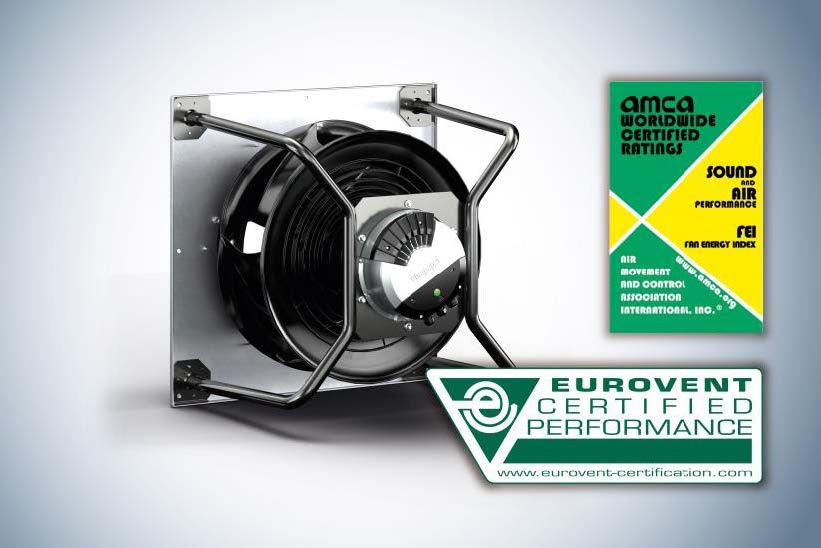
Figure1. The “Plenum Fans RadiPac3C series” built-in fans receive AMCA certification and the Eurovent Certified Performance mark.
The certification framework covers key performance parameters, including:
- Airflow
- Pressure
- Acoustic performance
- Fan Energy Index (FEI)
Eurovent certification also involves approval procedures and annual surveillance testing.
For AHU manufacturers, designers, and system integrators, independently verified performance data provides a more reliable basis for product evaluation and fan selection.
It also makes it easier to compare products using recognized testing standards rather than relying solely on manufacturer-provided nominal values.
Important: Certification should always be checked against the specific model and configuration. Do not assume that every size or installation arrangement has identical certification coverage.
What Makes RadiPac 3C Different?
RadiPac 3C is an EC centrifugal fan solution designed for ventilation and air conditioning applications.
Its performance comes from the coordinated design of the impeller, motor, and integrated electronics.
1. Active PFC: Improved Power Quality
Active Power Factor Correction (PFC) is a standard feature across the RadiPac 3C series.
Its three-phase active PFC technology is designed to prevent current harmonics at the source, helping improve power quality and reduce harmonic-related concerns in installations using multiple EC fans.
2. Optimized Impeller and EC Motor Design
RadiPac 3C combines an aerodynamically optimized impeller with an integrated EC motor and electronics.
The impeller is mounted directly on the external rotor motor, creating a compact design with optimized balance and high system efficiency.
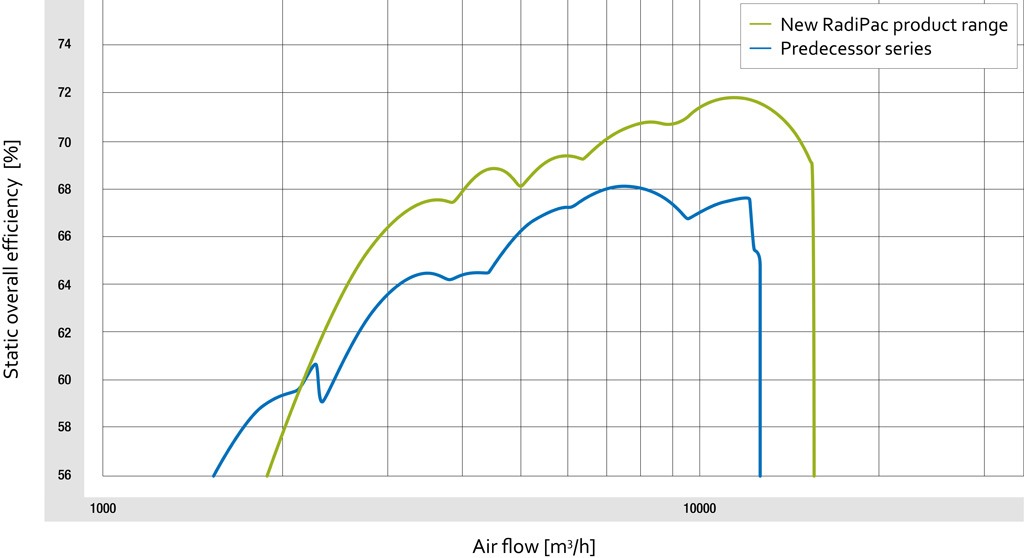
Figure2. The new RadiPac: The new generation of centrifugal fans offers higher efficiency; this results in significantly lower operating costs. (Source|ebm-papst)
3. Flexible Installation Configurations
RadiPac offers different configurations to suit various AHU designs and installation requirements, including:
- Motor-impeller combinations
- Ready-to-install versions with support brackets
- Short and standard designs
- Different impeller material options
- Optional FlowGrid inlet grille
FlowGrid helps reduce inlet turbulence and associated aerodynamic noise, providing greater flexibility for system integration.
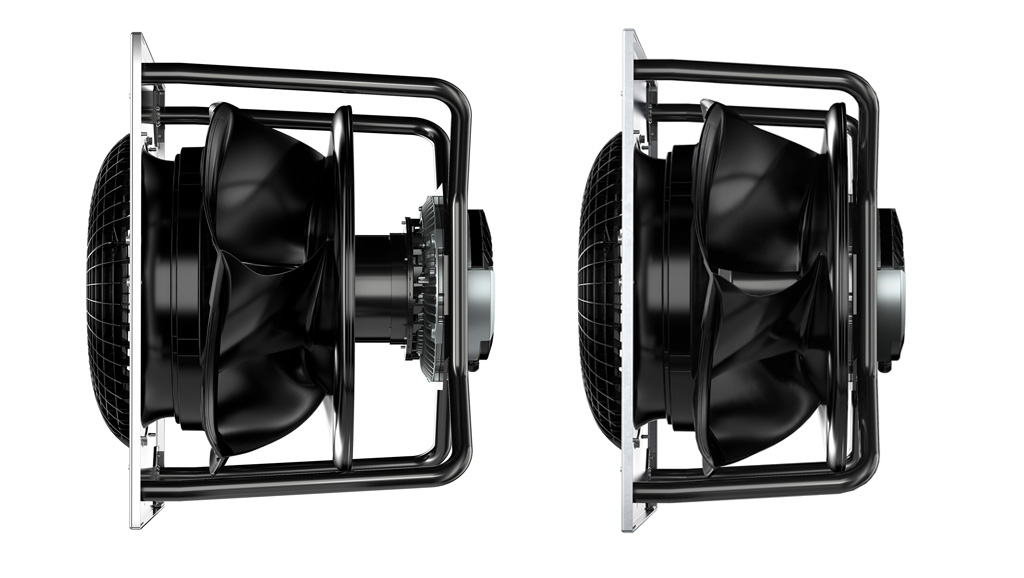
Figure3. In the standard types (left),the powerful motor is completely pulled out of the flow area.In the short version
(right),the motor is immersed in the impeller (Source|ebm-papst)
4. EC Control and Communication
EC technology enables variable-speed operation to match changing ventilation demands.
Depending on the model, interfaces such as Modbus allow integration with higher-level control systems, supporting demand-based airflow regulation in modern AHUs.
RadiPac 3C in FanGrid Applications
For large AHUs and high-volume ventilation systems, a FanGrid combines multiple EC fans operating in parallel to deliver the required airflow.
This modular design offers several advantages:
- Flexible airflow capacity and equipment layout
- Easier maintenance and fan replacement
- Potential operational redundancy
- Demand-based speed control
When properly engineered, FanGrid systems can improve operational flexibility and maintainability. However, redundancy depends on system capacity, fan configuration, and control strategy.
Real-World Application: EV Production Facility in South Korea
At an electric vehicle production facility in Ulsan, South Korea, AHU manufacturer Cheong Nam Air Conditioner Inc. selected 52 RadiPac 3C fans to replace the originally specified AC fan solution.
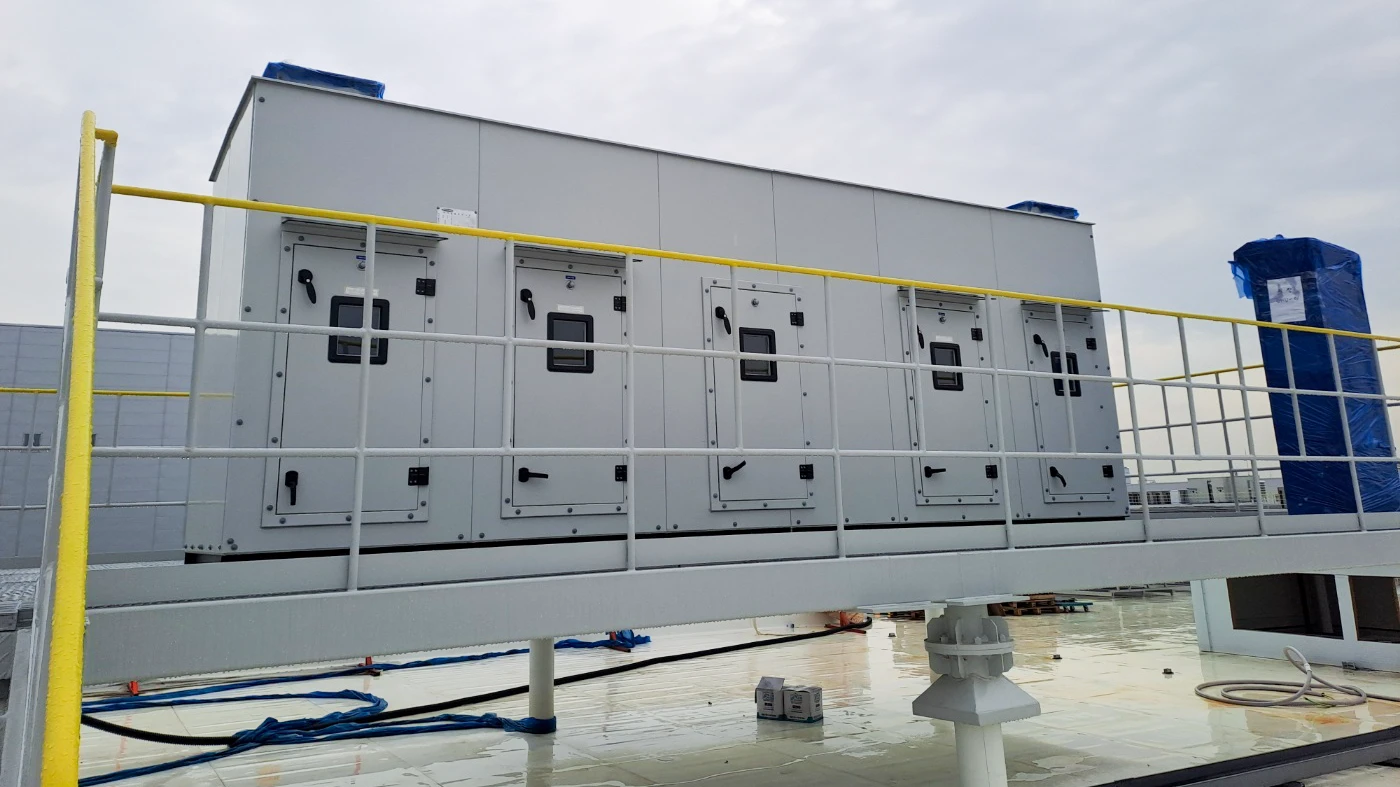
Figure4. A total of 52 RadiPac 3C units from ebm-papst are in operation in the roof-mounted ventilation systems.(Source|Cheong Nam Air Conditioner Inc.)
The fans were installed in FanGrid configurations on both supply and return air sides, with Modbus communication enabling demand-based speed control.
This project demonstrates how RadiPac 3C and FanGrid technology can support flexible, demand-controlled ventilation in large industrial facilities.
Where Should RadiPac 3C Be Considered?
RadiPac 3C is worth evaluating in applications where compact EC centrifugal fans, adjustable airflow, and reliable performance data are important.
Typical application areas include:
- Air Handling Units (AHUs)
For new AHU designs requiring efficient airflow, compact integration, and flexible fan configurations.
- FanGrid Systems
For large-volume ventilation systems where multiple fans can be arranged in parallel to meet airflow requirements.
- Industrial Ventilation
For production facilities, commercial buildings, and other applications requiring continuous or demand-controlled ventilation.
- HVAC Retrofit Projects
For evaluating the replacement of existing AC or older fan systems with EC fan solutions, subject to mechanical, electrical, and aerodynamic compatibility checks.
The suitability of a particular RadiPac 3C model depends on the required airflow, external static pressure, installation geometry, operating range, and control requirements.
What Should Engineers Check Before Selecting a RadiPac 3C Fan?
Even a technically advanced fan cannot compensate for an incorrect selection process.
Before choosing a model, engineers and equipment manufacturers should verify the following:
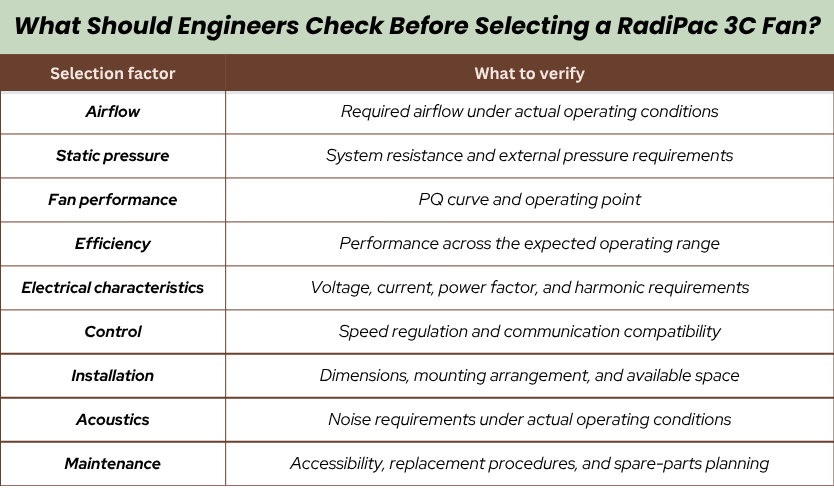
Figure5. What Should Engineers Check Before Selecting a RadiPac 3C Fan?
For retrofit projects, additional attention should be given to the existing ductwork, filter resistance, coil pressure drop, electrical supply, and control system.
A replacement fan that fits mechanically is not necessarily a suitable replacement in terms of airflow, pressure, or energy consumption.
The correct approach is to compare the fan performance curve with the actual system resistance curve, then verify the operating point under the expected load conditions.
Final Thoughts: Look Beyond the Fan Specifications
The value of RadiPac 3C is not defined by one individual feature.
It comes from the combination of:
- EC motor technology
- Optimized aerodynamic design
- Three-phase active PFC
- Flexible installation configurations
- Certified performance for applicable models
- And integration possibilities for modern AHU and FanGrid systems
For HVAC equipment manufacturers and system integrators, these characteristics make RadiPac 3C a worthwhile option to evaluate when developing or upgrading ventilation systems.
At BeijingHengrui, we support customers with ebm-papst fan model identification, cross-reference analysis, selection assistance, and technical matching for different industrial and HVAC applications.
Rather than comparing catalog specifications alone, we focus on matching fan performance to the actual operating conditions and application requirements.
If you are developing a new AHU, planning a FanGrid configuration, or evaluating an existing fan replacement project, our team can help you review the relevant fan specifications and identify suitable options.
Contact BeijingHengrui to discuss your RadiPac 3C application or fan selection requirements.
 whatsapp


