
 English
 Français
 Deutsch
 Português
 Español
 русский
  한국어
한국어 العربية
 Italiano
 Indonesia
 Schweiz
 Polski
 Nederlands
 ישראל - עברית
 Perzisch
 ไทย
ไทย 日本語
日本語 ኢትዮ-አማርኛ
 Việt Nam
 Kiswahili
 Srpski
 Ελληνικά
 简体中文
简体中文As AI Data Centers Scale, Is Cooling Redundancy Becoming as Important as Cooling Efficiency?
South Korea is preparing for around 8.4 GW of AI data center capacity.
That number is a strong signal of where AI infrastructure is heading.But behind the race for more computing capacity is another question that cooling engineers need to ask:
What happens when one cooling fan fails?
As AI workloads push rack power density higher, cooling is no longer simply an efficiency challenge.
It is becoming a reliability challenge.
From Cooling Efficiency to Cooling Resilience
For years, cooling discussions in data centers have focused heavily on:
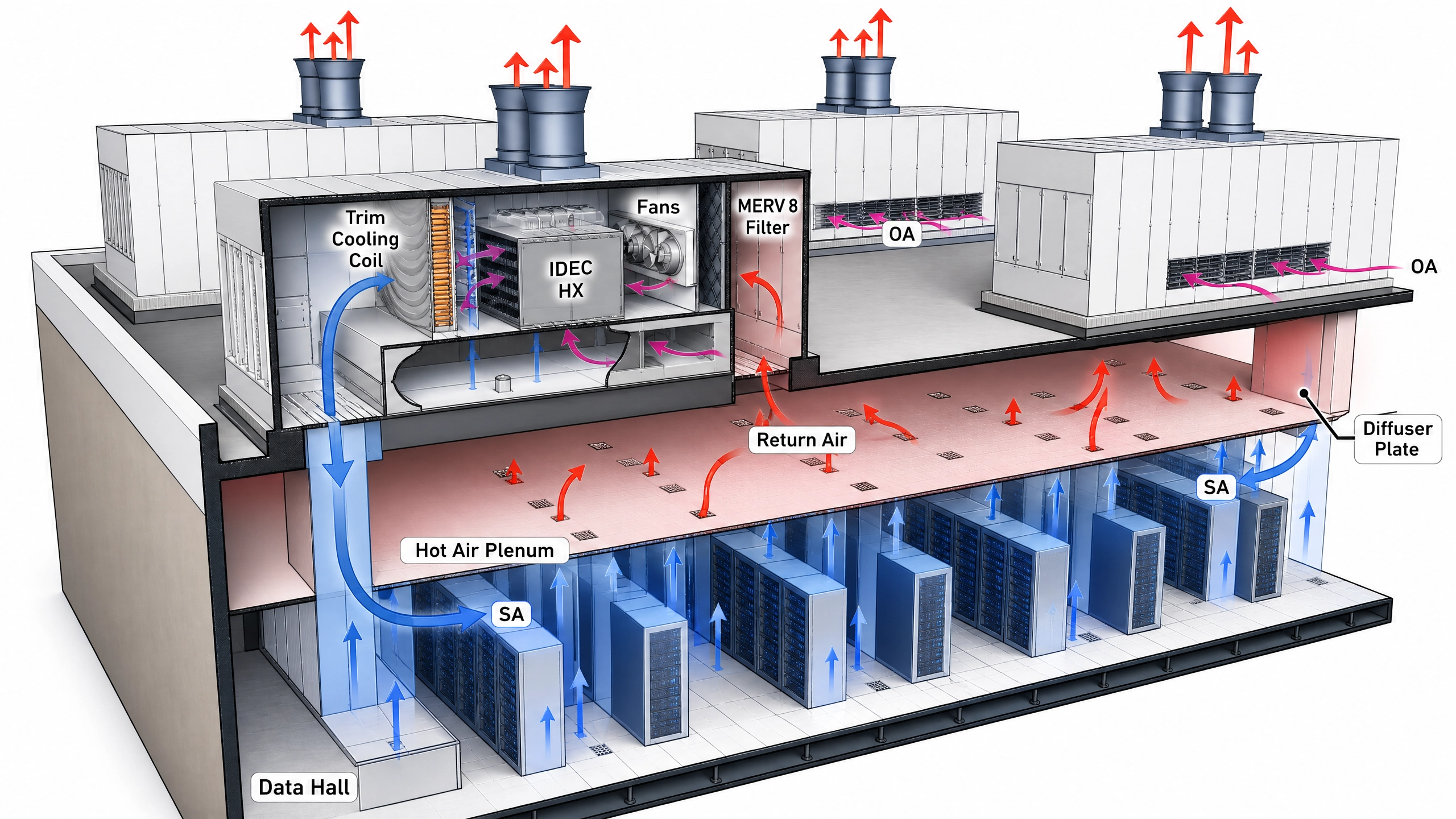
All of these remain important.But as AI infrastructure becomes more power-dense, another factor deserves more attention:How does the cooling system behave when something goes wrong?
In a conventional cooling system, the failure of a single large fan can represent a significant loss of airflow capacity.In a high-density AI environment, that can potentially create a localized thermal risk.
The question is therefore no longer only:How efficiently can the cooling system operate?
It is also:How resilient is the cooling system when one component becomes unavailable?
Why FanGrid Architecture Is Getting More Interesting
This is where modular FanGrid architectures become particularly interesting.
Instead of relying on one large fan, a FanGrid uses multiple fans operating together.
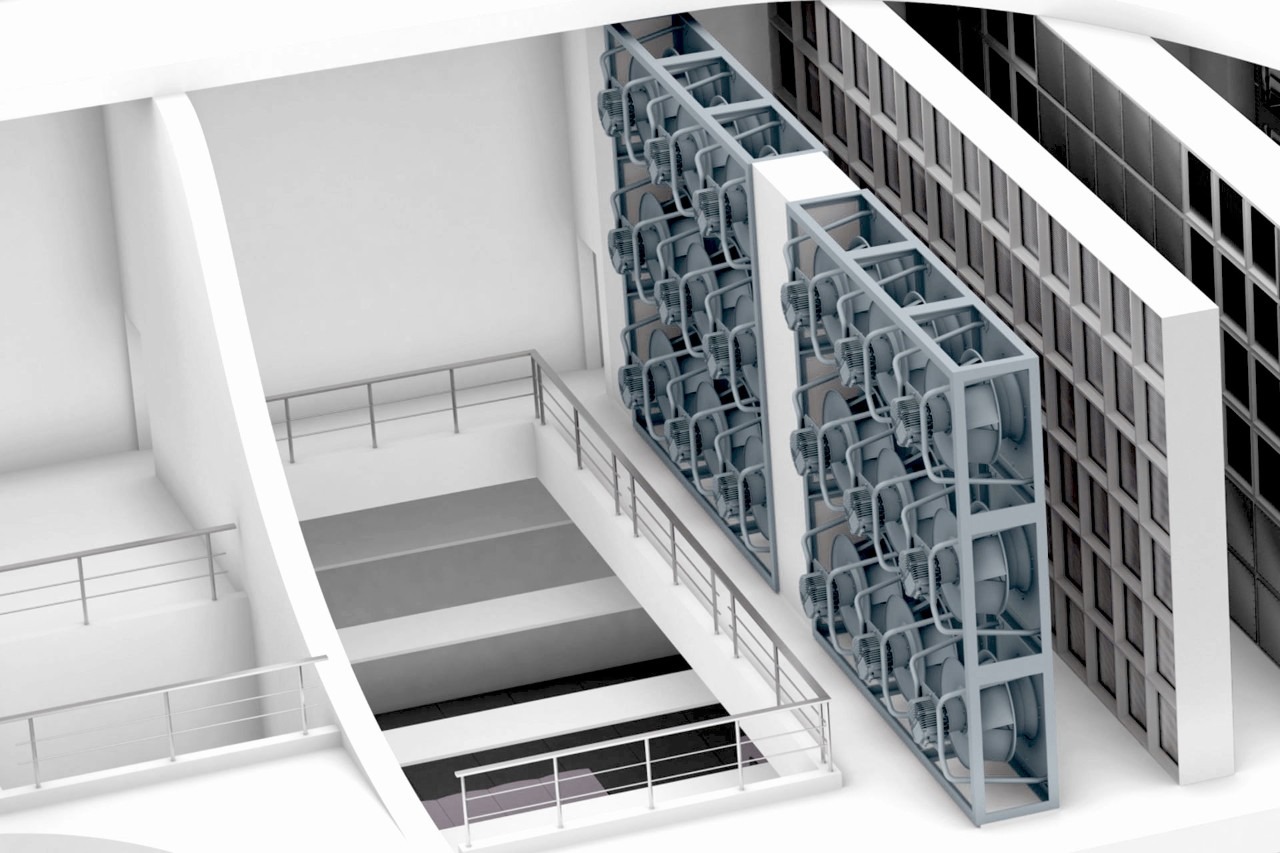
Pic.2 Diagram of Wind Walls in Data Centers
The basic redundancy logic is straightforward:
One large fan → One failure can mean significant capacity loss
Multiple fans → One failure can mean partial capacity loss
With an appropriately designed control strategy, the remaining fans can potentially increase speed and compensate for part of the lost airflow.
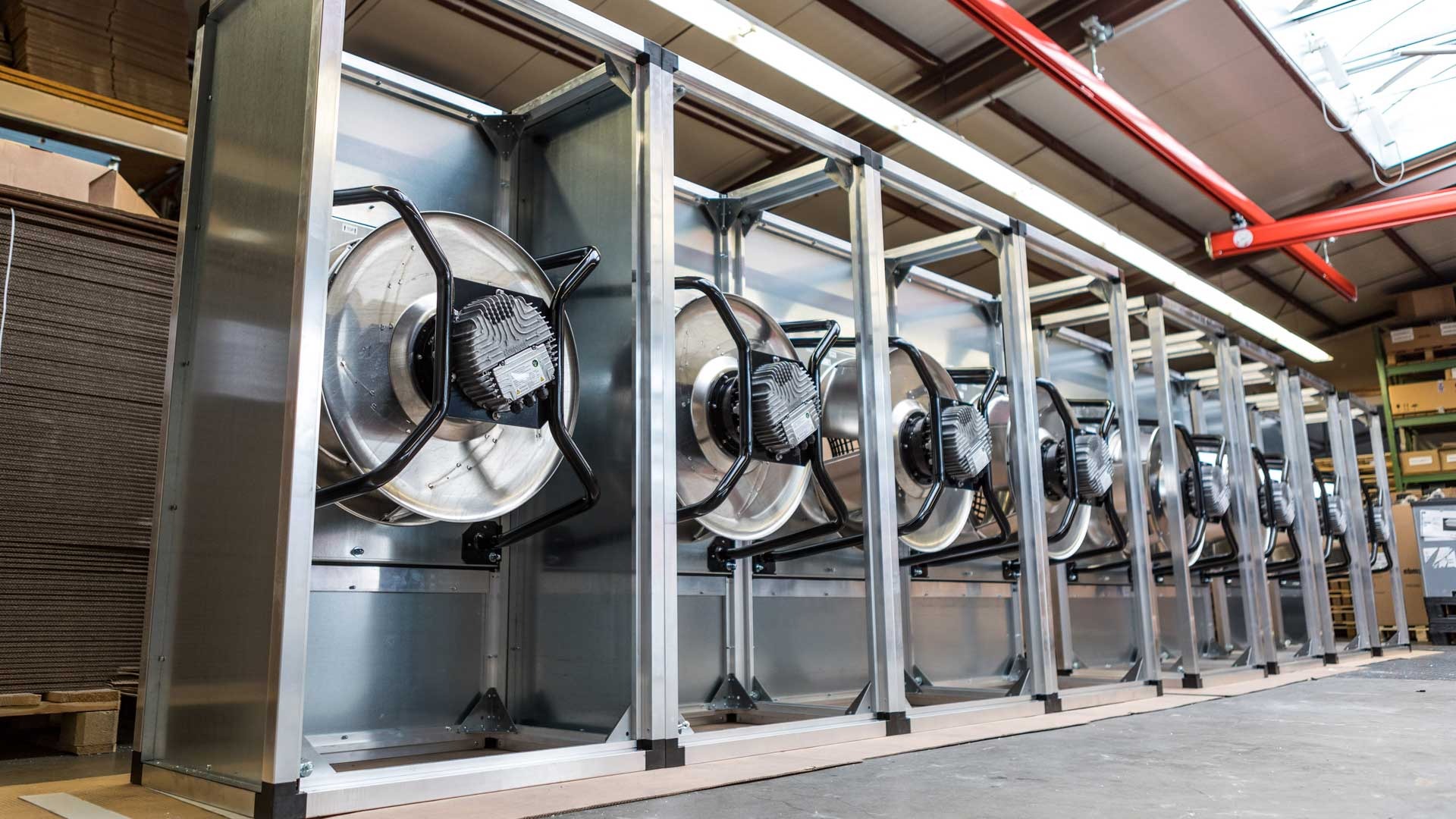
Pic.3 The FanGrid wit eight RadiPac EC centrfugal fans,supplies maximum air flow of 100,000 m3/h with a maximum electrical total power of 19kW.(Source from HDS GmbH)
Of course, redundancy is not simply about adding more fans.
The actual performance depends on system design, airflow requirements, fan operating points, controls, available capacity margin, and the required redundancy strategy.
That is why N+1, variable-speed compensation, and other redundancy approaches need to be evaluated at the system level.
The goal is not to claim that a fan failure has no impact.
The goal is to limit the impact of that failure and maintain cooling availability.
The Next Cooling Metric?
As AI data centers continue to scale, I believe we will increasingly see a shift from:
Cooling Efficiency → Cooling Efficiency + Cooling Resilience
The next generation of cooling systems may not be judged only by how efficiently they operate under normal conditions.
They may also be judged by how reliably they perform when something goes wrong.
And this matters not only to data center operators.
For cooling contractors, dry cooler OEMs, retrofit specialists, and maintenance/spare-parts suppliers, fan architecture can directly influence how a cooling system handles real-world failures and maintenance requirements.
At Beijing HENGRUI, we believe fan selection should be considered part of the overall cooling reliability strategy—not simply a question of airflow and efficiency.
Whether you are evaluating an N+1 configuration, FanGrid architecture, or a retrofit with EC fans, the right answer depends on the actual airflow, static pressure, operating conditions, control strategy, and required redundancy.
If you are currently working on a data center cooling project, dry cooler upgrade, or fan replacement, we can help you evaluate the fan configuration and identify a suitable solution.
Send us your airflow, static pressure, voltage, and application requirements. Our team can help you evaluate the right EC fan solution for your project.
Because in mission-critical cooling, the question isn't only how efficiently your system runs—it's how reliably it keeps running when something goes wrong.
 whatsapp


