
 English
 Français
 Deutsch
 Português
 Español
 русский
  한국어
한국어 العربية
 Italiano
 Indonesia
 Schweiz
 Polski
 Nederlands
 ישראל - עברית
 Perzisch
 ไทย
ไทย 日本語
日本語 ኢትዮ-አማርኛ
 Việt Nam
 Kiswahili
 Srpski
 Ελληνικά
 简体中文
简体中文What a Professional Fan Selection Process Should Check Before Recommending a Model
Beijinghengrui 3-Step Approach
01 — PROBLEM
02 — SOLUTION
03 — KEY RULE
When an industrial fan needs to be replaced or selected for new equipment, the fastest approach is often to search by model number or dimensions.
But a similar model does not automatically mean a suitable replacement.
For OEM engineers, contractors, and maintenance teams, the real question is:
Can the recommended fan meet the required operating point and integrate with the existing equipment?
This is where a structured fan selection process makes a difference.
What Should Be Checked Before Recommending a Fan?
A reliable selection starts with the application requirements, rather than the product catalogue.
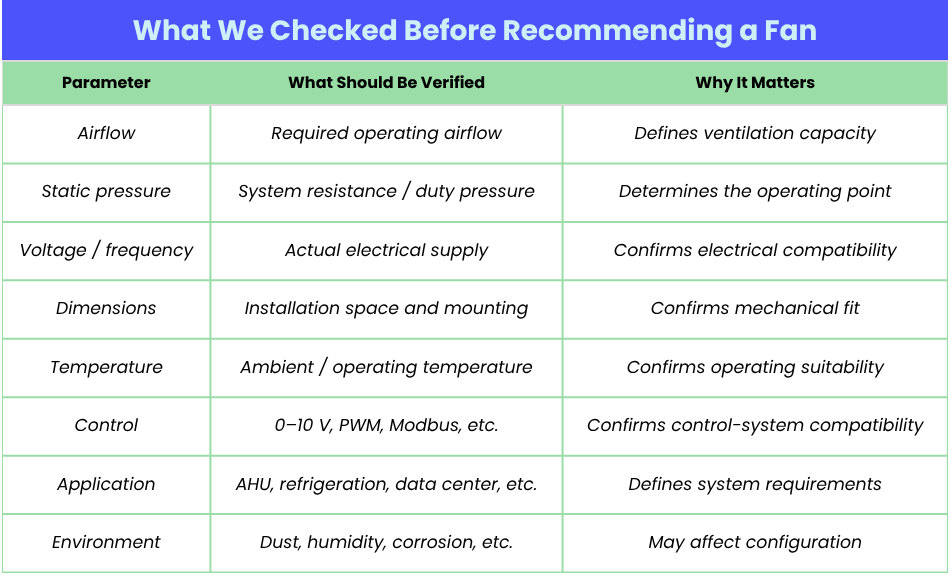
Pic.1 What We Checked Before Recommending a Fan
Not every project requires the same level of investigation. A straightforward replacement may require fewer checks, while a new OEM design or system retrofit may require a much more complete operating profile.
The key is to identify which parameters can affect the actual fan selection before making a recommendation.
How Beijinghengrui Handles Free Fan Selection
At Beijinghengrui, free fan selection is not simply a process of searching a catalogue and sending back a model number.
Our technical review follows a structured workflow:
01 — Review the Application
We first identify what the fan is being used for—such as HVAC, refrigeration, data center cooling, air handling, industrial ventilation, or equipment cooling.This provides the context for the selection.
02 — Check the Required Operating Point
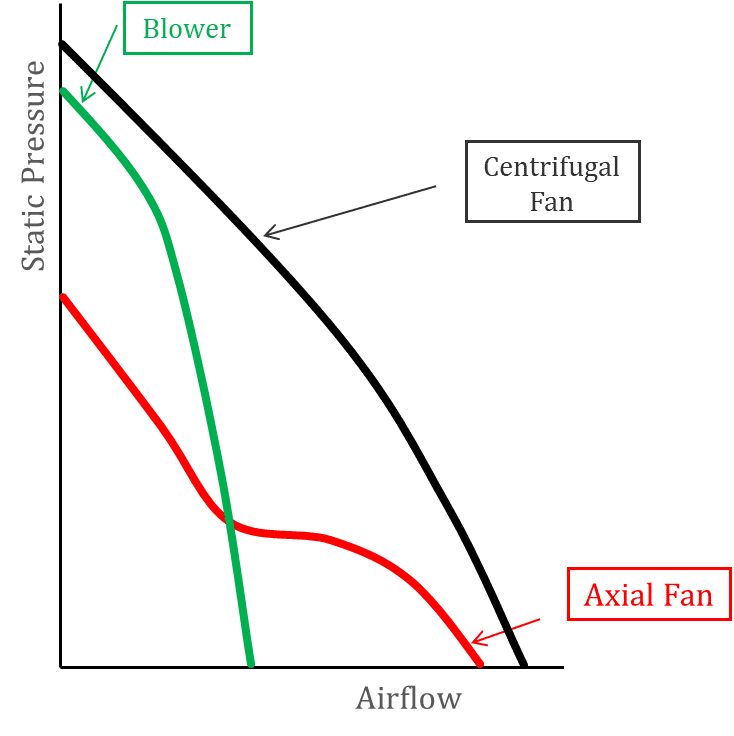
Airflow and static pressure are reviewed together to establish the required duty point.
Where available, PQ curves or manufacturer selection software are used to verify the candidate model against the actual operating condition.
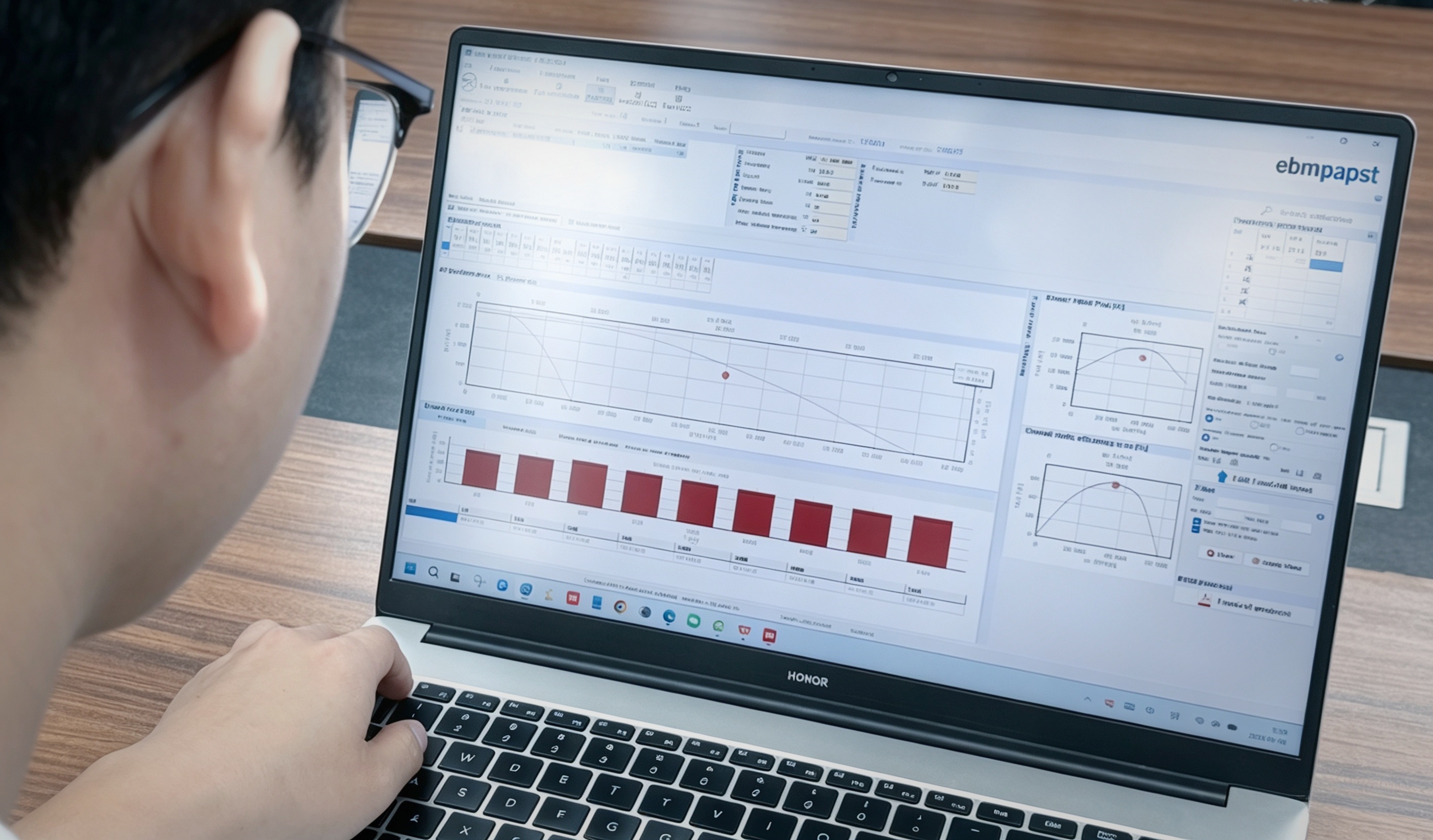
Pic.3 Engineers are using ebm-papst official selection software to select models for customers
03 — Verify the Configuration
The proposed fan is then checked against relevant requirements, including:
This is particularly important for replacement projects, where two visually similar fans may have different configurations.
04 — Identify Missing Information
If the customer's initial information is incomplete, we do not simply assume that the model is suitable.Instead, we identify:What is known → What is missing → What needs to be verified.
An existing nameplate, equipment photo, installation dimension, or application description can often provide the next step for the review.
05 — Provide the Selection Recommendation
After the relevant information has been checked, the customer receives a proposed fan configuration based on the application requirements and available technical data.
The objective is straightforward:Reduce the risk of selecting a fan that fits physically but does not perform correctly in the system.
What Does This Selection Process Look Like in Practice?

A typical request may begin with only:“We need to replace this fan. Here is the model number and nameplate.”
That information is enough to start—but not necessarily enough to confirm the replacement.
Beijinghengrui can then review the available model information, identify the key parameters that require verification, and compare the application requirements with the relevant performance data.
For an OEM project, the process may start differently:
Required airflow + static pressure + voltage + dimensions + control requirements
The selection is then evaluated against the operating point and equipment interface before a recommendation is made.
This difference matters.The selection process follows the application—not the order in which the information happens to arrive.
What Information Should You Send for Fan Selection?
To make a fan selection review more efficient, prepare as much of the following information as possible.
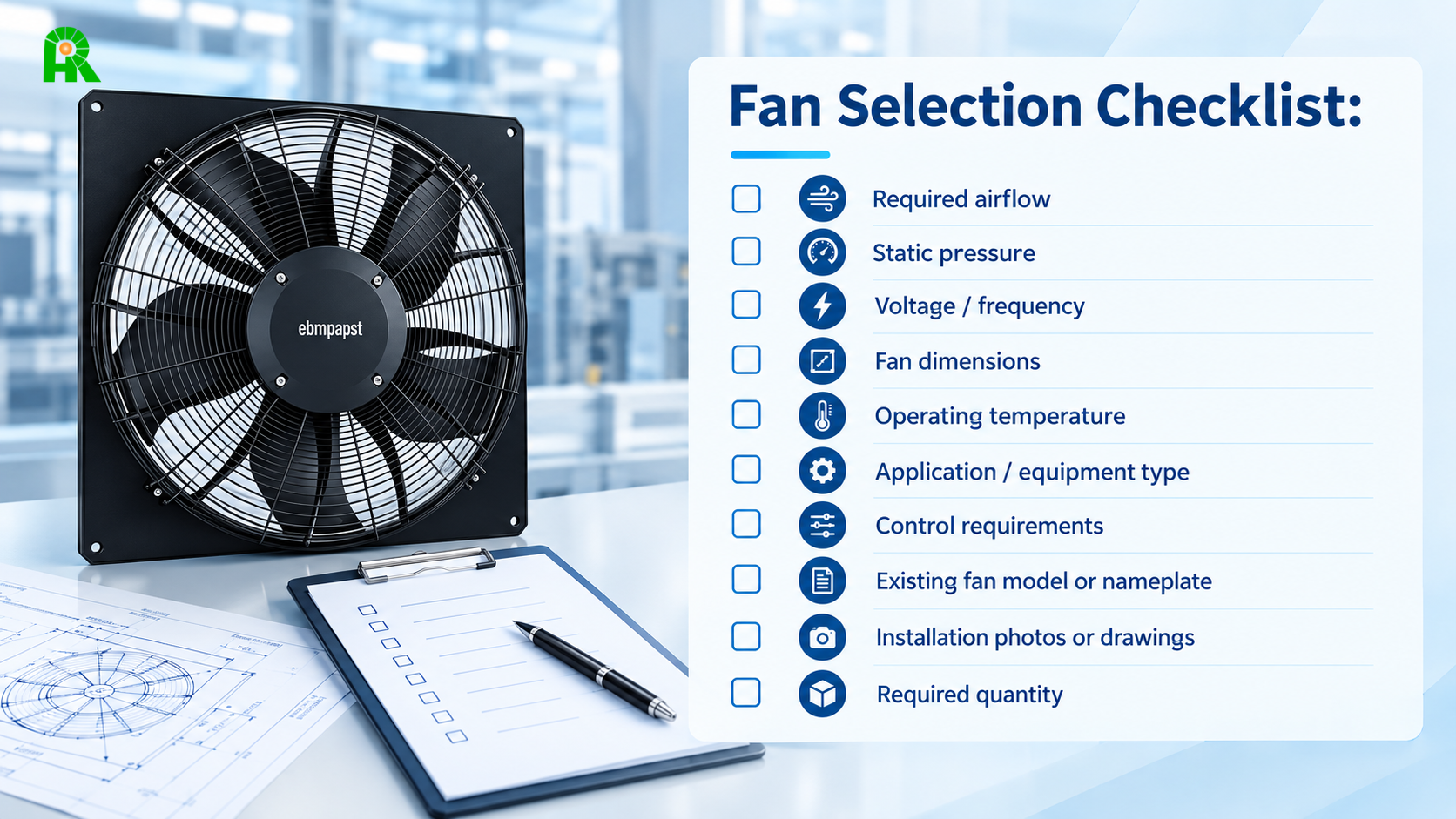
Pic.5 Fan Selection Checklist
If you do not have all the parameters, start with what you have.
An existing fan model, nameplate photo, equipment description, or installation photo can provide a useful starting point for identifying the missing information.
Free Fan Selection From Beijinghengrui
For OEM engineers, contractors, maintenance teams, and spare-parts buyers, choosing the right fan is often about more than finding a product with the right dimensions.
It is about verifying:Performance → Configuration → Compatibility → Application
Beijinghengrui provides free fan selection support for industrial fan applications and replacement projects.
Share your airflow, static pressure, voltage, dimensions, temperature, and control requirements for a technical review.
If you are working with an existing fan, you can also send the model number or nameplate photo as the starting point.
 whatsapp


