 English
 Français
 Deutsch
 Português
 Español
 русский
  한국어
한국어 العربية
 Italiano
 Indonesia
 Schweiz
 Polski
 Nederlands
 ישראל - עברית
 Perzisch
 ไทย
ไทย 日本語
日本語 ኢትዮ-አማርኛ
 Việt Nam
 Kiswahili
 Srpski
 Ελληνικά
 简体中文
简体中文Data Center Fan Procurement: How to Calculate the Real Cost Beyond Unit Price
Data Center Fan Procurement — 3-Step Approach
01 — PROBLEM | The Lowest Unit Price May Not Be the Lowest Procurement Cost
A lower fan price can look attractive on an RFQ, but it does not show the full cost of procurement, delivery, installation, replacement, and supply risk.
02 — SOLUTION | Evaluate Total Procurement Cost
Compare the fan not only by unit price, but also by logistics, lead time, inventory, compatibility, maintenance, and replacement risk.
03 — KEY RULE | Buy for Lifecycle Cost, Not Just Purchase Price
For data center cooling systems, the real procurement question is not “How much does this fan cost?”
It is:“What will this fan and its supply chain cost the project over its operating lifecycle?”

Pic.1 JLL's 2026 Global Data Center Outlook report
Data center cooling equipment is increasingly affected by tight project schedules and supply-chain constraints. JLL's 2026 Global Data Center Outlook reports that the global average data center equipment lead time is about 33 weeks, while developers and operators are increasingly using advance procurement and strategic inventory to reduce schedule risk.
For cooling components, this matters because a fan is rarely purchased as an isolated component.
A fan may be part of a CRAH, dry cooler, FanGrid, air-handling system, or other thermal management equipment. If the required fan is unavailable when the equipment needs to be commissioned or repaired, the financial impact can extend far beyond the original purchase price.
This is why procurement teams should look at Total Cost of Ownership (TCO) and Total Supply Risk, rather than unit price alone.

The first cost is obvious:Fan Unit Price × Quantity
But a practical procurement calculation should also consider:
Two fans with similar specifications and different purchase prices may produce very different total costs once logistics and replacement requirements are included.
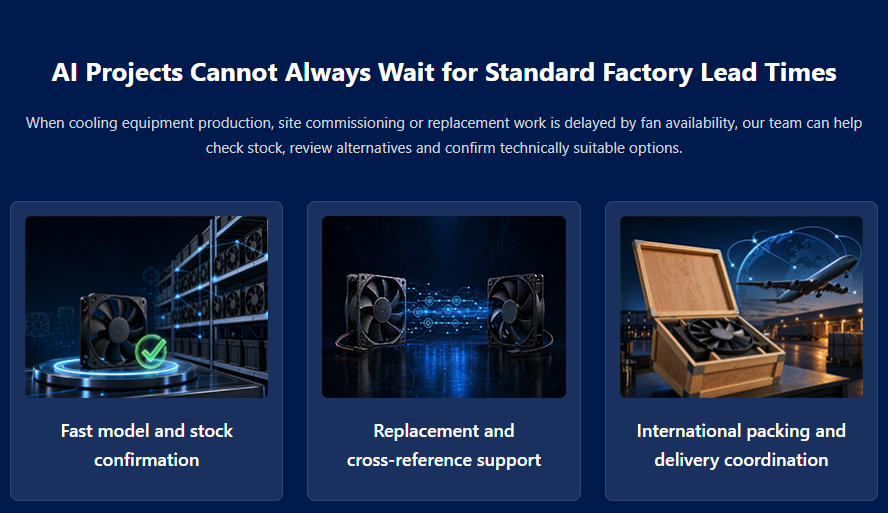
Lead time is often treated as a logistics number.
For data center projects, it can also become a project cost variable.
Consider a cooling system that requires 100 fans for commissioning. If 95 units are available but five critical units are delayed, the project may still face additional coordination, installation, testing, or commissioning work.
The question is therefore not simply:“What is the lead time?”
It should be:“What happens to the project if the lead time changes?”
Procurement teams should confirm:
A quoted lead time without supply visibility is not the same as a reliable delivery plan.
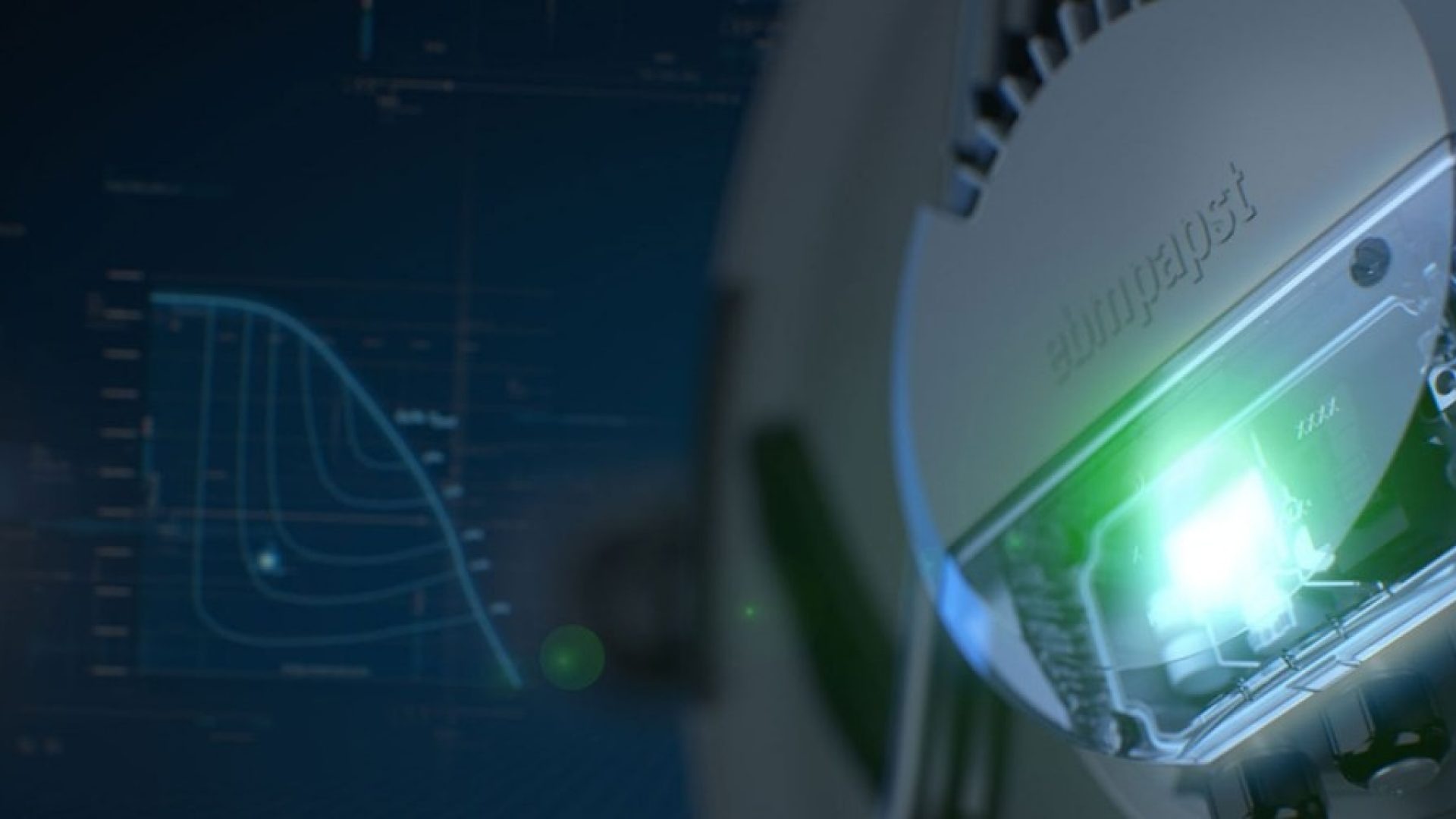
For data center cooling applications, the replacement fan may need to match the system's:
A mismatch can result in additional engineering work, airflow imbalance, control problems, commissioning delays, or reduced system performance.
This is why model number alone should not define procurement equivalence.
The correct question is:Does the replacement meet the actual operating requirements of the cooling system?
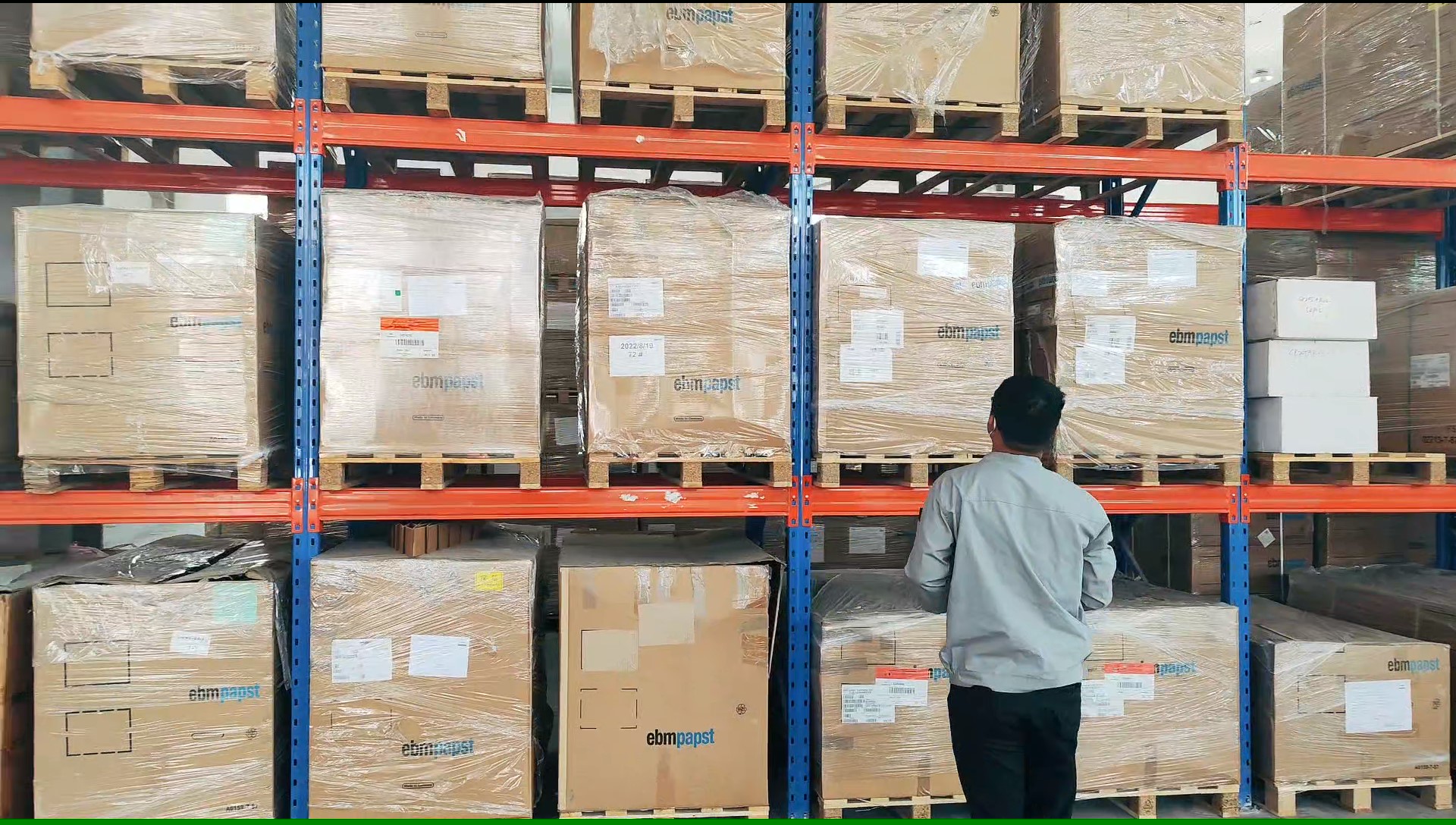
Holding spare fans ties up working capital.Holding no spare fans increases response risk.
The right inventory strategy depends on criticality + replacement lead time + installed base.
For example:
Critical / long-lead fan→ Consider planned safety stock.
Standard / readily available fan→ Lower inventory may be sufficient.
Large multi-site deployment→ Consider regional or centralized strategic inventory.
Uptime Institute's supply-chain research also shows why visibility matters: in its 2025 survey, only 56% of respondents said they had adequate visibility into supply-chain information from key data-center equipment vendors.
Inventory decisions should therefore be based on actual supply information—not assumptions.
What Should Procurement Teams Ask Suppliers?
Before placing a data center fan order, ask for more than a quotation.
Confirm:
1. Product — Is the exact model and configuration available?
2. Performance — Does it match the required operating point?
3. Availability — Is the stock physically available, allocated, or still in production?
4. Delivery — What is the realistic shipment timeline?
5. Traceability — Can the product and order information be verified?
6. Replacement — What happens if the model becomes unavailable in the future?
7. Support — Can the supplier support repeat orders, urgent replacements, and technical selection?
These questions help turn procurement from a one-time transaction into a supply-continuity strategy.
Final Takeaway
The lowest-priced data center fan is not always the lowest-cost option. For critical cooling systems, procurement teams should consider price, performance, availability, lead time, compatibility, inventory, and lifecycle support together—especially as cooling architectures evolve, including the growing adoption of liquid cooling.
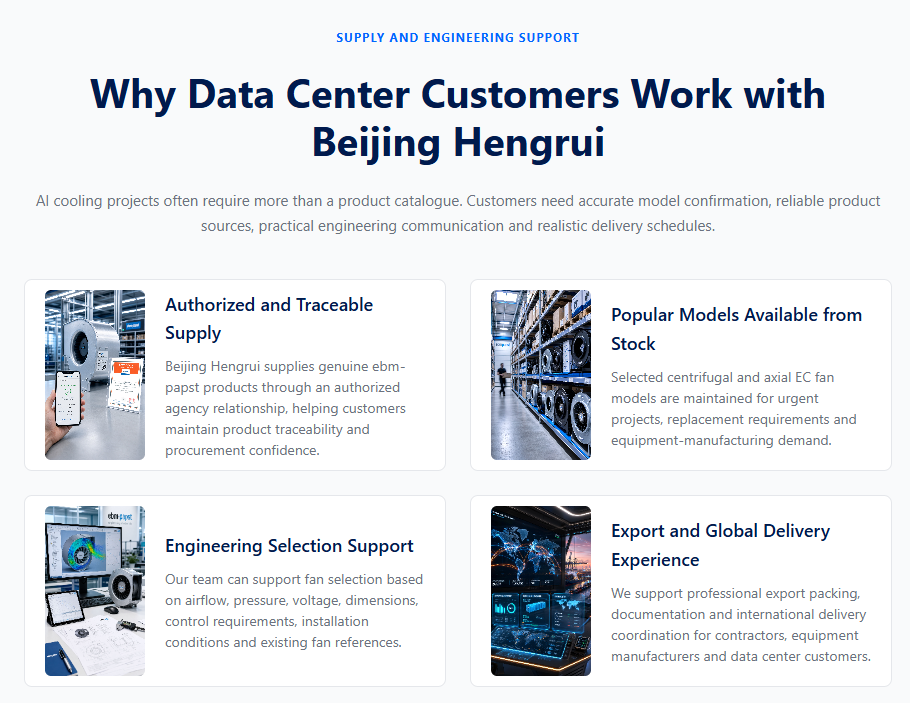
Pic.6 Why Data Center Customers Work with Beijing Hengrui
Beijinghengrui supports data center cooling projects with fan identification, technical selection, sourcing, stock and lead-time checks, replacement assessment, and delivery coordination. Send us the fan model, nameplate, application, airflow/pressure, voltage, and quantity to evaluate the right technical and supply options before ordering.
 whatsapp


