
 English
 Français
 Deutsch
 Português
 Español
 русский
  한국어
한국어 العربية
 Italiano
 Indonesia
 Schweiz
 Polski
 Nederlands
 ישראל - עברית
 Perzisch
 ไทย
ไทย 日本語
日本語 ኢትዮ-አማርኛ
 Việt Nam
 Kiswahili
 Srpski
 Ελληνικά
 简体中文
简体中文Repair or Replace? A Practical Cost Guide for ebm-papst EC Fan Failures
ebm-papst EC Fan Repair vs Replacement — 3-Step Approach
01 — IDENTIFY | Find the Actual Failure
02 — CALCULATE | Compare the Total Cost
03 — VERIFY | Confirm the Replacement
When an ebm-papst EC fan fails, the first question is often:
Is it cheaper to repair the existing fan or buy a new one?
The purchase price is only one part of the decision.
For a critical AHU, refrigeration system, dry cooler, or data center cooling system, a failed fan can also create labor costs, emergency logistics, equipment downtime, and the risk of another failure after repair.
A better approach is to compare the total cost and expected service value of both options.
In other words:Repair is not automatically cheaper, and replacement is not automatically better.
The right decision depends on what failed, how old the fan is, how critical the application is, and whether a suitable replacement can be verified.
Step 1: Identify What Actually Failed
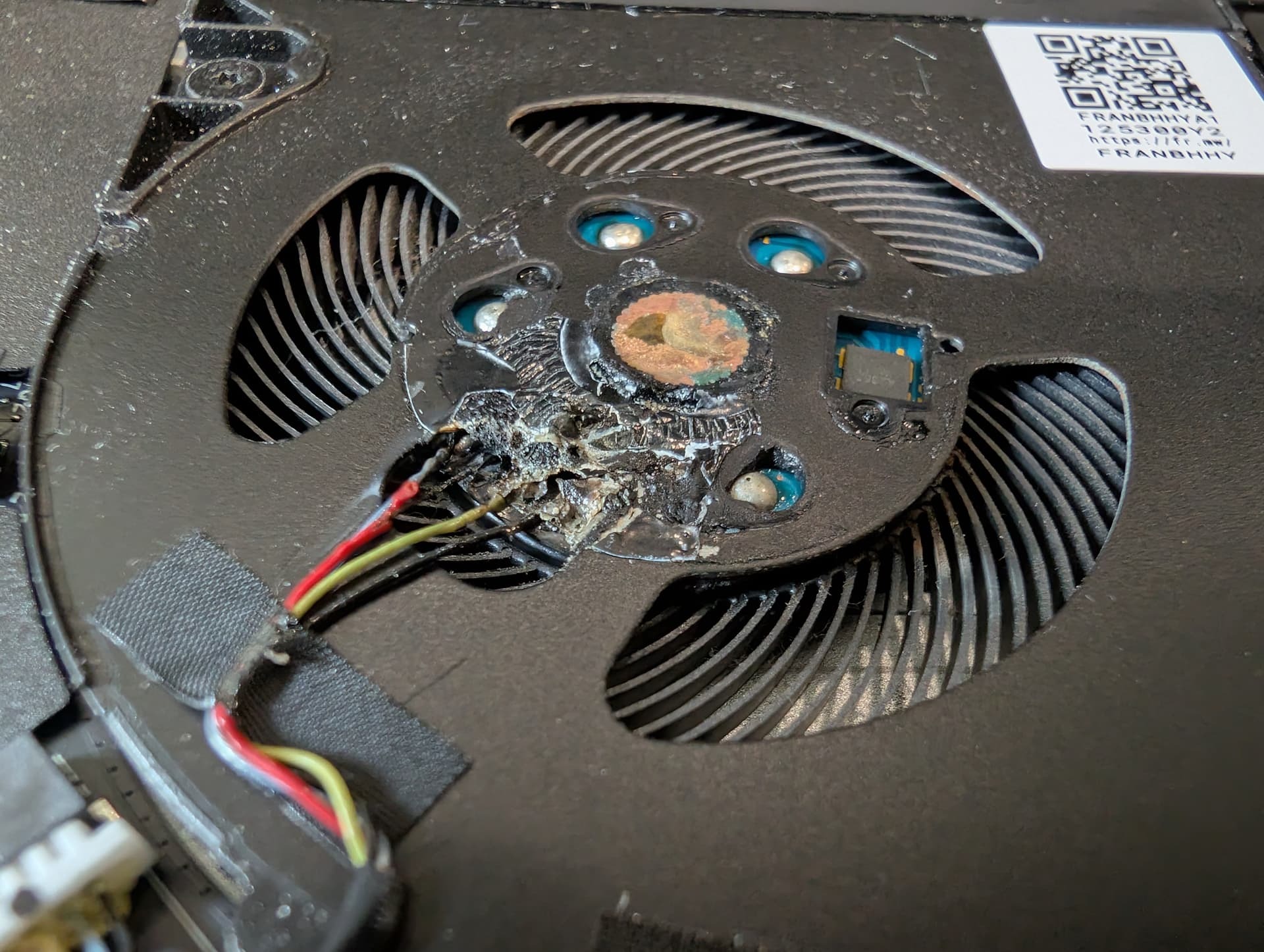
Pic.1 Check failure mode
Before requesting a repair quotation, identify the failure mode.Some problems may be relatively straightforward:
This distinction matters because an EC fan is not simply a motor plus an impeller. Many ebm-papst EC fan designs integrate motor and electronic control functions, with options such as 0–10 V, PWM and Modbus interfaces depending on the model.
In its operating instructions for specific products, ebm-papst states that severe corrosion on load-bearing or rotating parts requires the device to be replaced and that repair of such parts is not permitted. The same documentation identifies abnormal bearing noise and certain mechanical damage as conditions requiring replacement.
Key point:Do not decide “repair or replace” until you know which component or function has actually failed.
Step 2: Calculate the Real Cost of Repair

Pic.2 Consider the true costs of two options
Suppose a replacement fan costs more than a repair.That does not automatically make repair the economical option.
Consider:True Repair Cost = Repair + Labor + Downtime + Logistics + Repeat-Failure Risk.
For example, a repaired fan may require another shutdown if the repair does not restore reliable operation. For a production line or critical cooling system, that risk may be more important than the initial repair quotation.
The same principle applies to an older fan.
ebm-papst distinguishes between L10 bearing life and the reliability of electronic components. Its FAQ explains that L10 is used for bearing life because bearing failure rates change over time, while electronic-component reliability is treated differently. For larger fans, ebm-papst notes that typical minimum expected L10 bearing life can be around 40,000 operating hours, depending on the specific product and conditions.
Therefore, a useful question is not simply:“How much does the repair cost?”
It is:“How much reliable service can I reasonably expect after the repair?”
When Does Replacement Become More Practical?
There is no universal percentage at which replacement becomes the correct decision. However, several conditions can make replacement increasingly practical.
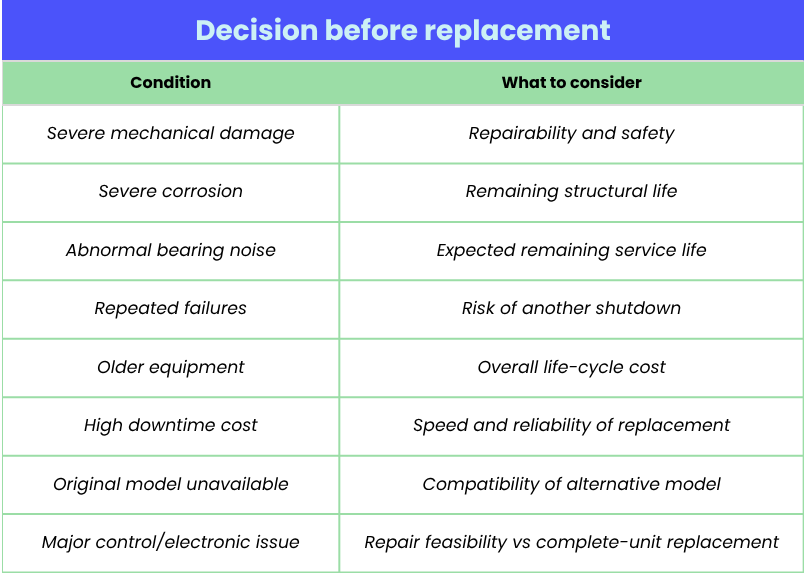
Pic.3 Decision before replacement
The important point is that replacement should be evaluated as a system decision, not just a spare-parts purchase.
Never Replace an EC Fan by Size Alone
This is one of the most common mistakes in fan replacement.
A fan with the same diameter or mounting dimensions may still have different operating characteristics or control requirements.
Before ordering a replacement, verify at least:
The fan's operating point is particularly important.
A replacement should deliver the required airflow at the required pressure—not simply fit into the existing opening.
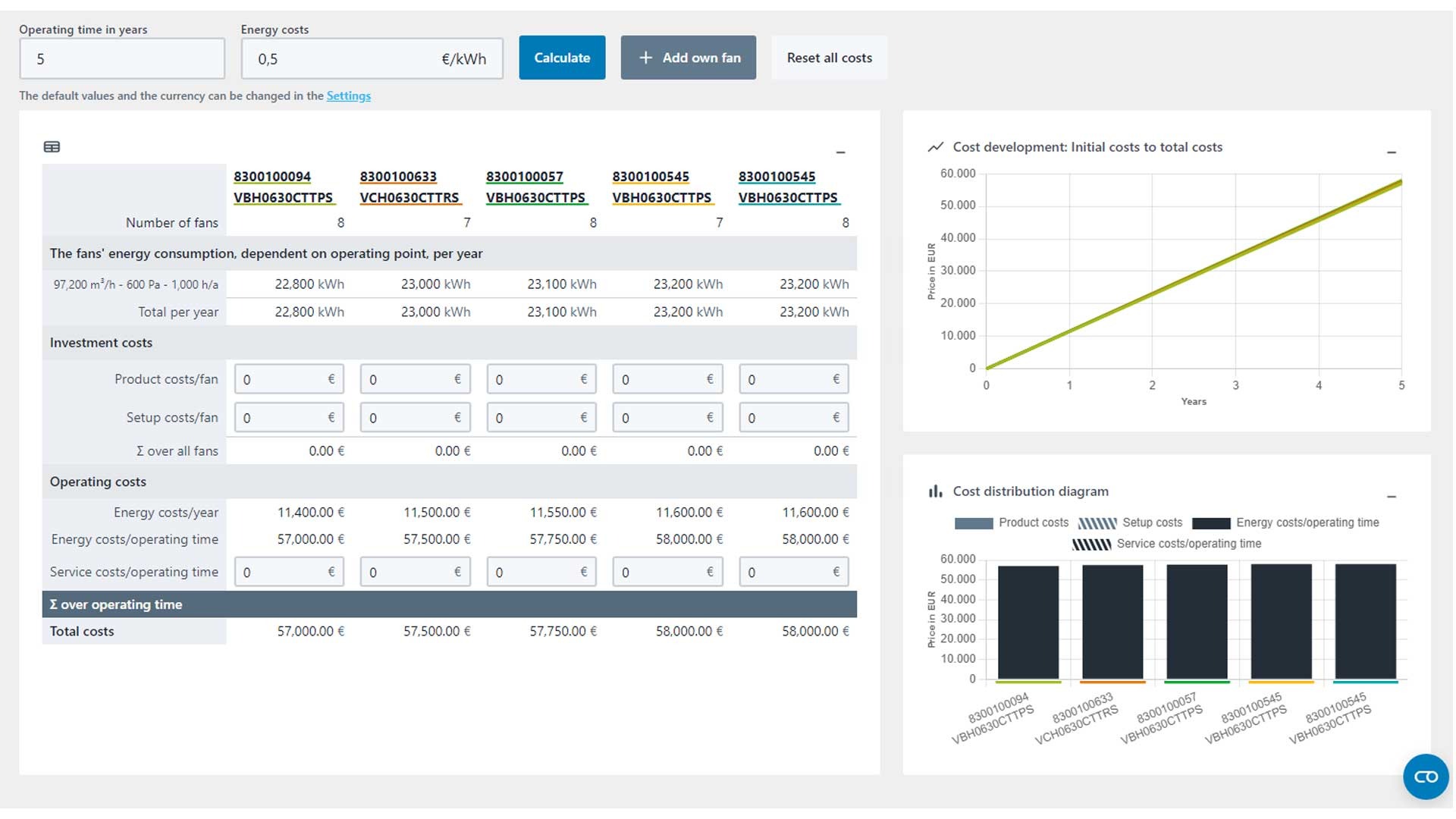
Pic.4 FanScout can help you calculate expenses(Source|ebm-papst)
ebm-papst's FanScout selection tool uses operating points, operating times, voltage, frequency, installation space, noise requirements and other application parameters to identify suitable fan configurations. It can also compare product data and calculate lifecycle costs.
Same size does not mean same replacement.
A Simple Repair-or-Replace Decision Guide
When evaluating a failed ebm-papst EC fan, ask these five questions:
1. What actually failed?
2. Is the fan structurally reliable?
3. How much reliable service remains?
4. What is the cost of downtime?
5. Can the replacement be technically verified?
If the repair addresses a limited issue and the fan still has sufficient service value, repair may be reasonable.If the fan has serious mechanical damage, severe corrosion, repeated failures, or uncertain remaining life, replacement deserves closer consideration.
What Should You Confirm Before Ordering?
For an urgent replacement, prepare:
Model / Nameplate → Application → Airflow & Pressure → Voltage → Control Interface → Quantity → Delivery Requirement
The nameplate is particularly important. ebm-papst states that key information such as voltage and frequency can be found on the fan's label and in the corresponding data sheet or operating instructions.
For discontinued or difficult-to-source models, the question is not simply whether another fan looks similar. The replacement should be checked against the original application's technical requirements.
Conclusion: Repair or Replace? Start with the Right Assessment
Identify the failure → Compare the total cost → Verify the replacement.
The right choice depends on the fan’s condition, application requirements, and replacement compatibility—not repair cost alone.
Need Help with an ebm-papst EC Fan?
Beijinghengrui supports model identification, technical selection, replacement sourcing, and delivery coordination.
Send us the model or nameplate information to check the right replacement option before you order.
 whatsapp


