
 English
 Français
 Deutsch
 Português
 Español
 русский
  한국어
한국어 العربية
 Italiano
 Indonesia
 Schweiz
 Polski
 Nederlands
 ישראל - עברית
 Perzisch
 ไทย
ไทย 日本語
日本語 ኢትዮ-አማርኛ
 Việt Nam
 Kiswahili
 Srpski
 Ελληνικά
 简体中文
简体中文AI Liquid Cooling: Inside SANYO DENKI's Liquid Cooling Pump
Hengrui 3-Step Approach
01 — PROBLEM | Rising Rack Power Density
Higher chip performance means higher power consumption and greater heat generation within limited space.
02 — SOLUTION | Air + Liquid Cooling
Liquid cooling does not simply mean replacing fans with pumps. Modern data centers increasingly require air-side and liquid-side cooling to work together.
03 — KEY RULE | Select by Operating Conditions
For fans and pumps alike:Measure → Analyze → Select → Verify.
Flow, pressure/head, temperature, installation space, power, and operating conditions all matter.
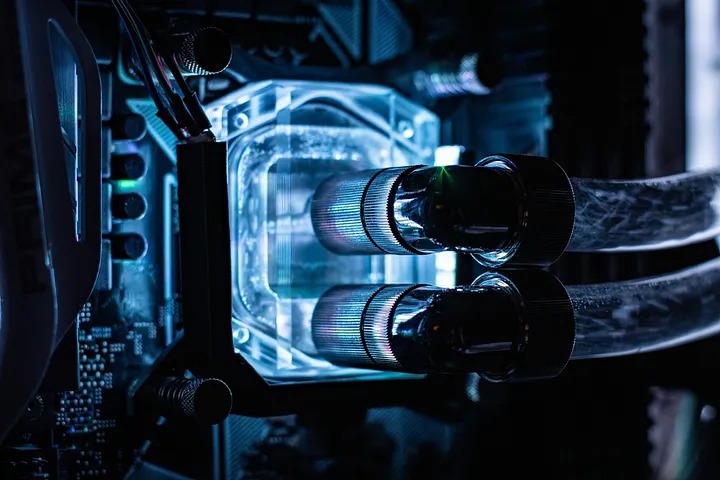
AI server power continues to rise, and so does the challenge of data center cooling.
For years, thermal management mainly focused on server fans, CRAC, and CRAH systems. But with the growth of GPU servers, HPC, and high-density racks, cold plate liquid cooling, Coolant Distribution Units (CDUs), and Rear Door Heat Exchangers (RDHx) are becoming increasingly important.
One component is also gaining attention: the liquid cooling pump.
If a liquid cooling system is viewed as a circulation system, the pump is its “heart”—providing the driving force to continuously circulate coolant and remove heat from high-performance chips.
SANYO DENKI’s data center materials now cover liquid cooling pumps, CDUs, RDHx, and server fans within its broader thermal management portfolio.
Why Is Liquid Cooling Becoming More Important?
The basic drivers are straightforward:
Higher chip performance/Higher power consumption/Higher thermal density
As thermal density increases, traditional air cooling faces greater pressure.
In a cold plate liquid cooling system, the basic heat-transfer path is:
High-performance chip → Cold plate → Coolant → CDU → Facility cooling system
The CDU performs heat exchange and coolant distribution between the server-side cooling loop and the building-side cooling system.
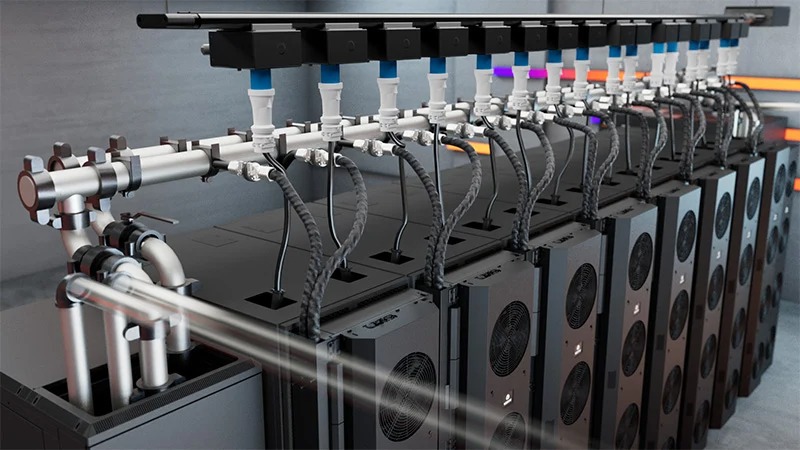
Pic.1 For a liquid-to-air system, the CDU transfers the heat to the ambient supply utilizing a heat exchange coil design within the CDU.
This means that as liquid cooling adoption grows, the liquid cooling pump becomes an increasingly important thermal management component.
Why Is the Liquid Cooling Pump Critical?
The roles are simple:
In SANYO DENKI’s AI server liquid cooling example, coolant enters the cold plate at approximately 25°C and can reach approximately 30–40°C after absorbing heat.
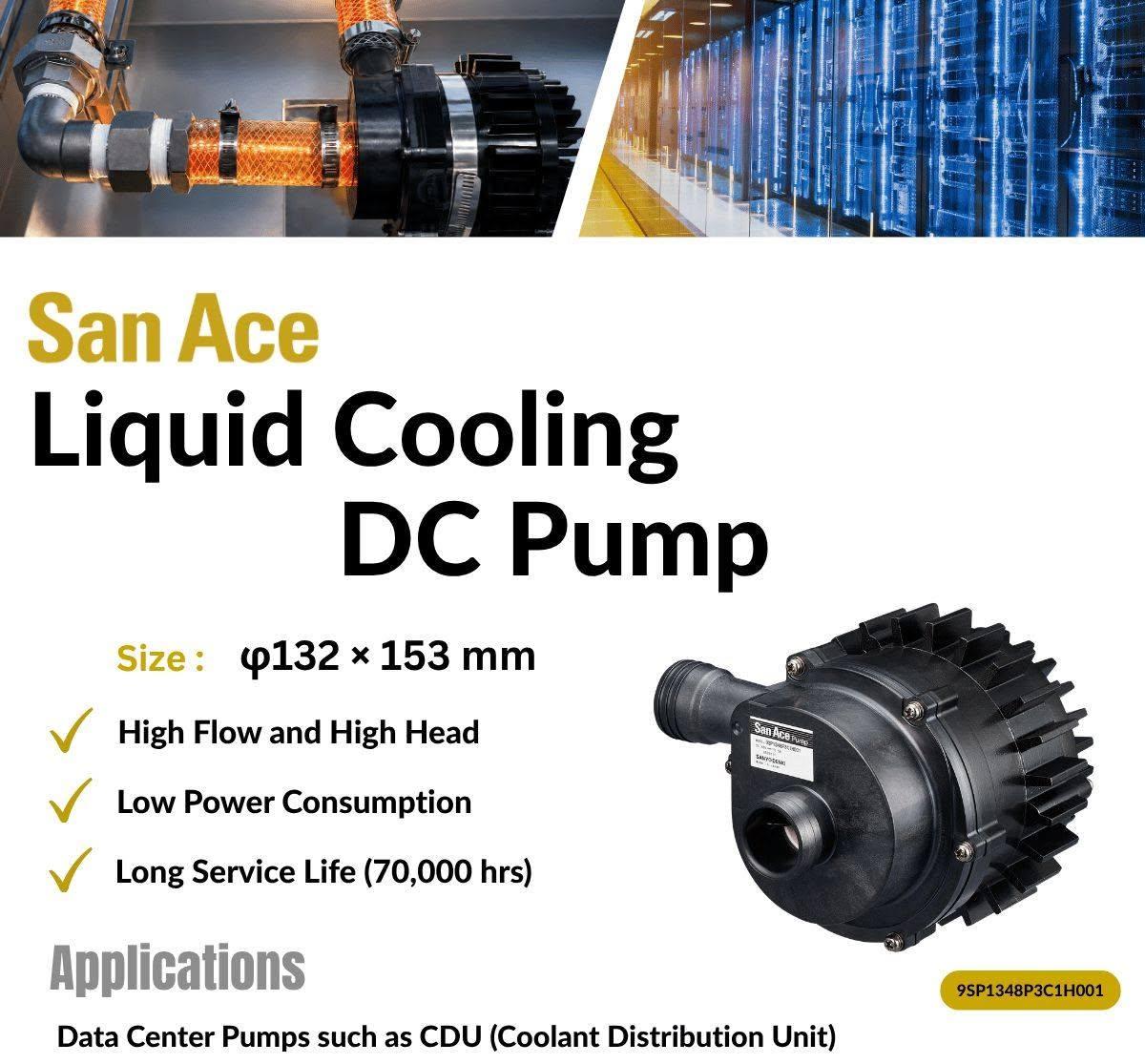
Pic.2 SANYO DENKI DC cooling pump
Pump performance therefore affects several important system factors:
Flow rate · Head · Circulation efficiency · Reliability · Long-term stability
For AI data centers, pump selection is not simply about moving coolant. The pump must provide the required operating point and maintain stable performance under continuous operating conditions.
SANYO DENKI: Combining Pumps and Fans in CDU Applications
SANYO DENKI is well known for its San Ace server fans and cooling fans. Its data center materials also show liquid cooling pumps designed for CDU-related applications.
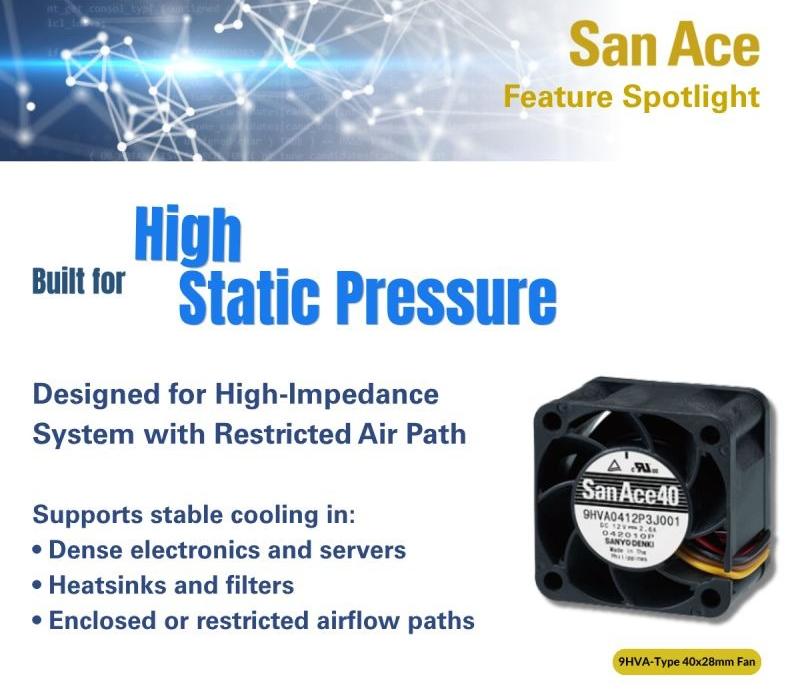
Pic.3 SANYO DENKI server fans
The roles can be broadly understood as:
San Ace cooling fan: cooling control systems and related components
San Ace liquid cooling pump: circulating coolant
This represents an expansion from traditional air-side cooling toward:Air-side heat dissipation + Liquid-side coolant circulation
Typical applications include:
The key point is that liquid cooling does not eliminate the need for fans. It changes how different thermal management components work together.
How Large Is the Liquid Cooling Pump Opportunity?
Different research organizations use different market definitions and assumptions, so market estimates should be treated as forecasts rather than confirmed end-customer market figures.
One MarketsandMarkets estimate cited in the source material projects the global data center CDU pumps market to grow from approximately US$340 million in 2026 to US$1.84 billion in 2032, with an estimated CAGR of about 32.7%.
Other 2026 research cited in the source material also points to substantial demand associated with AI data center liquid cooling and CDU deployment.
More important than any single number is the underlying trend:AI computing growth → Higher rack power density → Greater cooling pressure → More liquid cooling → Growing demand for pumps, heat exchangers, fans, and other thermal management components.
Will Liquid Cooling Pumps Replace Fans?
Not necessarily.
A more accurate description is that data centers are moving from predominantly air cooling toward coordinated air-side and liquid-side thermal management.
A CDU needs a pump to circulate coolant, but its control system, power electronics, and other components may still require fans for heat dissipation.
RDHx systems also continue to rely on fans to move data center air through the heat exchanger. Fan selection therefore still needs to consider:
Airflow · Static pressure · Energy efficiency
The future architecture may increasingly look like:Liquid Cooling Pump + Fan + CDU + RDHx + Intelligent Control
Rather than one technology replacing another, different components perform different thermal management functions.
How Should Thermal Components Be Selected?
For projects evaluating AI data center liquid cooling, CDU, RDHx, or high-density rack cooling, selection should begin with the actual operating conditions—not simply a preferred model.
For pumps, review:Flow rate · Head · Coolant · Temperature · Installation space · Power · Expected life
For fans:Airflow · Static pressure · Dimensions · Voltage/frequency · Temperature · Control requirements
At Beijinghengrui, our approach is:Measure → Analyze → Select → Verify.
If you are evaluating a liquid cooling project or looking for a replacement or matching fan/pump, share the available operating conditions with us.
Contact Beijinghengrui for product specifications and a technical selection solution.
 whatsapp


