
 English
 Français
 Deutsch
 Português
 Español
 русский
  한국어
한국어 العربية
 Italiano
 Indonesia
 Schweiz
 Polski
 Nederlands
 ישראל - עברית
 Perzisch
 ไทย
ไทย 日本語
日本語 ኢትዮ-አማርኛ
 Việt Nam
 Kiswahili
 Srpski
 Ελληνικά
 简体中文
简体中文China's Draft Fan Efficiency Standard: What It Means for OEM Fan Selection
Beijinghengrui 3-Step Approach
01 — PROBLEM
Motor efficiency alone does not tell the full energy story of a fan system.
02 — SOLUTION
Evaluate the complete fan configuration at the required airflow and pressure operating point.
03 — KEY RULE
Select the fan for its actual duty point — not simply its motor efficiency rating or maximum airflow.
A Quick Look at China's Draft Fan Efficiency Standard
On July 20, 2026, the Standardization Administration of China opened public consultation on draft revisions of two mandatory national standards: fan energy efficiency (plan no. 20262559-Q-469, which would fully replace GB 19761-2020) and motor energy efficiency (plan no. 20262560-Q-469, which would fully replace GB 18613-2020).
The consultation closed on September 18, 2026. Neither draft has been published as a final standard, and neither is in force — but the direction is clear: efficiency evaluation is moving from the motor alone to the complete fan system, measured from electrical input to delivered airflow and pressure.
For OEM buyers, the practical question is: if motor efficiency is only part of the picture, how should a fan actually be selected?
Motor Efficiency ≠ Fan System Efficiency
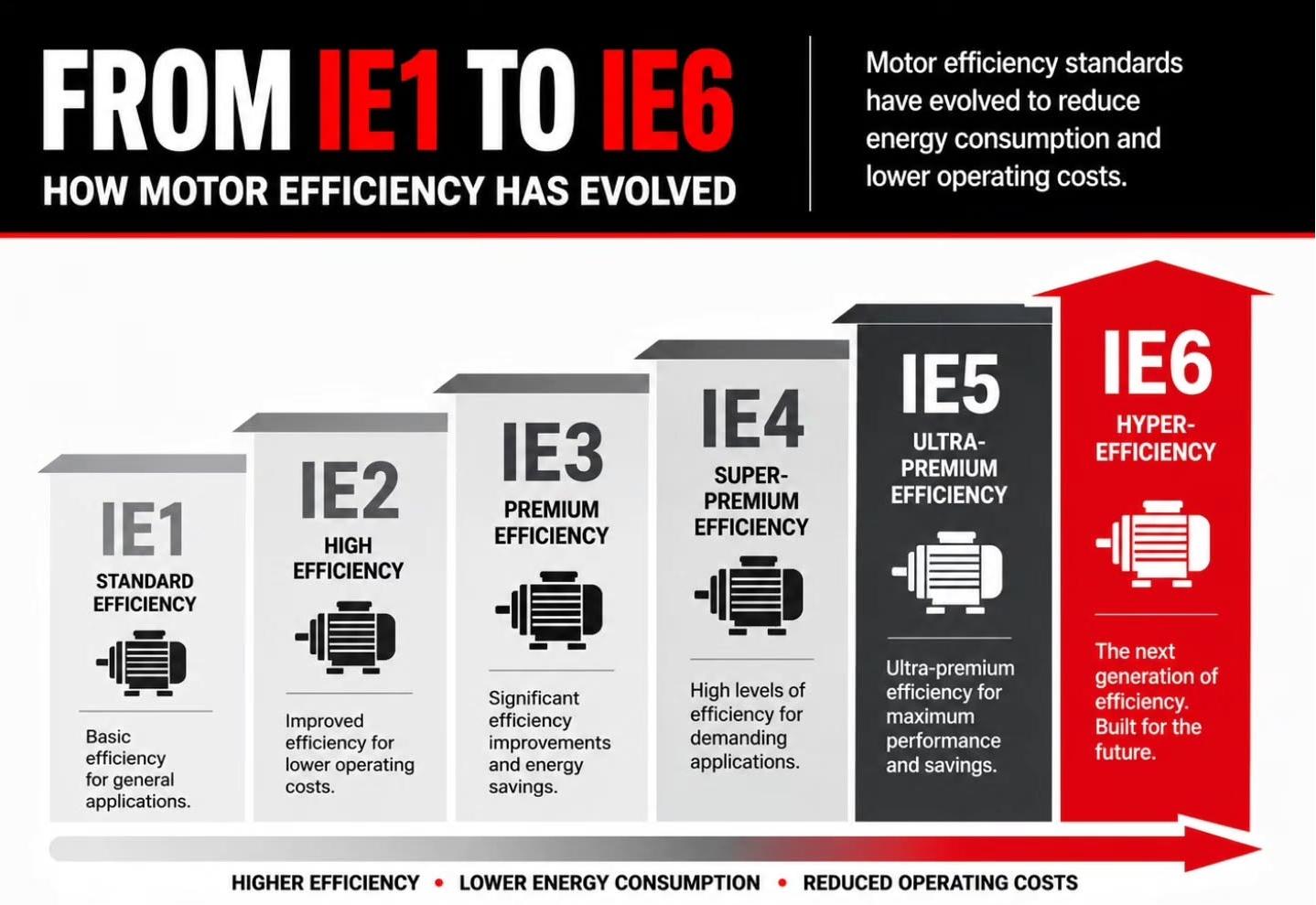
An IE4 or IE5 motor can deliver high motor efficiency. But motor efficiency alone does not describe the performance of the complete fan system.
The energy path of a fan system runs:
Electrical input → Controller / Drive → Motor → Fan → Airflow + Pressure
This is why the industry increasingly evaluates fans on wire-to-air efficiency — the electrical power drawn at the terminals versus the air power delivered — rather than on motor efficiency alone. Related metrics such as specific fan power (SFP) express the same idea: how much electrical input is required to move a given airflow.
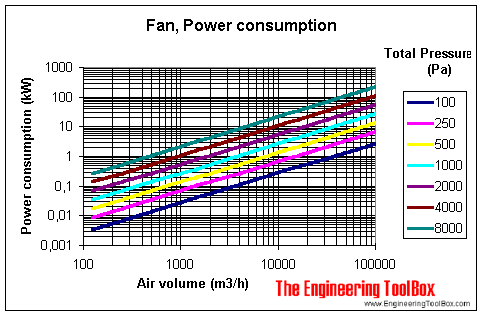
Pic.1 Power consumption under different air volumes and pressure increases
Two terms matter here:
The final engineering requirement is not simply an efficient motor. It is: the required airflow at the required pressure, with the lowest practical electrical input.
This is why two fans using motors with similar efficiency ratings can still show different system performance. Fan geometry, operating speed, controller configuration, system resistance and the actual duty point all matter.
The draft direction reinforces this distinction: motor documentation may be necessary evidence, but it cannot by itself demonstrate the overall efficiency of the fan system — because controller, transmission and aerodynamic losses remain inside the evaluation boundary.
What Should OEM Buyers Check Before Ordering?
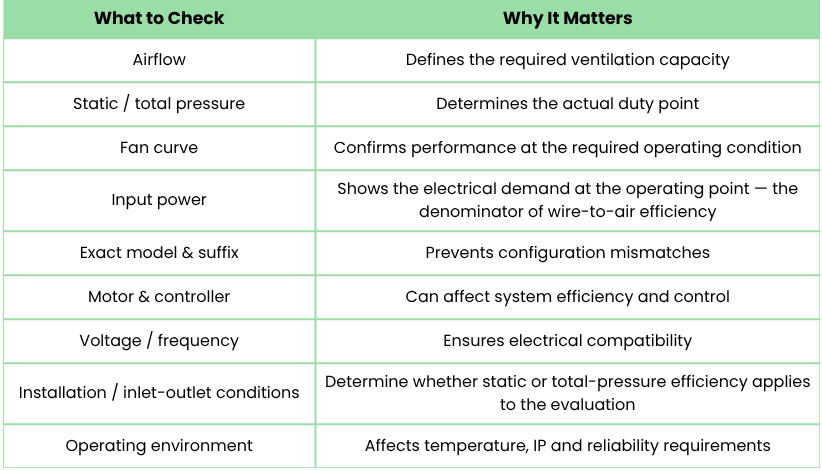
The exact model and suffix are particularly important when purchasing replacement fans.
A product family name or catalog maximum does not necessarily represent the configuration installed in the field.
For an existing fan, the nameplate can provide valuable information about the original configuration. Combining the nameplate data with actual airflow, pressure and operating conditions provides a much stronger basis for replacement selection.
From Fan Selection to Fan Verification
This is where fan selection becomes an engineering task rather than a catalog search. A practical workflow is:
Measure → Analyze → Select → Verify
(1) Measure
Collect the actual application requirements:
(2) Analyze
Compare the required duty point with available fan curves and determine the expected input power and operating range.
(3) Select
Choose the appropriate fan type, model and configuration based on the actual application — not simply the largest airflow rating or highest motor efficiency class.
(4) Verify
Check the complete configuration, including:
This process is particularly important when replacing an existing fan or cross-referencing between different brands.
What Should OEMs Do Now?
The draft does not require immediate product redesign. Until the final standard is published and takes effect, GB 19761-2020 and GB 18613-2020 remain the basis for product release. But the transition period is a good time to close documentation gaps:
Instead of asking only "Which motor has the highest efficiency rating?", OEM teams should also ask: "Which fan configuration delivers our required airflow and pressure with the lowest practical electrical input?"
That is a more complete engineering question — and a more reliable basis for procurement.
FAQ
Q1: Is the 2026 draft fan efficiency standard already mandatory?
No. It was a public consultation draft, and the comment period closed on September 18, 2026. It has not been published as a final standard and is not in force. The official plan pages indicate implementation 12 months after formal publication.
Q2: Does an IE4 or IE5 motor prove that a fan meets the proposed efficiency grade?
No. Motor efficiency is only one part of the proposed system boundary. Controller, transmission and aerodynamic losses also affect the result.
Q3: What is the difference between motor efficiency and wire-to-air efficiency?
Motor efficiency measures the motor alone. Wire-to-air efficiency measures the complete fan system — from electrical input to delivered air power. The draft evaluates the latter.
How Beijinghengrui Supports Fan Selection
As efficiency evaluation moves toward a wire-to-air view, the documentation behind a selection matters as much as the selection itself. This is where Beijinghengrui works with OEMs and engineering teams: from model identification and nameplate checks to airflow/pressure verification, fan curve matching, replacement selection, cross-reference and sourcing coordination. When an original model is discontinued or unavailable, the goal is not simply to find a fan with similar dimensions, but to identify a replacement that matches the required performance, electrical configuration and operating conditions.
For a selection or replacement review, send us the fan nameplate photo together with your required airflow, static pressure, voltage and installation conditions — we will verify the duty point and confirm a matched model or replacement with its supporting configuration details.
An efficient motor is a good starting point, but the right fan selection completes the equation.
 whatsapp


