
 English
 Français
 Deutsch
 Português
 Español
 русский
 한국어
 العربية
 Italiano
 Indonesia
 Schweiz
 Polski
 Nederlands
 ישראל - עברית
 Perzisch
 ไทย
 日本語
 ኢትዮ-አማርኛ
 Việt Nam
 Kiswahili
 Srpski
 Ελληνικά
 简体中文
What Serving 20,000+ Business Customers Has Taught Us About Industrial Fan Supply and Selection
BeijingHengrui 3-Step Approach
01 — PROBLEM
Manufacturers, maintenance companies, and spare-parts suppliers face different challenges when sourcing industrial fans. Incomplete model information, discontinued products, technical requirements, and supply constraints can all complicate purchasing decisions.
02 — SOLUTION
Experience across different customer requirements helps structure the process: identify the product, verify the available technical information, evaluate suitable options, and coordinate sourcing based on the actual application.
03 — KEY RULE
A large customer base matters when accumulated experience translates into practical support for real purchasing and technical requirements.

BeijingHengrui has served 20,000+ business customers across a wide range of industrial fan applications and sourcing requirements.
Behind this number are manufacturers looking for the right fan for their equipment, maintenance and repair companies searching for suitable replacements, and spare-parts suppliers managing products across different brands and models.
Each group faces different challenges, but they share a common need: accurate product identification, suitable technical solutions, and reliable sourcing support.
Over time, working with these different customers has given us valuable experience in understanding their requirements and helping them navigate industrial fan selection and sourcing decisions.
The value of serving 20,000+ business customers is not the number alone. It is how that accumulated experience can help us address the specific requirements of each customer.
Different Customer Types, Different Priorities
1.Manufacturers and OEMs: Matching Product Requirements with Supply Plans
For equipment manufacturers, fan selection starts with the intended operating conditions and equipment design.
Key factors may include:
- Required airflow and static pressure at the operating poin
- Installation dimensions and mounting arrangements
- Voltage, frequency, motor type, and control requirements
- Ambient conditions and application environment
- Required quantities, availability, and purchasing schedules
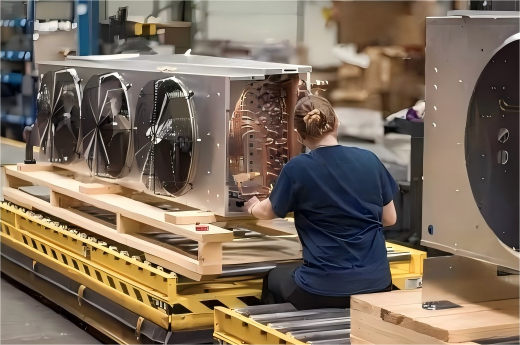
A fan that fits physically may still fail to meet the equipment's operating requirements. Establishing the technical requirements first helps buyers evaluate products more effectively and coordinate sourcing with production needs.
2.Maintenance and Repair Companies: Identifying Suitable Replacements
When an installed fan fails, the original model may be difficult to identify, the documentation may be incomplete, or the product may no longer be available.
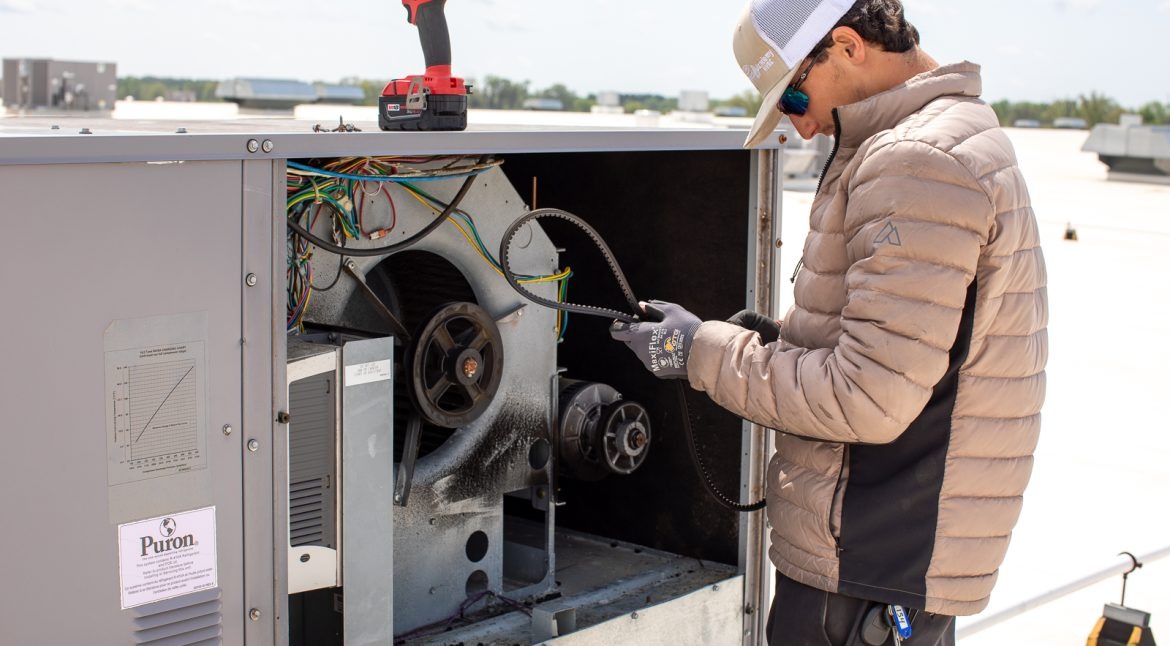
Pic.2 HVAC maintenance requires finding suitable replacement models
A model number or nameplate photograph is often a useful starting point. Depending on the application, further checks may include dimensions, electrical specifications, airflow, pressure requirements, and operating conditions.
If the original model is discontinued or difficult to source, an alternative may need to be evaluated.
Physical dimensions and nominal airflow alone are not enough to establish replacement compatibility. The proposed alternative must be assessed against the requirements of the actual equipment and application.
3.Spare-Parts Suppliers: Accurate Identification Across Multiple Models
Spare-parts suppliers often handle requests involving different brands, product families, and equipment types. Their customers may provide a model number, a nameplate photograph, an old quotation, or only partial technical information.
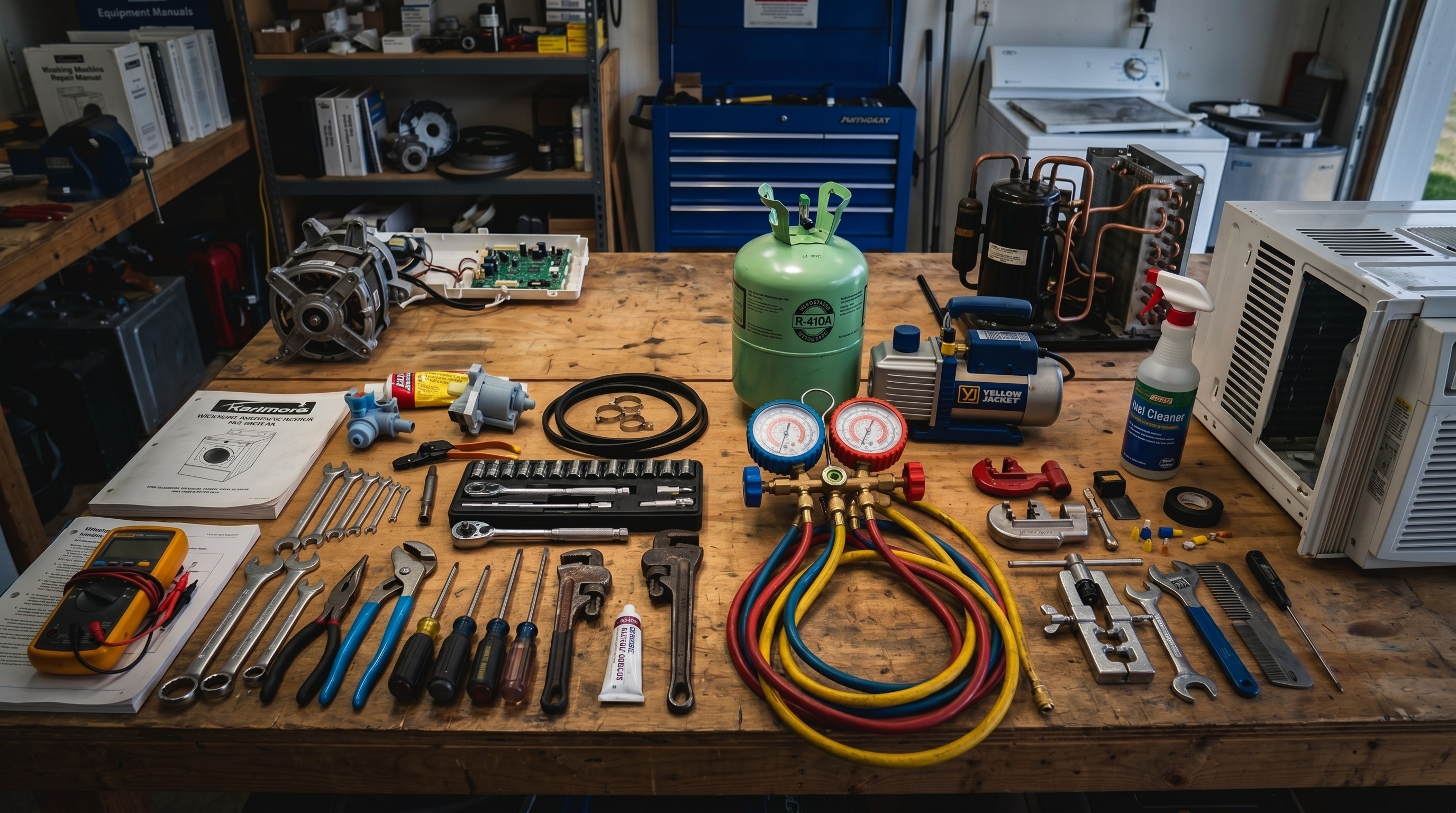
Pic.3 For spare-parts businesses, accurate identification is important
In these situations, checking the exact model designation, available specifications, quantities, and sourcing options helps reduce avoidable errors.
When an alternative is considered, its suitability should be evaluated against the application requirements rather than assumed from similar dimensions or specifications.
For spare-parts businesses, accurate identification is an important step toward more reliable purchasing and customer service.
What Application Examples Illustrate About Fan Selection
Different applications show why industrial fan sourcing requires more than matching a product name or a few headline specifications.
Example 1: Evaluating an Alternative for a Discontinued Fan Model
A design company in Saudi Arabia needed a replacement for a fan model that had been discontinued. The customer was looking for an alternative that could meet the project requirements while staying within the available budget.
BeijingHengrui recommended an EC fan with an integrated panel. The customer accepted the proposed configuration because it met the project's requirements.
What this illustrates: When an original model is no longer available, replacement evaluation needs to consider project requirements and budget constraints—not simply find a product with similar dimensions.
Example 2: Fan Selection for Compact Data Center Cooling Equipment
A customer needed a fan solution for a compact air-conditioning unit used in a data center cooling application. Installation space was an important consideration.
After reviewing the application requirements, BeijingHengrui recommended the ebm-papst AxiForce 80 fan, which has a width of 90 mm and supports 0–10 V speed control.
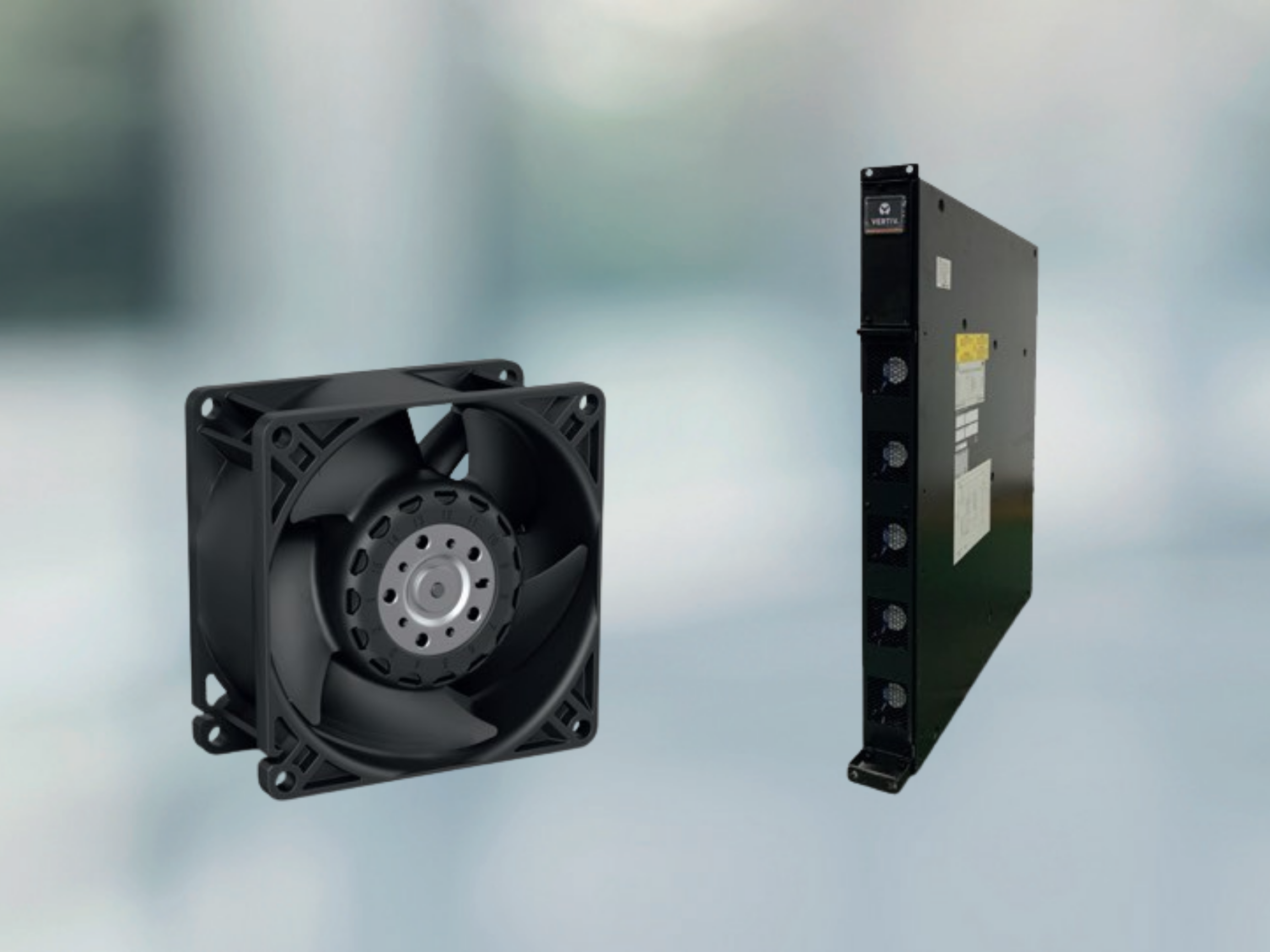
Pic.4 AxiForce 80 provides the performance needed while allowing the A/C unit to remain extremely narrow
What this illustrates: For compact cooling equipment, fan selection involves more than fitting the available space. Airflow, pressure, control requirements, and operating conditions also need to be considered.
Example 3: Considering an EC Fan Wall for Cooling Tower Modernization
A documented cooling tower retrofit case featured an EC Fan Wall solution as an alternative to an existing belt-driven fan arrangement. The project focused on upgrading the fan arrangement rather than replacing the entire cooling tower.
The original project report described energy savings exceeding 50% under that project's conditions. This figure is specific to the documented project and should not be treated as a guaranteed result for other installations.
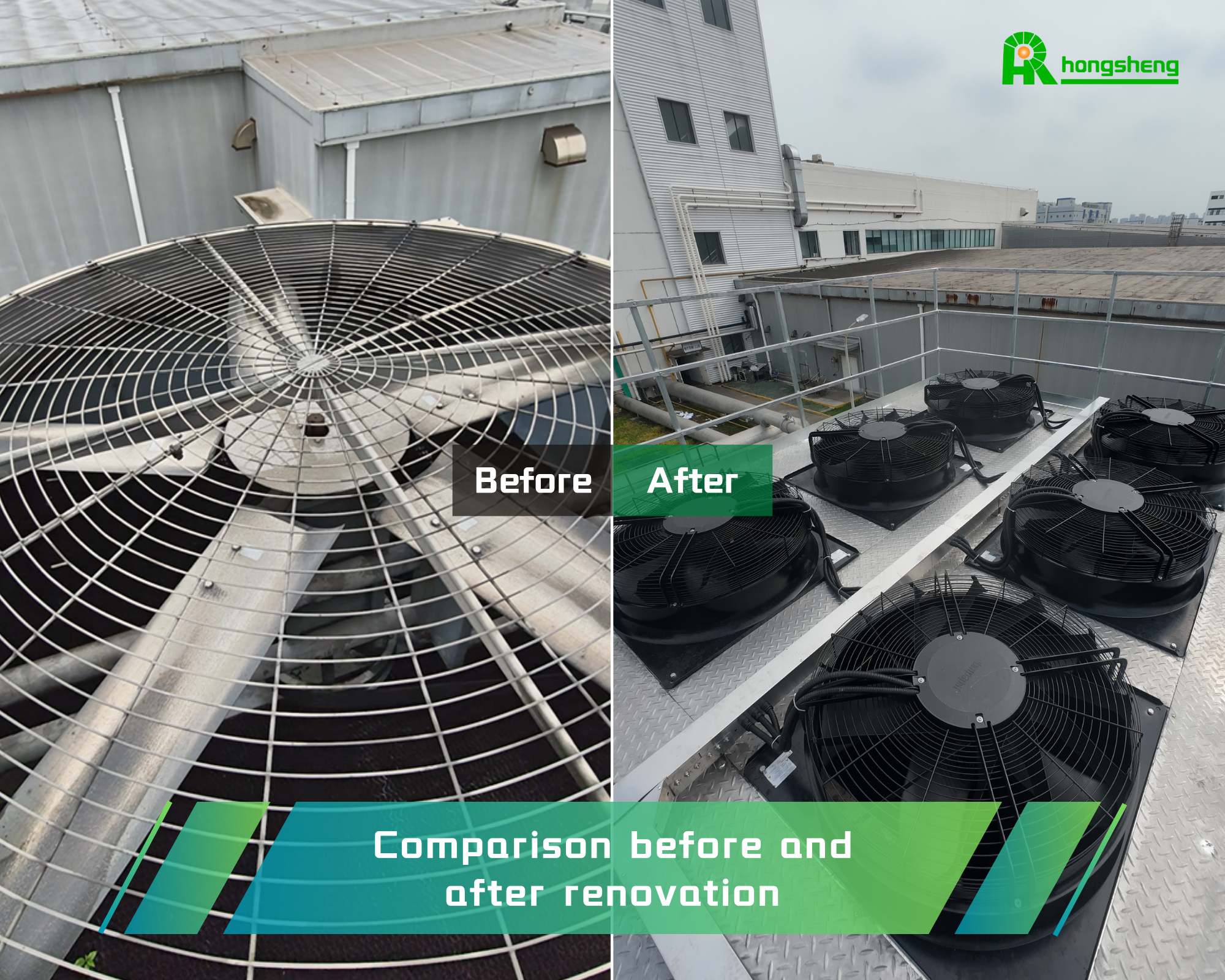
Pic.5 Comparison before and after renovation
What this illustrates: When considering a retrofit, buyers need to evaluate the existing equipment, operating requirements, control arrangements, and proposed solution together. Results depend on the specific system and operating conditions.
These examples highlight three different considerations: evaluating alternatives, selecting fans for space-constrained equipment, and assessing options for existing cooling systems. Each requires a clear understanding of the application before a product decision is made.
From Customer Experience to a Practical Working Process
Experience becomes useful when it supports a clear, repeatable process.
At BeijingHengrui, the key considerations can be organized into four steps:
1. Understand the requirement
Identify the equipment, application, intended operating conditions, and purchasing objective.
2. Verify the available information
Check model numbers, nameplate details, datasheets, dimensions, electrical specifications, and other relevant information where available.
3. Evaluate the options
Determine whether the original model meets the requirement, whether an alternative needs to be assessed, and which technical details still require confirmation.
4. Confirm product and supply details
Clarify the selected model or proposed alternative, quantity, availability, delivery arrangements, and any remaining technical questions.
Not every request requires the same level of review. A straightforward model inquiry may need only basic verification, while a replacement or engineering application may require a more detailed assessment.
The objective is to match the level of support to the complexity of the requirement, while keeping the information and decision process clear.
What This Means for Your Business
If you manufacture equipment, maintain installed systems, or supply industrial spare parts, the information you provide can help determine how efficiently a sourcing request progresses.
Depending on your situation, useful starting information may include:
- For manufacturers and OEMs: equipment specifications, operating requirements, quantities, and purchasing schedules.
- For maintenance and repair companies: the existing fan model, a nameplate photograph, equipment details, and the reason for replacement.
- For spare-parts suppliers: model lists, required quantities, customer specifications, and sourcing priorities.
- For retrofit projects: the existing fan arrangement, operating conditions, control requirements, and project objectives.
The right supplier should do more than provide a product quotation. It should help establish what is known, identify what still needs to be checked, and clarify the basis on which a product or alternative is being considered.
Serving more than 20,000 unique business customers has given BeijingHengrui experience across a range of industrial fan sourcing requirements. The practical value of that experience lies in applying it to each customer's specific equipment, technical needs, and purchasing conditions.
Frequently Asked Questions
Q1:What information is needed to identify an industrial fan?
Start with the model number or a clear nameplate photograph. Depending on the application, dimensions, electrical specifications, airflow, pressure requirements, and equipment details may also be needed.
Q2:Can a discontinued industrial fan be replaced with an alternative?
Potentially, but suitability should be evaluated against the original application's requirements. Similar dimensions or nominal airflow do not, by themselves, establish technical compatibility.
Q3:What should buyers check before ordering a replacement fan?
Verify the exact model, electrical and mechanical requirements, operating point, control method, environmental conditions, and installation constraints as applicable. Also confirm availability, quantity, and delivery arrangements.
Need Help with an Industrial Fan Sourcing or Selection Requirement?
Whether you are an equipment manufacturer, a maintenance and repair company, or a spare-parts supplier, BeijingHengrui can help review product identification, selection considerations, replacement options, and sourcing requirements based on the information available.
Share your model number, nameplate photograph, application details, or required model list to start the discussion.
The objective is simple: identify the requirement clearly, evaluate the options carefully, and make a more informed purchasing decision.
 whatsapp


